
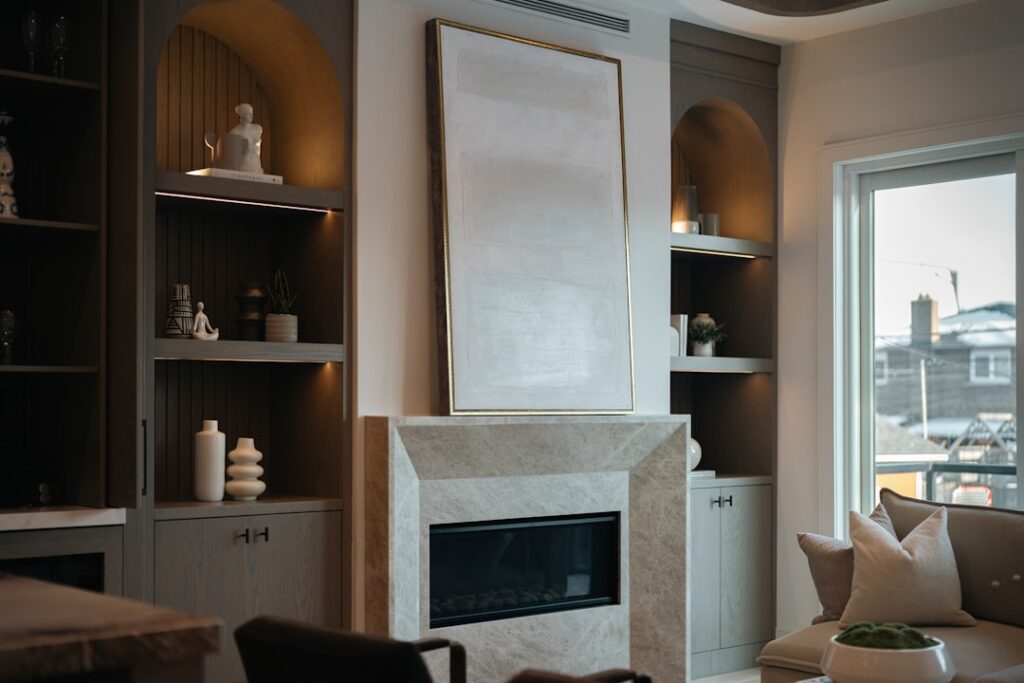
A wall of books changes a room the moment you finish screwing in the last shelf. Well-built diy bookshelves cost roughly one-third of a custom built-in and last decades if you choose solid lumber and sink fasteners into studs. Most homeowners can build a five-shelf unit in a weekend with a circular saw, a drill, and about $180 in materials. The hard part is planning: getting dimensions right, figuring out shelf spans, and finishing so the wood does not look like raw plywood.
- Pick the Right Lumber for the Job
- Plan Shelf Spans and Heights Before You Cut
- Choose a Joinery Method That Matches Your Skill
- Anchor Tall Units to the Wall
- Finish the Wood Before You Fill the Shelves
- Build In Smart Upgrades That Cost Almost Nothing
- Budget Realistic Timelines and Costs
- Frequently Asked Questions
Pick the Right Lumber for the Job
Wood choice drives both cost and appearance. For a painted finish, 3/4-inch birch plywood runs $65 to $85 per 4×8 sheet and takes paint beautifully. For a natural or stained look, red oak plywood at $90 per sheet or solid poplar boards give you paint-grade or stain-grade flexibility. Avoid particleboard melamine shelving from the big-box discount aisle for anything over 30 inches wide — it sags under a modest book load within a year.
If you want the shelves to look like furniture, rip your plywood edges and glue on 3/4-inch wide hardwood strips to hide the plies. A router with a flush-trim bit cleans the joint in seconds. Solid wood shelves in oak, maple, or walnut handle heavier spans but push material costs past $400 for an average bookcase.
Plan Shelf Spans and Heights Before You Cut
Shelf sag is the silent killer of homemade bookcases. A 3/4-inch plywood shelf will sag about 0.2 inches per foot of span when loaded with hardcovers. Keep unsupported spans under 32 inches, or glue a 1×2 apron along the front edge to triple the stiffness. For heavy reference books or vinyl record collections, drop to 24-inch spans.
Standard shelf spacing fits most home libraries: 10 inches for paperbacks, 12 inches for standard hardcovers, 14 to 16 inches for art books and binders. Make the bottom shelf 15 to 18 inches tall so you can fit oversized volumes or a basket of throws. Build in adjustable pin shelves on the middle tiers using a 5 mm shelf-pin jig from Rockler or Kreg for about $40.
Choose a Joinery Method That Matches Your Skill
You do not need dovetails to build solid bookshelves. Three joinery methods cover most DIY builds:
- Pocket screws: Fastest method. A Kreg 320 jig at $40 gets you tight, square joints with 1 1/4-inch coarse screws. Hide the holes on undersides and back edges.
- Dadoes: A router with a 3/4-inch straight bit cuts shallow grooves for shelves to sit in. Glue plus two finish nails per shelf is plenty strong and looks clean.
- Cleats: 1×2 strips screwed to the inside of the cabinet walls. Shelves rest on top. Perfect for closet or utility shelving where aesthetics matter less.
For a first project, stick with pocket screws. You can build a 36-inch wide, 72-inch tall bookcase with 24 pocket holes and have the carcass assembled in under an hour.
Anchor Tall Units to the Wall
Anything over 48 inches tall becomes a tip hazard, especially with kids or pets in the house. Drive two 3-inch cabinet screws through a cleat on the back of the bookshelf into wall studs. An L-bracket hidden behind a top trim piece works too. The code cost is zero, and the peace of mind is real. Freestanding units that bow when loaded almost always flex at the back — adding a 1/4-inch plywood back panel with glue and 1-inch brads stiffens the whole assembly dramatically.
Finish the Wood Before You Fill the Shelves
Sanding and finishing is where amateur builds show their seams. Sand progressively: 120 grit to flatten, 180 grit to smooth, 220 grit before finish. Vacuum and wipe with a tack cloth between grits.
For painted bookcases, prime with a stain-blocking primer like Zinsser BIN at $22 per quart, then apply two coats of Sherwin-Williams Emerald Urethane Trim Enamel in satin. The urethane resists scuffing from book bindings sliding in and out. For stained pieces, use a gel stain for even color on plywood — General Finishes Java Gel at $18 for 8 ounces covers one bookcase and forgives uneven absorption.
Build In Smart Upgrades That Cost Almost Nothing
Small details separate a project that looks homemade from one that looks custom. Consider these easy upgrades:
- Add a 3-inch tall baseboard-matched toe kick so the bookcase reads as built-in.
- Route a simple roundover on the front edges of shelves for a softer look and fewer splinters.
- Install LED strip lighting under the top shelf with a battery-powered puck kit at $25, or hardwire to a dimmer.
- Paint the back panel a contrasting color — navy, forest green, or a warm putty — to make books pop visually.
- Scribe the side panels to uneven walls with a compass and jigsaw for a tight fit.
Budget Realistic Timelines and Costs
A pair of 36-inch by 72-inch painted plywood bookcases takes most weekend builders about 12 hours of shop time spread over two or three days, because paint and poly need to dry between coats. Expect to spend $350 to $500 on materials for a matched pair with drawers at the bottom, and $150 to $250 for a single simple open unit. Compare that to $1,400 to $2,500 for the closest factory-built alternatives at furniture stores, and the math on diy bookshelves becomes hard to argue with.
Frequently Asked Questions
How thick should shelves be? For spans under 32 inches, 3/4-inch plywood is fine. For wider spans or heavy books, use 1-inch stock or add a front apron.
Can I build without a table saw? Yes. Home Depot and Lowe’s will rip plywood sheets into shelf-width strips for free or a small fee, and a circular saw with a straight-edge guide handles cross cuts accurately.
What screws should I use for assembly? Coarse-thread pocket screws in 1 1/4-inch length for plywood-to-plywood joints. Use 2 1/2-inch deck or cabinet screws for anchoring to studs.
Do I need to seal the back panel? If it shows when the unit is empty, yes. Otherwise a single coat of primer stops the plywood from absorbing humidity unevenly.


