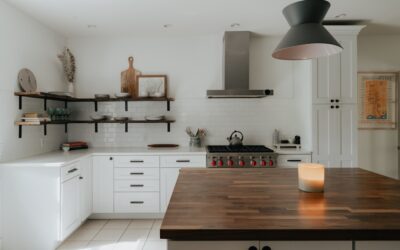
Of every wood top I install, nothing gets the reaction a walnut butcher block countertop does — that deep chocolate-brown surface against white cabinets stops people in the doorway. Black walnut is the luxury pick of American butcher block, and it earns the label in looks and price. But walnut also has quirks buyers rarely hear at the point of sale: it is softer than maple and oak, its heartwood-versus-sapwood color range is wide, and quality between suppliers varies more than any other species I buy. This guide covers what to check before you spend $500 to $2,000-plus on a slab.
Part of our Countertops guide — explore the full guide →
- Why Walnut, Specifically
- The Hardness Caveat, Honestly
- Grades and Construction: Where the Money Goes
- What Walnut Butcher Block Really Costs
- Inspecting a Slab Before You Buy
- Finishing Walnut: Oil Is the Point
- Living With It: Care and Repairs
- Where to Buy: Big Box, Online Mill, or Local Shop
- Walnut vs. the Obvious Alternatives
Why Walnut, Specifically
American black walnut (Juglans nigra) is the only dark-brown domestic hardwood — every other “dark” kitchen wood is stained something else. The heartwood runs from milk-chocolate to purple-tinged espresso, with figure that shifts in the light. It machines beautifully, glues well, and takes oil finishes like it was born for them; the first oil coat on raw walnut is one of the genuinely satisfying moments in this trade. Aging note most buyers do not know: unlike cherry, which darkens over time, walnut slowly lightens toward a warmer honey-brown over years of light exposure. Oil finishes and UV-inhibiting topcoats slow this, but plan on the color mellowing, not deepening.
The Hardness Caveat, Honestly
Walnut’s Janka hardness is 1,010 — noticeably softer than hard maple (1,450), white oak (1,360), and hickory (1,820). In practice that means dents from dropped cans and heavy pots show sooner, and an end-grain walnut chopping surface wears faster than the maple the pros use. Does that disqualify it? No — I have walnut tops in service for a decade that look wonderful, because dents in a full-color wood like walnut read as patina rather than damage, and everything sands out. But if your kitchen is a high-impact zone and you want the surface pristine, maple is the more forgiving tool; buy walnut for its looks with eyes open about the softness.
Grades and Construction: Where the Money Goes
Walnut butcher block pricing swings on three quality variables:
- Heartwood vs. sapwood. Walnut sapwood is creamy white. Premium slabs are all-heartwood, color-matched stave to stave. Value slabs mix in pale sapwood streaks — some buyers love the contrast; most walnut shoppers wanted uniform chocolate and are disappointed. Suppliers may steam lumber to blend sapwood darker; it mutes the contrast but also flattens the heartwood color slightly. Look for “all heartwood” or “sap-free” in the spec.
- Full-stave vs. finger-jointed. Full-length staves run unbroken end to end — the premium, furniture-grade look. Finger-jointed (butcher block with visible zigzag end joints in each strip) uses short offcuts and costs 30–50 percent less; it is structurally fine but visually busy, and in a dark wood the joint lines are conspicuous. For an island showpiece, pay for full-stave.
- Grain construction. Edge grain is the standard for counters — stable and mid-priced. End grain makes a stunning checkerboard chop block at roughly double the price. Face grain (wide planks) shows walnut’s cathedral figure at its best for bars and low-abuse runs.
What Walnut Butcher Block Really Costs
| Product | Typical size | Price range |
|---|---|---|
| Finger-jointed slab, big-box import | 8 ft × 25 in × 1.5 in | $400–$700 |
| Full-stave edge grain, domestic mill | 8 ft × 25 in × 1.5 in | $700–$1,400 |
| Island slab, full-stave | 6 ft × 38 in × 1.75 in | $900–$2,000 |
| End-grain chop-block section | Per sq ft | $120–$250/sq ft |
| Installed, fabricated (cutouts, edges) | Per sq ft | $75–$150/sq ft |
Compare that with maple at roughly 40–60 percent less in every row, and with mid-range quartz at $55–$100 per sq ft installed — walnut sits firmly in premium territory. Money-saving plays that work: use walnut only on the island against cheaper perimeter surfaces; buy the slab prefab and DIY the cuts (walnut works easily with sharp carbide tooling); accept “character grade” with sapwood if the contrast genuinely appeals to you.
Inspecting a Slab Before You Buy
- Check flatness across the width with a straightedge — imported budget slabs sometimes cup in shipping. Anything over 1/16 inch of cup across 25 inches means work for you or a pass.
- Look at the glue lines. Tight, invisible joints signal good milling; visible glue squeeze-out or hairline gaps predict future separation at the dishwasher’s steam zone.
- Confirm moisture content if buying from a mill — 6 to 8 percent is right for interior use. A damp slab will shrink and check after install.
- Read the stave layout. Color-matched, width-consistent staves are the premium tell; random widths and abrupt light/dark neighbors mark a value blank.
- Ask what is on it. Raw, mineral-oiled, or factory-finished with hardwax or conversion varnish — this determines your first weekend of work and your finish options.
Finishing Walnut: Oil Is the Point
Walnut under a penetrating oil finish is the whole reason to buy it — the grain lights up and the surface stays touchable. My finish schedule for a working top: sand to 180 grit, flood with food-grade mineral oil or a tung-oil blend, re-oil daily for a week, weekly for a month, then monthly. An oil-wax board cream every few months adds sheen and water beading. For sink runs and low-maintenance households, a hardwax-oil (Rubio Monocoat, Osmo class of products, $40–$90 a can that does a whole kitchen) splits the difference — natural look, real water protection, spot-repairable. Full polyurethane film gives maximum water armor but turns the block into look-don’t-chop furniture, and on walnut I find thick film finishes cheapen the exact depth you paid for. Whatever you choose, coat the underside and the sink cutout edges as thoroughly as the top — unbalanced finishing is why slabs cup.
Living With It: Care and Repairs
- Wipe spills promptly; standing water is the enemy, especially at the sink where I insist on a fat silicone bead maintained yearly.
- Chop on it only if oiled — and expect knife tracks to join the patina. On film finishes, always board up.
- Dents: steam them with a wet cloth and a clothes iron — walnut fibers swell back impressively — then scuff and re-oil.
- Scratches and gray water marks: 220-grit sand, re-oil, ten minutes, gone. This perpetual renewability is what you are really buying.
- Keep indoor humidity between roughly 30 and 55 percent; walnut moves with the seasons, and cross-grain overhangs need proper slotted fastening to the cabinets so the top can breathe without cracking.
Where to Buy: Big Box, Online Mill, or Local Shop
Three channels, three experiences. Big-box walnut blocks are finger-jointed imports — the cheapest entry and fine for a coffee bar, but inspect for warp before it leaves the store. Online direct mills ship full-stave domestic slabs in custom lengths, usually the best value on quality stock; confirm crating standards and photograph everything at delivery, because a forklift hole in a $1,200 slab is a claim you want documented within the hour. Local hardwood shops and countertop fabricators cost the most and earn it on jobs with sink cutouts, mitered corners, or long seamed runs — and they will stand behind the glue joints. My rough guidance: under $500 budget, big box; straightforward island slab, online mill; complex kitchen, local shop.
Walnut vs. the Obvious Alternatives
Versus maple: maple is harder, cheaper, and brighter; walnut is darker, richer, softer, and pricier. Versus stained oak or “walnut-stained” anything: stain sits in the surface and wears through at edges and sanding — real walnut is the color all the way down, which is exactly what makes refinishing invisible. Versus dark quartz: quartz wins on zero maintenance; walnut wins on warmth, repairability, and how it ages. There is no wrong answer, but there is a wrong reason — do not buy walnut to babysit it into showroom condition forever. Buy it because a wood that shows its history suits you.
Final buying advice from the field: spend on full-stave, all-heartwood stock from a supplier who publishes moisture content; put your budget savings into a hardwax-oil finish and a good silicone job at the sink; and let the first dent hurt a little and the tenth one disappear into character. A walnut top treated that way is the one surface in the kitchen that gets more beautiful every year you own it.