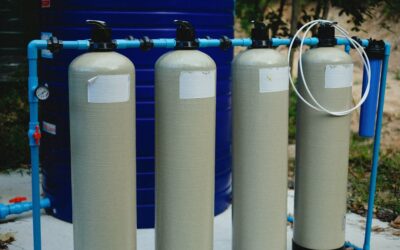
PFAS, the so-called “forever chemicals,” have turned up in the drinking water of tens of millions of Americans, and a pitcher filter from the grocery store may remove only a fraction of them. Choosing the right water filtration system for PFAS starts with knowing which technologies are proven, which certifications to look for, and how much water you actually need treated. The good news is that effective home options exist at almost every budget. The bad news is that plenty of products on the market make vague claims that do not hold up.
- What a Water Filtration System for PFAS Needs to Do
- Step One: Test Your Water
- Filtration Technologies Compared
- Certifications That Matter
- Point-of-Use vs. Whole-House Systems
- Installation Considerations
- Maintenance and Filter Change Schedules
- Reducing PFAS Exposure Beyond Water
- Choosing the Right System for Your Home
What a Water Filtration System for PFAS Needs to Do
PFAS (per- and polyfluoroalkyl substances) are a family of thousands of synthetic compounds used in nonstick cookware, stain-resistant carpet, firefighting foam, and water-repellent fabrics. Their carbon-fluorine bonds are extremely stable, so they do not break down in the environment or the body. The two most studied are PFOA and PFOS, but shorter-chain versions such as GenX (HFPO-DA), PFBS, and PFHxS are increasingly common.
In 2024 the EPA finalized enforceable drinking water limits of 4 parts per trillion for PFOA and PFOS individually, plus limits for several other PFAS. Public water systems have until the end of the decade to comply, and private well owners are not covered by those rules at all. That gap is why many homeowners are adding point-of-use or whole-house treatment now.
A system aimed at PFAS has to capture both long-chain and short-chain molecules. Short-chain PFAS are smaller and less “sticky,” so they slip through some carbon filters that handle PFOA and PFOS well. That is the key detail to check before you buy.
Step One: Test Your Water
If you are on municipal water, start with your utility’s Consumer Confidence Report, published every year by July 1. Many utilities now list PFAS sampling results. You can also check the EPA’s Unregulated Contaminant Monitoring Rule (UCMR 5) data, which covers most systems serving more than 3,300 people.
Private well owners should order a lab test. A certified lab running EPA Method 533 or 537.1 will report 18 to 40 individual PFAS compounds at parts-per-trillion levels. Expect to pay $250 to $600. Cheap home test strips cannot detect PFAS at meaningful levels, so skip them for this purpose.
Knowing which compounds are present and at what concentration lets you size the system correctly. Water with 8 ppt of PFOA needs different treatment than water with 150 ppt of mixed short-chain PFAS near an airport or military base.
Filtration Technologies Compared
Reverse Osmosis
Reverse osmosis (RO) forces water through a semi-permeable membrane with pores around 0.0001 micron. Independent studies, including research from Duke University and NC State, have found under-sink RO systems remove 90 to 99 percent of PFAS, including short-chain types. Most units combine RO with carbon pre- and post-filters. RO is the most reliable point-of-use option for PFAS.
Trade-offs: traditional RO wastes 2 to 4 gallons for every gallon produced, though newer high-efficiency and tankless units bring that ratio closer to 1:1 or 2:1. RO also strips minerals, which some people prefer to add back with a remineralization cartridge.
Granular Activated Carbon (GAC)
GAC filters use loose carbon granules. They remove PFOA and PFOS well when the contact time is long enough, which is why utilities use large GAC vessels. At home, GAC works best in whole-house tanks sized for adequate contact. Short-chain PFAS break through GAC sooner, so change media on schedule.
Carbon Block
Compressed carbon block filters, used in many under-sink and countertop systems, offer more surface area and tighter pores than loose GAC. The best models are certified to reduce PFOA and PFOS, but performance on short-chain PFAS varies widely between brands.
Ion Exchange Resin
PFAS-selective anion exchange resin grabs PFAS molecules chemically. It handles short-chain compounds better than carbon and is often paired with GAC in whole-house systems for high contamination levels. Resin must be replaced, not regenerated, when used for PFAS.
Certifications That Matter
Do not rely on marketing phrases like “reduces forever chemicals.” Look for third-party certification from NSF, IAPMO, or WQA to these standards:
- NSF/ANSI 53: Covers health-related contaminants, including PFOA and PFOS reduction to below 70 ppt combined in the older claim. Newer listings show reduction to the EPA’s lower levels.
- NSF/ANSI 58: The standard for reverse osmosis systems, which can include a PFOA/PFOS reduction claim.
- NSF/ANSI P473: The original protocol for PFOA and PFOS, now folded into Standard 53 and 58 claims.
- Total PFAS claims: Newer certifications cover a broader list of PFAS compounds. Look for the specific compounds your test found.
Check the certification listing on the certifier’s website, not just the product box. Certified rated capacity, such as 500 or 1,000 gallons, tells you when to change the cartridge.
Point-of-Use vs. Whole-House Systems
Most PFAS exposure from water comes from drinking and cooking. Skin absorption during showers is minimal compared to ingestion, according to current research. That makes point-of-use treatment at the kitchen sink the most cost-effective first step for most homes.
| System Type | Upfront Cost | Annual Upkeep |
|---|---|---|
| Certified pitcher or countertop | $40 to $200 | $100 to $250 |
| Under-sink carbon block | $150 to $500 | $80 to $200 |
| Under-sink reverse osmosis | $250 to $1,200 | $100 to $300 |
| Whole-house GAC or GAC plus resin | $2,000 to $6,000 installed | $300 to $1,000 |
Whole-house systems make sense when levels are high (often above 20 to 50 ppt), when you have a private well near a known contamination source, or when you want every tap covered for young children who drink from bathroom faucets. They require a spot near the main water line, typically in the basement, garage, or utility room, with floor space for one or two tanks about 10 by 54 inches each.
Installation Considerations
An under-sink RO system installs in two to three hours for a handy homeowner. You will tap the cold water line with a saddle or compression valve, drill a 1/2-inch hole in the sink deck or countertop for the dedicated faucet, and connect a drain line to the sink drain above the P-trap. Quartz and granite countertops need a diamond core bit; if that makes you nervous, a plumber or countertop fabricator can drill it for $75 to $150.
Leave room for the storage tank (about 11 inches in diameter) or pick a tankless model that fits in narrower cabinets. Place a leak-detection sensor on the cabinet floor; a slow drip from a fitting can quietly damage the subfloor and cabinet base.
Whole-house systems usually need a licensed plumber, a bypass valve so you can service the tanks without shutting off water, and sometimes a sediment prefilter to protect the carbon. Expect $500 to $1,500 in labor on top of the equipment. If your home has a water softener, the PFAS system usually goes after the softener so hardness does not foul the media.
Maintenance and Filter Change Schedules
A PFAS filter that has reached capacity stops working, and some studies suggest overloaded carbon can even release captured PFAS back into water. Follow the replacement schedule strictly.
- Carbon pre-filters on RO: every 6 to 12 months
- RO membrane: every 2 to 3 years
- Carbon block under-sink cartridges: at the rated gallon capacity or every 6 months
- Pitcher filters: every 40 to 100 gallons, often about every 1 to 2 months
- Whole-house GAC media: every 1 to 3 years based on usage and lab retesting
Retest your treated water about six months after installation, especially with a whole-house system. The test confirms the system is working and helps set a realistic media replacement interval for your specific water.
Reducing PFAS Exposure Beyond Water
Filtration handles water, but PFAS also come into homes from other products. When remodeling, consider how your material choices add up. Some stain-resistant carpet treatments and older waterproofing sprays have historically relied on PFAS chemistry, and many manufacturers now advertise PFAS-free alternatives. Hard surfaces such as tile, sealed concrete, and many hardwood finishes are easier to keep dust-free, which matters because PFAS can accumulate in household dust.
Replace scratched nonstick pans with stainless steel or cast iron, skip aftermarket stain-guard sprays on upholstery and rugs, and vacuum with a HEPA-filter machine. Combined with a certified filtration system, those habits meaningfully lower daily exposure.
Choosing the Right System for Your Home
For most city-water households with PFAS near or slightly above the EPA limits, an NSF 58-certified under-sink reverse osmosis unit is the best balance of cost and performance. If your test shows only PFOA and PFOS at low levels, a certified carbon block unit may be enough. Well owners near airports, military bases, landfills, or industrial sites with high readings should talk to a certified water treatment specialist about a whole-house GAC and resin system, then verify results with follow-up lab tests.
Whatever you choose, match the certification to the compounds in your water, change filters on time, and retest periodically. That combination is what actually keeps forever chemicals out of your glass.