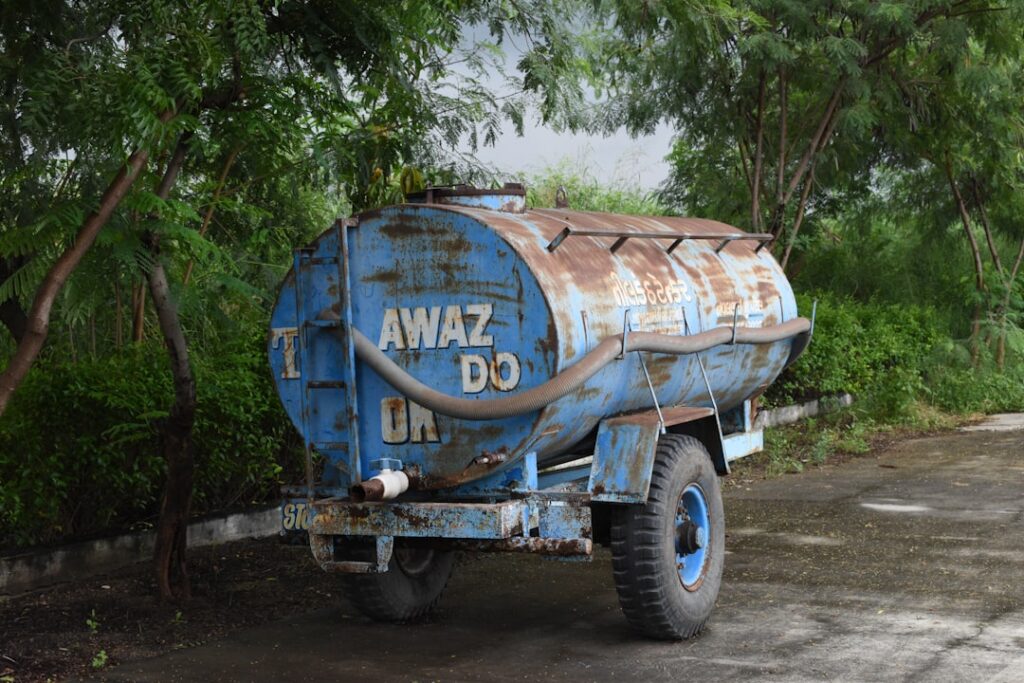
Running a pressure washer far from a spigot means you need a reliable water tank for pressure washer use, and getting the setup right prevents pump damage and dead-in-the-water frustration. Whether you’re washing at a job site, an off-grid cabin, or a driveway with no nearby faucet, sizing the water tank for pressure washer supply to your machine’s flow rate is the difference between smooth work and a starved, overheating pump.
- Why Water Supply Is the Real Bottleneck
- Sizing the Tank to Your GPM
- Gravity Feed vs. Pump Feed
- Can Electric Washers Draw From a Tank?
- Fittings, Hoses, and Filters
- Water Source and Cleanliness
- Building a Simple Tank Setup
- Choosing the Right Tank Material and Shape
- A Buffer Tank Setup for Weak Water Supply
- Priming and Starting the Pump
- Common Mistakes to Avoid
- Safety and Practical Tips
- The Bottom Line
Why Water Supply Is the Real Bottleneck
Every pressure washer needs a steady, adequate volume of water fed to its inlet. Run it dry, even briefly, and the pump cavitates, overheats, and can fail. A tank solves the no-spigot problem, but only if it delivers enough gallons per minute (GPM) to match what the washer draws.
The washer’s GPM rating tells you exactly how much water it consumes. A typical electric unit uses 1.2 to 1.5 GPM; a gas unit uses 2 to 4 GPM. Your tank and its plumbing must keep up with that demand continuously, not just for the first few seconds.
Sizing the Tank to Your GPM
Do the math before you buy. Multiply the washer’s GPM by how many minutes you plan to run before refilling. A 2.5 GPM gas washer running 20 minutes needs 50 gallons. Add a margin so the tank never runs dry mid-job.
- 25 to 35 gallon tanks: good for a small electric washer and quick jobs.
- 55 gallon drums: the popular all-around choice for gas washers and moderate work.
- 65 to 100+ gallon tanks: for long sessions, mobile detailing rigs, and high-GPM machines.
Remember water weighs about 8.3 pounds per gallon. A full 55-gallon tank weighs over 450 pounds, so plan how you’ll transport and position it before it’s full.
Gravity Feed vs. Pump Feed
How the water gets from tank to washer is the most important decision, and it hinges on whether your washer can draw water itself.
Gravity feed relies on the tank sitting higher than the washer inlet so water flows down by gravity. This works for many gas pressure washers that can self-prime and pull water, but it delivers low pressure at the inlet, so the tank outlet must be large (3/4 inch minimum) and the hose short and wide to avoid starving the pump.
Pump feed uses a separate transfer or booster pump to push water from the tank into the washer’s inlet under mild pressure. This guarantees steady supply and is often required for electric washers, which usually cannot draw water and need it fed to them under pressure. A 12V or 120V transfer pump delivering a few GPM handles this reliably.
Can Electric Washers Draw From a Tank?
This trips up a lot of buyers. Most consumer electric pressure washers are not designed to siphon water; they expect pressurized supply from a garden hose spigot. Feeding one from a tank usually requires a booster pump to pressurize the inlet. Many gas washers, by contrast, have pumps that can self-prime and draw water uphill a few feet, making gravity or a short suction line workable. Always check your manual for the minimum inlet pressure and whether siphoning is permitted.
Fittings, Hoses, and Filters
The plumbing between tank and washer is where setups fail. Use the largest practical diameter to keep flow high and restriction low.
- Fit a 3/4-inch bulkhead outlet on the tank, not a narrow 1/2-inch port that chokes flow.
- Use a short, large-bore suction hose; long, thin hoses starve the pump.
- Install an inline strainer or filter to keep debris out of the pump, especially with rain or pond water.
- Make sure all suction-side connections are airtight; even a small leak lets the pump suck air and lose prime.
Water Source and Cleanliness
Pumps hate grit. If you fill from a garden hose, the water is clean. If you draw from a rain barrel, tank, or natural source, add a filter and let sediment settle. Debris scores the pump seals and shortens its life fast. For soft-wash chemical work, dedicated tanks keep detergents separate from your clean-water supply.
Building a Simple Tank Setup
A common, dependable rig looks like this: a 55-gallon poly tank on a stand or truck bed, a 3/4-inch bulkhead fitting at the bottom, a short reinforced suction hose to the washer inlet, and an inline filter in between. For electric washers or long runs, add a 12V transfer pump between tank and washer. Position the tank higher than the pump if you’re relying on gravity, and prime the line before starting so no air is trapped.
Choosing the Right Tank Material and Shape
Tank material matters for durability and portability. Poly (polyethylene) tanks are the most common: light, rustproof, UV-stabilized for outdoor use, and available in every size from 25 to 500 gallons. Food-grade poly is worth choosing if you’ll ever use the water for anything sensitive. Steel drums are cheap and rugged but can rust internally, contaminating the water with particles that harm the pump. For mobile detailing and window-cleaning rigs, low-profile “leg tanks” and slimline tanks fit truck beds and trailers better than a tall drum, which also lowers the center of gravity for safer transport.
A baffled tank, one with internal walls, reduces sloshing when you drive with water aboard, which improves handling and reduces the chance of a top-heavy tip. If you’ll transport the tank full, that stability feature is worth seeking out.
A Buffer Tank Setup for Weak Water Supply
A tank isn’t only for off-grid work. If your home’s spigot can’t keep up with a high-GPM gas washer, running the machine directly starves it. The fix is a buffer tank: a barrel that the garden hose fills continuously through a float valve (like a toilet tank fill valve), while the pressure washer draws from the bottom. The tank acts as a reservoir, smoothing out the mismatch between a slow supply and a thirsty pump. This is a common trick for running a 4 GPM washer off a spigot that only delivers 3 GPM, and it protects the pump from ever running dry.
Priming and Starting the Pump
With a tank feed, always prime the system before you fire up the washer. Open the tank valve, squeeze the trigger, and let water flow through the pump and out the wand to purge trapped air, which can take 30 seconds or more with a gravity feed. Starting a pump with air in the line causes it to cavitate and can damage the seals. Once you have a steady stream from the wand with no sputtering, the pump is primed and you’re ready to work. If flow ever stops or the pump starts surging, shut it down immediately and check the tank level and suction line before continuing.
Common Mistakes to Avoid
- Tank too small: running dry mid-job overheats the pump. Size for your GPM.
- Narrow outlet or hose: restricts flow and starves the pump even with a full tank.
- No filter: sediment destroys pump seals.
- Assuming an electric washer will siphon: most need a booster pump.
- Air leaks on the suction side: the pump loses prime and cavitates.
Safety and Practical Tips
Secure the tank so it can’t shift or tip, especially a heavy full drum on a trailer or truck. Never let the pump run dry while you troubleshoot; shut it off if flow stops. For gas washers, follow standard fuel-handling safety and never run the engine in an enclosed space. Keep electrical transfer pumps and connections dry and away from standing water.
The Bottom Line
A water tank for pressure washer use is a straightforward solution to working away from a spigot, but success comes down to two things: sizing the tank to your machine’s GPM so it never starves, and choosing the right feed method. Gas washers often work with gravity feed and a big outlet; electric washers usually need a booster pump. Use wide fittings, add a filter, keep connections airtight, and your pump will get the steady water it needs to run cool and last for years.