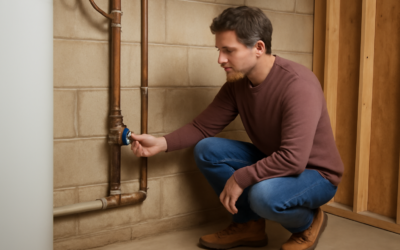
When a pipe bursts, you have minutes, not hours, to stop the flood, and fumbling to find the shutoff is the worst time to learn what it looks like. So what does a main water valve look like? In most homes it is one of two shapes: a round spoked wheel like a garden faucet handle, or a straight lever you rotate a quarter turn. Both sit on the main supply line where water enters your house, and knowing which one you have, and where it hides, is basic homeowner insurance.
This guide shows you the two valve types, the common locations, how to shut the water off correctly, and the difference between your indoor valve and the utility’s curb stop at the street. Spend ten minutes today finding yours and you will never regret it.
The Two Common Valve Types
Nearly every residential main shutoff is either a gate valve or a ball valve. Telling them apart is easy once you know the shapes.
Gate Valve
A gate valve has a round, wheel-shaped handle, often 2 to 4 inches across, that looks like the spigot handle on an outdoor faucet. You turn it clockwise several full rotations to close it, which lowers an internal metal gate to block the water. Gate valves are common in older homes. They work, but they can seize up if they have not been turned in years, and the internal stem can corrode. If yours is a gate valve you have never touched, it is worth exercising it gently once a year.
Ball Valve
A ball valve has a straight lever handle, usually a few inches long, that you rotate just a quarter turn, 90 degrees, to shut off. When the lever runs parallel to the pipe, the valve is open; when it sits perpendicular, crossing the pipe, it is closed. Ball valves are the modern standard because they are fast, reliable, and easy to read at a glance. Most homes built or re-plumbed in recent decades have one.
Where to Find the Main Shutoff
Location depends heavily on your climate and foundation type. Walk your home with this list:
- Basement: On an interior wall facing the street, within a few feet of where the main line enters through the foundation, often near the water meter.
- Crawl space or slab home: Frequently near the water heater, or in a utility closet, garage, or laundry area.
- Warm climates: Often outdoors on an exterior wall near a hose bib, or in a covered box near the foundation.
- Near the water meter: There is usually a valve on the house side of the meter, which is the one you want.
Follow the largest supply pipe from the meter into the house, and the first valve you reach is almost always your main. It is typically on a 3/4-inch or 1-inch line, larger than the branch pipes feeding individual fixtures.
Indoor Valve vs the Street Curb Stop
Your home actually has two main shutoffs. The one inside or on the house is yours to use freely. Out near the street or sidewalk, there is a second valve called the curb stop, housed in a metal or plastic box with a lid marked “water” set into the ground. That curb stop belongs to the utility and requires a special long tool called a curb key to operate. Use your indoor valve for everyday emergencies; leave the curb stop to the water company unless your indoor valve fails.
How to Shut Off Your Water Correctly
The technique differs slightly by valve type, so match it to what you have:
- Ball valve: Rotate the lever a quarter turn until it sits crosswise to the pipe. It should stop firmly. That is fully closed.
- Gate valve: Turn the wheel clockwise, “righty tighty,” until it stops. This may take several full turns. Do not force it hard past the stopping point, which can snap a corroded stem.
- Confirm it worked: Open a faucet on the lowest floor. The stream should drop to a trickle and stop within a few seconds.
To restore water, reverse the motion slowly. Open a faucet upstairs first so air can escape, then open the main gradually to avoid a pressure surge that can hammer the pipes.
When the Valve Is Stuck or Leaking
Old gate valves are notorious for seizing. If the wheel will not budge, do not crank on it with a pipe wrench and full body weight; you can shear the stem and turn a small problem into a flood. Instead, apply gentle back-and-forth pressure, or shut the water at the curb stop and call a plumber to replace the valve. A common upgrade is to swap a failing gate valve for a modern quarter-turn ball valve so future shutoffs are quick and dependable. Budget roughly $150 to $350 for a plumber to replace a main shutoff, depending on access and pipe material.
If your main valve weeps a little water from the stem when closed, it may just need the packing nut snugged a fraction of a turn. Persistent leaking or a valve that no longer stops the flow is a clear sign it needs replacement.
Individual Fixture Shutoffs
Do not forget the smaller shutoffs at each fixture. Toilets, sinks, and washing machines usually have their own little oval or football-shaped stop valves on the supply lines. For a leak isolated to one fixture, closing its local valve lets the rest of the house keep running water while you make repairs. Reserve the main shutoff for whole-house emergencies or when a leak is between the main and a fixture.
It pays to walk everyone in the household to the main valve at least once, so a teenager home alone during a burst pipe knows exactly what to do. Tape a small laminated tag to the pipe noting which direction closes it, and keep the area clear of stored boxes so you are not digging through clutter in an emergency. If your valve is a stubborn old gate type, consider tagging it as one to replace, because the moment you need it most is the worst time to discover it will not turn.
Frequently Asked Questions
Which way do I turn the main water valve to shut it off?
For a round gate valve, turn the wheel clockwise, the “righty tighty” direction, several full turns until it stops. For a lever-style ball valve, rotate it a quarter turn so the handle sits perpendicular to the pipe. Verify by opening a faucet and watching the flow stop.
Where is the main water shutoff in most houses?
In cold climates it is usually in the basement on the wall facing the street, near the water meter. In warmer regions it is often outside on an exterior wall, near a hose bib, or in the garage. Follow the main supply pipe from the meter and the first large valve you find is typically it.
What is the difference between the indoor valve and the box in my yard?
The indoor valve is your household shutoff, meant for everyday use. The box in the yard holds the curb stop, which belongs to the utility and needs a special curb key to operate. Use your indoor valve for emergencies and leave the curb stop to the water company.
Why won’t my old main valve turn?
Gate valves can corrode and seize when they sit unused for years. Do not force it with a wrench, which can break the stem. Apply gentle pressure, and if it still will not move, have a plumber replace it, ideally with a modern quarter-turn ball valve that is easier to operate.
Should I shut the main off when I go on vacation?
It is smart to close the main before an extended trip, especially in freezing weather, so a failed hose or supply line cannot flood the house while you are away. Turn off the water heater or set it to vacation mode too, so it does not run dry.