Knowing how to find main water valve locations in your home is one of those quiet skills that means nothing until the day a pipe bursts, and then it means everything. When water is spraying across your basement or flooding under a sink, the difference between a minor cleanup and thousands in damage is often just how quickly you can shut off the supply. Every adult in the household should know where this valve is and how to operate it before an emergency strikes.
In this guide I’ll show you the most common places to find your main shutoff, how to locate the street-side valve at the meter, how to actually turn the water off, and how to keep the valve in working order so it doesn’t fail you when you need it most.
Why the Main Water Valve Matters
The main water valve controls the entire flow of water into your home. Individual fixtures like toilets and sinks usually have their own local shutoffs, but for a major leak, a burst pipe, a water heater failure, or any repair that affects the whole system, the main valve is what stops the water. Shutting it fast can be the single most valuable thing you do to limit water damage.
Water damage is insidious because it spreads and soaks into framing, drywall, and flooring within minutes. A burst supply line can release many gallons per minute. Finding the valve calmly today, and even labeling it, means you won’t be frantically searching while your floor floods. Think of it as basic home-safety literacy, right alongside knowing where your electrical panel is.
Common Indoor Locations
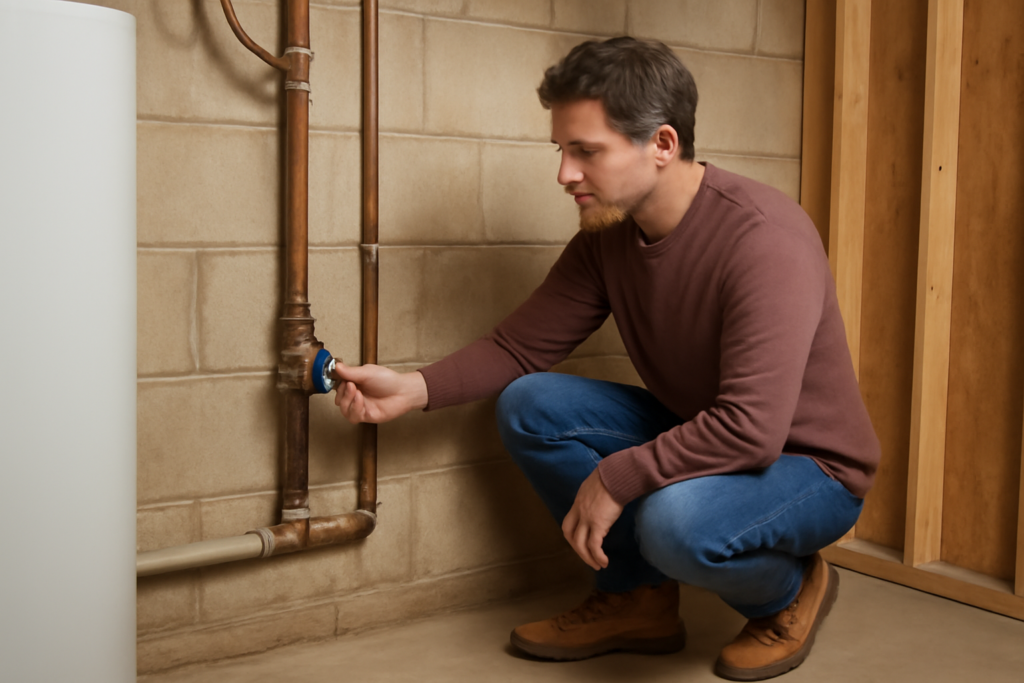
Inside the home, the main shutoff is almost always located on the interior side of the wall where the water line enters from the street, typically at ground level or in a lower area. In homes with basements, look along the wall that faces the street, often near the front of the house, where you’ll find the valve on the pipe coming through the foundation.
In houses built on a slab or with a crawl space, check the garage, a utility closet, or a mechanical room, frequently near the water heater or furnace. In warmer climates, the valve is sometimes in an exterior utility area or near an outdoor faucet on the street-facing side. Trace the largest incoming water pipe and you’ll usually find the valve within a few feet of where it enters the structure.
Finding the Valve at the Street Meter
Every home also has a shutoff at the water meter, which sits on the utility’s side of your service and controls water before it even reaches your house. This is your backup if the indoor valve fails or can’t be found. The meter is usually housed in a ground-level box near the street or sidewalk, covered by a metal or plastic lid, often marked with the word “water.”
Lift the lid, and inside you’ll see the meter and typically two valves. The valve on the house side of the meter is the one you can use to shut off water to your home. Some of these are standard handles you can turn by hand, while others require a special water meter key or a wrench because of their shape. It’s worth buying an inexpensive meter key and keeping it handy so you’re not caught without the right tool.
Types of Main Shutoff Valves
You’ll encounter two main valve styles, and knowing which you have helps you operate it correctly. The ball valve is the modern standard: it has a straight lever handle, and it’s off when the handle is perpendicular to the pipe and on when parallel. A quarter turn is all it takes, which makes ball valves fast and reliable in an emergency.
Older homes often have a gate valve, which uses a round wheel-style handle you turn clockwise multiple times to close. Gate valves are more prone to seizing or failing over time because their internal parts corrode, especially if they’re never operated. If you have a gate valve that’s stiff or leaks when turned, consider having a plumber replace it with a ball valve, which is far more dependable.
How to Shut Off the Water Correctly
Once you’ve located the valve, shutting off is straightforward. For a ball valve, rotate the lever a quarter turn so it sits crosswise to the pipe. For a gate valve, turn the wheel clockwise until it stops, but don’t force it brutally, as over-tightening an old gate valve can break the stem. After closing the valve, open a low faucet in the house to relieve pressure and confirm the water is truly off.
When you shut water off for a repair rather than an emergency, do it gently and turn it back on slowly afterward to avoid a pressure surge that can stress pipes and fittings. If you turned off the water at the meter, turn it back on slowly as well and check for leaks. Never force a valve that won’t budge; that’s a sign it needs professional attention.
Individual Fixture Shutoffs Versus the Main
It helps to understand that the main valve isn’t your only shutoff. Most individual fixtures, toilets, sinks, and often the water heater and washing machine, have their own local shutoff valves right at the supply line. For a leak isolated to one fixture, using that local shutoff lets you stop the water there while the rest of the house keeps running, which is far more convenient than shutting down the whole home.
Reserve the main valve for major events: a burst pipe inside a wall, a supply line failure, a leak you can’t locate, or any whole-house repair. Knowing both levels of shutoff means you can respond proportionally, cutting one fixture for a running toilet, or killing the main for a flooding basement. Take a few minutes to locate the local shutoffs under your sinks and behind your toilets too, since a stuck fixture valve is another reason you might need the main.
What to Do After You Shut the Water Off
Shutting the valve is only the first step in a leak emergency. Once the water is off, open the lowest faucet in the house, and one on an upper floor if you have one, to drain the remaining water from the pipes and relieve pressure. This reduces the amount of water that keeps flowing from the break and helps you assess the damage more safely.
Next, if the leak is anywhere near electrical outlets, wiring, or your electrical panel, be extremely cautious, and if there’s any doubt about safety, shut off power to the affected area at the breaker before wading in. Mop up standing water promptly to limit damage to flooring and drywall, and call a plumber for the repair. Turning the water back on slowly afterward, then checking the repaired area for drips, confirms the fix held before you walk away.
Keep the Valve Working and Label It
A valve that’s never touched can seize up over years, so exercise your main shutoff once or twice a year by turning it fully off and back on. This keeps the mechanism free and confirms it still holds. If the valve is hard to turn, drips when operated, or won’t fully stop the flow, have a plumber service or replace it before you actually need it.
Once you’ve located everything, take two minutes to help your future self: tie a bright tag or write directly on the valve, and make sure everyone in the household, including older kids and guests who stay often, knows the location. Snap a photo on your phone too. Learning how to find main water valve locations and keeping them in good shape is cheap insurance against one of the most common and costly home disasters there is.