Every breaker panel in your house connects to the earth through a copper rod driven eight feet into the soil. That single connection is the foundation of what is electrical grounding — it gives stray electricity a safe path away from people, appliances, and combustible building materials. Without grounding, a faulted dishwasher could electrify your sink, a lightning strike could fry every device in the house, and basic protections like GFCIs would simply not work. This guide walks through the physics in plain language and the code rules every homeowner should understand.
Grounding vs Bonding vs Neutral: Three Different Concepts
People mix up these three terms constantly. The neutral wire (white) carries current back to the panel under normal operating conditions. The grounding wire (bare copper or green) carries current only during a fault and routes it to earth. Bonding ties metal objects together so they share the same electrical potential — pipes, appliance frames, ductwork.
All three meet at the main service panel via the neutral-to-ground bonding screw. Past that point — at any subpanel or junction — neutrals and grounds must remain separated. Mixing them downstream creates parallel current paths and is one of the most common code violations electricians find in older homes.
The Grounding Electrode System
Your home’s grounding electrode is typically one or more copper-clad rods driven 8 feet into the ground outside the panel. NEC requires either two rods spaced 6 feet apart or a single rod with a verified earth resistance under 25 ohms. The grounding electrode conductor (GEC) — usually 4 AWG or 6 AWG bare copper — connects the rod to the main panel’s grounding bus.
Alternatives to rods include a metal underground water pipe (the original electrode of choice), a concrete-encased “Ufer” ground in the foundation, or a buried 20-foot length of bare copper wire. Most modern installations use a combination of two of these for redundancy.
How Grounding Protects You
Imagine a microwave with a frayed hot wire that touches the metal case. Without grounding, the case becomes electrically live at 120 volts. Touch the case while standing on a damp floor and you become the path to ground — potentially fatal.
With proper grounding, the same fault sends current through the appliance’s ground prong, back to the panel’s ground bus, and out to earth. The huge current surge trips the circuit breaker within 1/60th of a second, killing power before anyone can be hurt. That fraction of a second of breaker response is the entire point of the grounding system.
GFCIs and AFCIs: Modern Layers on Top of Grounding
Ground-fault circuit interrupters (GFCIs) and arc-fault circuit interrupters (AFCIs) supplement grounding but do not replace it. A GFCI compares current on the hot and neutral and trips within 25 milliseconds if it detects more than a 5-milliamp imbalance — meaning current is escaping somewhere it should not.
GFCIs are required in bathrooms, kitchens, garages, basements, outdoor outlets, and within 6 feet of any sink. AFCIs detect dangerous arc patterns from damaged wiring and are required on most bedroom, living, and dining room circuits in new construction. Both technologies cost $20 to $45 per receptacle or breaker — cheap insurance for outsized protection.
Two-Prong Outlets in Older Homes
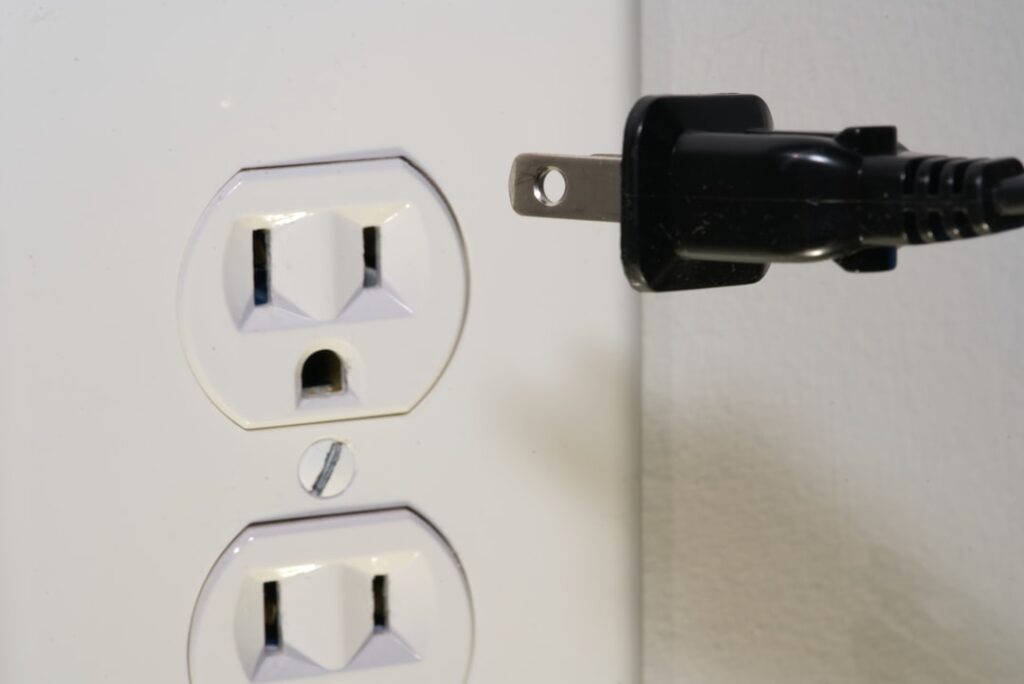
Homes built before 1962 often have ungrounded two-prong outlets throughout. Modern appliances with three-prong plugs were never meant to land on these circuits. Three-prong adapters do not magically create a ground — the appliance is still ungrounded.
The fix has three options under NEC 406.4:
- Run new grounded wiring (best, most expensive — $200 to $500 per circuit)
- Replace with GFCI outlets and label them “No Equipment Ground”
- Add a GFCI breaker at the panel covering the whole circuit
Option two or three takes 30 minutes and $25 in parts. It protects people but does not protect surge-sensitive equipment — computers, TVs, and audio gear still need true grounded outlets for proper surge suppression.
Surge Protection Depends on Grounding
Whole-house surge protective devices (SPDs) like the Square D HEPD80 or Eaton CHSPT2ULTRA divert surge energy to ground when they sense voltage spikes. Without a low-resistance path to earth, the SPD cannot do its job. A surge that should dissipate harmlessly into the soil instead pushes through every connected device.
Plug-in surge protectors do the same thing on a smaller scale. The “protected” indicator light on a power strip stays lit only as long as the grounding path works. Outdated strips, ungrounded outlets, or corroded ground connections turn surge strips into expensive plain extension cords.
Testing Your Home’s Grounding
A $15 outlet tester from Klein Tools or Sperry Instruments plugs into any three-prong outlet and lights up combinations of indicators to show grounding status. Three lights with the correct pattern means properly grounded. Two lights or wrong patterns indicate open ground, reversed polarity, or hot-on-neutral wiring — all common in homes that have been remodeled by amateurs.
For a complete grounding system test, a licensed electrician runs an earth resistance test with a 3-point fall-of-potential meter. The reading should be 25 ohms or less to satisfy code. High resistance often means corroded ground clamps at the rod or a broken GEC connection inside the panel.
Common Grounding Mistakes
The mistakes that cause inspection failures and real safety problems include using neutral as ground beyond the main panel, leaving a sub-panel’s neutral and ground bonded together, replacing two-prong outlets with three-prong outlets and leaving them ungrounded, and skipping bonding jumpers on water heaters and gas piping.
Any work on the grounding system requires either a permit or a licensed electrician in nearly every jurisdiction. The good news is that grounding upgrades pay back in safety and equipment protection for the life of the home. A $300 service call to add a missing ground rod or repair bonding is the best electrical money most homeowners ever spend.