Electrical grounding is the quiet safety system standing between you and a lethal shock every time you touch an appliance. Ground electric systems give stray or fault current a safe, low-resistance path to the earth instead of through your body, and they help trip breakers fast when something goes wrong. Understanding the basics helps you spot hazards and ask the right questions, but this is one area of the home where the actual work belongs to a licensed electrician. Never treat grounding as a casual DIY project.
What Grounding Actually Does
Electricity always seeks a path back to its source and toward the earth. In a properly grounded system, that path is a dedicated grounding conductor, not you and not the metal case of your toaster. If a hot wire inside an appliance comes loose and touches the metal housing, the grounding system carries that fault current safely away and causes the circuit breaker or fuse to trip almost instantly, cutting power before the housing can shock you.
Without grounding, that same loose wire could energize the appliance’s metal body and sit there, waiting. Touch it while standing on a damp floor and you become the path to ground. Grounding turns a potentially fatal fault into a tripped breaker.
The Key Components
Ground Wires
The equipment grounding conductor is the bare copper or green-insulated wire running alongside the hot and neutral wires in your cables and circuits. It connects metal outlet boxes, appliance frames, and the third (round) prong on a three-prong plug back to the main electrical panel’s grounding bus. This is why you should never break off or bypass a ground prong.
Grounding Electrode and Ground Rods
At the service panel, the grounding system connects to the earth itself through a grounding electrode, most commonly one or more ground rods. These are typically copper-clad steel rods 8 feet long, driven into the soil outside the home, bonded to the panel with a heavy grounding electrode conductor. Some systems also use the metal water pipe or a concrete-encased electrode (a “Ufer” ground) in the foundation. This earth connection stabilizes voltage and gives surges, such as nearby lightning, a path to dissipate.
Bonding
Bonding ties all the metal parts of the electrical system together so they share the same electrical potential. Proper bonding ensures that fault current reliably reaches the panel and trips the breaker rather than energizing isolated metal parts.
GFCIs: Ground-Fault Protection
A Ground-Fault Circuit Interrupter, or GFCI, is a different but related layer of protection. A GFCI constantly compares the current flowing out on the hot wire with the current returning on the neutral. If it detects even a tiny imbalance, as little as 4 to 6 milliamps, meaning some current is leaking to ground (potentially through a person), it cuts power in a fraction of a second.
Electrical code requires GFCI protection in areas where water and electricity meet: kitchens, bathrooms, laundry rooms, garages, basements, and outdoor outlets. GFCIs come as receptacles with test and reset buttons or as breakers in the panel. Test them monthly using the test button. A GFCI can protect you even in some situations where traditional grounding is imperfect, which is why they are mandatory near water.
Signs of a Grounding Problem
- Two-prong outlets throughout an older home, indicating an ungrounded system.
- Outlets that feel warm, spark, or give you a slight tingle when touched.
- Frequent breaker trips or a GFCI that will not reset.
- A “false ground” three-prong outlet wired without an actual ground connection, common in homes where someone swapped two-prong outlets improperly.
- Flickering lights or electronics that behave erratically.
A licensed electrician can test outlets with a circuit analyzer to confirm whether a true ground is present. Plug-in testers sold at hardware stores can flag obvious wiring faults, but they do not replace a professional inspection.
Why This Is Not a DIY Job
Grounding and bonding sit at the core of home electrical safety, and getting it wrong can be deadly or cause a fire. Working inside the service panel exposes you to lethal voltage, and the main service conductors may remain energized even with the main breaker off. National and local electrical codes govern wire sizing, electrode requirements, and bonding, and most jurisdictions require permits and inspections for this work.
For all of these reasons, grounding upgrades, panel work, new circuits, and rewiring should be performed by a licensed electrician who pulls the proper permits and works to code. Never work on live circuits, never bypass a ground prong, and never assume a three-prong outlet is actually grounded.
Practical Steps for Homeowners
- Test GFCI outlets monthly with the test and reset buttons.
- Never remove or defeat the grounding prong on a plug or use a cheater adapter without proper grounding.
- If your home has ungrounded two-prong outlets, have an electrician evaluate options, which may include adding a ground or installing GFCI protection where a ground cannot be run.
- Schedule a professional inspection if you experience shocks, sparks, or repeated breaker trips.
The Bottom Line
Grounded vs. Ungrounded Outlets
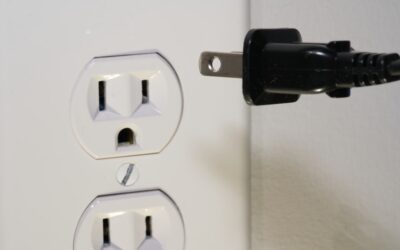
The difference between a two-prong and a three-prong outlet is the presence of a grounding connection. A three-prong outlet’s round bottom hole connects to the equipment grounding conductor; the two flat slots carry hot and neutral. Older homes often have only two-prong outlets, meaning there is no ground path at those receptacles. Plugging a modern three-prong appliance into a two-prong adapter without a real ground defeats the protection the appliance was designed to use. If your home has two-prong outlets, an electrician can advise whether grounds can be run or whether GFCI protection is the appropriate, code-compliant alternative for those locations.
Surge Protection and Grounding
A solid ground is also what makes surge protection work. Surge protectors and whole-home surge protective devices divert excess voltage, from lightning, utility switching, or large motors cycling on, safely to ground. Without an effective grounding path, a surge protector cannot do its job. This is one more reason a properly grounded system matters: it protects not just people from shock but sensitive electronics from voltage spikes. Whole-home surge protection installed at the panel by an electrician adds a layer of defense beyond plug-in strips.
A grounding system is invisible until the moment it saves your life. Ground wires, ground rods, proper bonding, and GFCIs work together to route dangerous current safely to earth and shut off power before it can hurt you. Respect it, understand the warning signs, and leave the wiring to a licensed professional who can verify your system meets code.