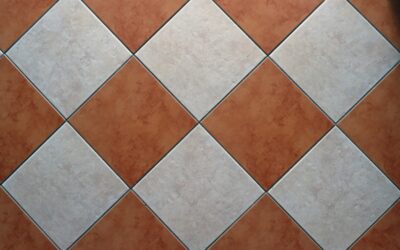
Walk into any flooring showroom and you will see luxury vinyl tile marketed as “the modern hardwood alternative” with almost no detail about the actual chemistry. That gap matters because the difference between a $1.99 sq ft import and a $5.49 sq ft premium product is not the photography. It is the polymer chemistry, plasticizer ratios, and wear-layer construction. So what is LVT flooring made of, exactly? Four bonded layers of plastic, calcium carbonate, printed film, and clear topcoat, with significant variation between brands. Here is the full breakdown.
The Four Layers of LVT Construction
Every modern LVT plank or tile (and most LVP planks) shares the same four-layer architecture, fused together with heat and pressure during manufacturing.
Layer 1: Backing Layer
The bottom of the tile is a stabilizing backing that controls dimensional movement and improves adhesion or click performance. Three common approaches:
- Foam or cork pre-attached pad. Common on premium floating click LVT.
- Fiberglass scrim with PVC. Glue-down commercial LVT.
- Solid SPC core extension. Stone-plastic-composite cores extend the backing into a structural layer.
Layer 2: Core Layer
The thickest layer in the construction and the one that determines whether you have flexible LVT, WPC (wood-plastic composite), or SPC (stone-plastic composite). All three start with PVC resin as the binder. The fillers and additives are what differentiate them:
- Flexible LVT cores use PVC plus plasticizers and 30 to 50 percent calcium carbonate filler. Result: a thin, flexible tile (2 to 4mm).
- WPC cores blend PVC with wood flour and foaming agents. Result: a thicker (5 to 8mm), softer-feeling plank with sound damping.
- SPC cores use PVC with up to 70 percent calcium carbonate (limestone) and stabilizers. Result: a dense, rigid plank (4 to 6mm) with high indentation resistance.
Layer 3: Print Film
The layer that gives LVT its visual. A high-resolution photographic image of wood grain, stone, or tile is printed on PVC film and laminated under the wear layer. Premium brands use four-color printing with multiple registration points; budget imports use two-color processes that produce repetitive patterns visible across just a few planks.
Embossed-in-register (EIR) is a key spec at this layer. EIR means the surface texture aligns precisely with the printed grain, so a knot in the print has a corresponding indent in the surface. EIR products read as wood at arm’s length; non-EIR products look obviously printed.
Layer 4: Wear Layer
The clear top coat that protects the print film and determines lifespan. Made of polyurethane or aluminum-oxide-enhanced PU, the wear layer is measured in mils (thousandths of an inch). The spec hierarchy:
- 6 to 8 mil — bargain-bin LVT, light residential use only, 5 to 8 year service life.
- 12 to 14 mil — standard residential, 10 to 15 year service life.
- 20 mil — heavy residential and light commercial, 15 to 25 year service life.
- 22 to 30 mil — full commercial, 20-plus year service life.
The Polymer Chemistry
The structural matrix is polyvinyl chloride (PVC), a thermoplastic that softens with heat and reforms when cooled. PVC is paired with plasticizers (typically phthalate-free DOTP or DEHT in modern products) that give flexibility, plus stabilizers, UV inhibitors, and color pigments. Calcium carbonate filler reduces cost and adds density, with higher-grade products using ground limestone instead of cheaper recycled mineral fines.
The phthalate question is worth understanding. Older LVT used DEHP and DINP plasticizers, which are now restricted in residential products in California, the EU, and increasingly elsewhere. Major brands like Shaw, Mannington, Mohawk, and Karndean transitioned to phthalate-free formulations between 2015 and 2020. Cheap imports may still contain restricted compounds.
Quality Markers That Matter
If you want to know the quality of an LVT product before buying, check these specs:
- Wear layer thickness. 12 mil minimum for residential, 20 mil for active homes with pets.
- Total thickness. 5mm minimum for floating click products, 2mm minimum for glue-down commercial.
- Phthalate-free certification. Look for FloorScore or GreenGuard Gold.
- Made-in country of origin. US, Belgium, Germany, and South Korea generally produce higher quality than mainland China imports.
- Warranty terms. A 25-year residential warranty backed by a known brand means more than a “lifetime” warranty from a private label.
How LVT Is Manufactured
Production runs continuous on a conveyor system. PVC pellets are melted and extruded with fillers into a base sheet. The print film and wear layer are unrolled from spools and bonded to the base under heated calendering rollers at 320 to 360 degrees Fahrenheit. Embossing rollers add surface texture in the same pass for EIR products. The cooled sheet is cut into planks or tiles, edges are milled for click joints (on floating products), and quality control inspects for color consistency.
Premium brands run multiple QC stations and reject 5 to 10 percent of production for color drift or print defects. Bargain manufacturers ship everything that comes off the line, which is why budget LVT often shows visible color shifts between boxes.
LVT Versus LVP and Other Vinyl Categories
The category is a marketing tangle. Here is the simple decoder:
- LVT = luxury vinyl tile, typically square or rectangular tile shapes mimicking stone or ceramic.
- LVP = luxury vinyl plank, the same construction in long plank shapes mimicking wood.
- WPC = wood-plastic composite, softer waterproof core.
- SPC = stone-plastic composite, harder rigid core.
- Sheet vinyl = continuous roll product, no individual planks or tiles.
The four-layer construction is consistent across LVT and LVP. Only the core formulation and the cut shape differ.
What LVT Flooring Is Not Made Of
LVT contains no real wood, no natural stone, and no ceramic. Despite marketing language about “stone-look” or “wood-look,” the only natural ingredient in most LVT is the calcium carbonate filler, which is mineral. Engineered hardwood flooring with a wear layer of real wood is a separate category. Porcelain tile, even thin “LVT-replacement” porcelain, is a separate category. Marketing copy blurs these lines on purpose. The four-layer PVC construction is what defines LVT specifically.
Environmental and Health Considerations
Modern LVT from major brands is FloorScore certified for low VOC emissions, phthalate-free, and increasingly recyclable through manufacturer take-back programs. The PVC base is energy-intensive to produce but the long lifespan offsets some of that footprint. If sustainability is a priority, look for products with at least 30 percent recycled content and the EPD (Environmental Product Declaration) on file.
Final Thoughts
What is LVT flooring made of? Four engineered layers (backing, core, print film, wear layer) bonded over a PVC matrix with calcium carbonate filler and modern phthalate-free plasticizers. The chemistry is well-understood, the specs are measurable, and the difference between quality and budget product comes down to wear layer thickness, core formulation, and country of origin. Read the spec sheet, not the marketing copy, and you will buy the right floor.
Prefer to explore on your own?
See how new flooring looks in your actual room in seconds — free, no signup.
Try the free Floor Studio →