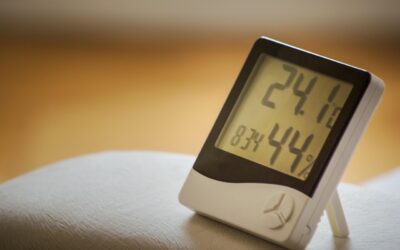
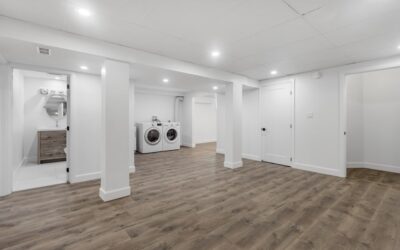
If your basement feels clammy or your closet smells musty, the fix usually comes down to one number on the dial. Knowing what to set dehumidifier at is the difference between a dry, comfortable home and a unit that runs nonstop while mold keeps spreading. The sweet spot for most homes is between 45 and 50 percent relative humidity. Go too low and you waste electricity drying air that is already comfortable. Too high and dust mites, mildew, and that telltale damp odor move right back in.
The Ideal Humidity Range for Most Homes
The Environmental Protection Agency and most HVAC contractors recommend keeping indoor relative humidity between 30 and 50 percent. For day-to-day comfort, target the upper half of that range, around 45 to 50 percent. At this level, the air feels fresh, your hardwood floors stay stable, and you avoid the static-electricity dryness that comes from over-dehumidifying.
Mold and mildew need humidity above 60 percent to thrive, while dust mites flourish anywhere over 50 percent. Dropping below 30 percent, on the other hand, can crack wood furniture, dry out your sinuses, and gap your laminate planks. The 45 to 50 percent band threads that needle.
What to Set a Basement Dehumidifier At
Basements are naturally the dampest part of a house because they sit below grade, where soil moisture seeps through concrete. Set a basement unit to 50 percent in summer and 45 percent in the swing seasons. If you store cardboard boxes, photos, or seasonal clothing down there, hold it at 45 percent to protect against mildew.
For finished basements used as living space, 45 to 50 percent keeps the room comfortable without that cave-like chill. If you notice condensation on cold water pipes or the floor, drop the setting 5 points until the sweating stops. A 50-pint or 70-pint unit is usually right for a full basement; smaller 20-pint models struggle to keep up in spaces over 1,500 square feet.
Bedroom and Living Area Settings
Living spaces call for comfort first. A setting of 45 to 50 percent feels neither sticky nor parched and is gentle on your skin and breathing. In a bedroom, many people sleep better at the higher end, near 50 percent, since very dry air irritates the throat overnight.
If anyone in the home has asthma or dust-mite allergies, nudge the target down to 40 to 45 percent. Dust mites cannot survive sustained humidity below 50 percent, so a slightly drier room measurably reduces allergens in carpet and bedding. Look for a unit with a built-in humidistat so it cycles off automatically once it hits your number.
Crawl Space and Whole-House Considerations
Crawl spaces and encapsulated sub-floors are a different animal. Building-science specialists recommend holding these areas at 55 to 60 percent. That may sound high, but the goal is preventing wood rot and mold on joists rather than human comfort, and over-drying a sealed crawl space wastes energy without benefit. A dedicated crawl-space dehumidifier with a condensate pump and a drain line is the right tool here.
Whole-house dehumidifiers that tie into your ductwork can be set once at 50 percent and left alone, since they treat conditioned air the HVAC system already moves. These units cost $1,200 to $2,500 installed but eliminate the need to empty buckets.
Adjusting by Season and Climate
Humidity is not static, so your setting should not be either. In humid summer months across the South and Midwest, you may need to drop to 45 percent to keep up with outdoor moisture pouring in every time a door opens. In winter, when heated indoor air dries out naturally, you can often raise the setting to 50 percent or turn the unit off entirely.
People in arid climates like Arizona or New Mexico rarely need aggressive dehumidification at all; a setting of 50 percent is plenty. Coastal and Gulf homeowners, by contrast, fight constant humidity and benefit from running a unit on the continuous setting during the wettest weeks of July and August.
How to Measure and Fine-Tune
Do not trust the dehumidifier’s onboard sensor alone. Buy a separate digital hygrometer for $10 to $15 and place it across the room from the unit. Cheap built-in sensors can read 5 to 10 points off, which means you might be drying to 40 percent while thinking you are at 50.
Run the dehumidifier for 48 hours, then check the hygrometer at the same time each day. If the reading sits above your target, lower the dial 5 points and wait another day. The right answer to what to set dehumidifier at is always the number that keeps your measured humidity steady in the 45 to 50 percent comfort zone without the compressor running around the clock.
Energy and Maintenance Tips
Every 5-point drop in your humidity target meaningfully increases run time and electricity use, so resist the urge to set it lower than you need. An Energy Star unit uses roughly 30 percent less power than a standard model and pays back the difference within two seasons of heavy use.
Clean the air filter every two weeks and wipe the coils monthly so the unit pulls moisture efficiently. If you connect a gravity drain hose to a floor drain, you can skip emptying the bucket and run the machine continuously, which keeps humidity rock-steady and prevents the overflow shutoffs that let dampness creep back in.
Signs Your Setting Is Wrong
Your home will tell you when the dial is off. Condensation on windows, a persistent musty smell, black spotting in grout, and clammy-feeling sheets all point to humidity that is too high; drop your setting 5 points. Wood floors that cup at the edges and a stuffy, heavy feel in the air are the same warning. In a basement, frequent fogging on cold pipes means you need to dehumidify harder.
The opposite extreme has its own tells. Static shocks every time you touch a doorknob, cracking trim and furniture joints, chronically dry skin and lips, and gaps opening between laminate planks all mean you have over-dried the air. Raise the setting back toward 50 percent. The right number is the one where none of these symptoms appear, your hygrometer holds steady in the 45 to 50 percent band, and the compressor cycles on and off rather than running flat out around the clock.