The right water heater temperature is one of those small settings that quietly affects your energy bill, your safety, and how long your tank lasts. Set it too high and you risk serious scald burns and wasted money; too low and you invite bacteria into the tank. For most homes, the sweet spot the U.S. Department of Energy recommends is 120°F.
- Why 120°F Is the Recommended Setting
- The Scald Risk: Why Hot Water Is Dangerous
- The Legionella Tradeoff
- How to Check Your Current Temperature
- Signs Your Temperature Is Set Wrong
- How to Adjust a Gas Water Heater
- How to Adjust an Electric Water Heater
- Setting the Temperature for Your Situation
- Temperature and the Life of Your Tank
- The Bottom Line
I’ll explain exactly why 120°F is the target, what the tradeoffs are on either side, and — step by step — how to check and adjust the setting on both gas and electric units without getting hurt.
Why 120°F Is the Recommended Setting
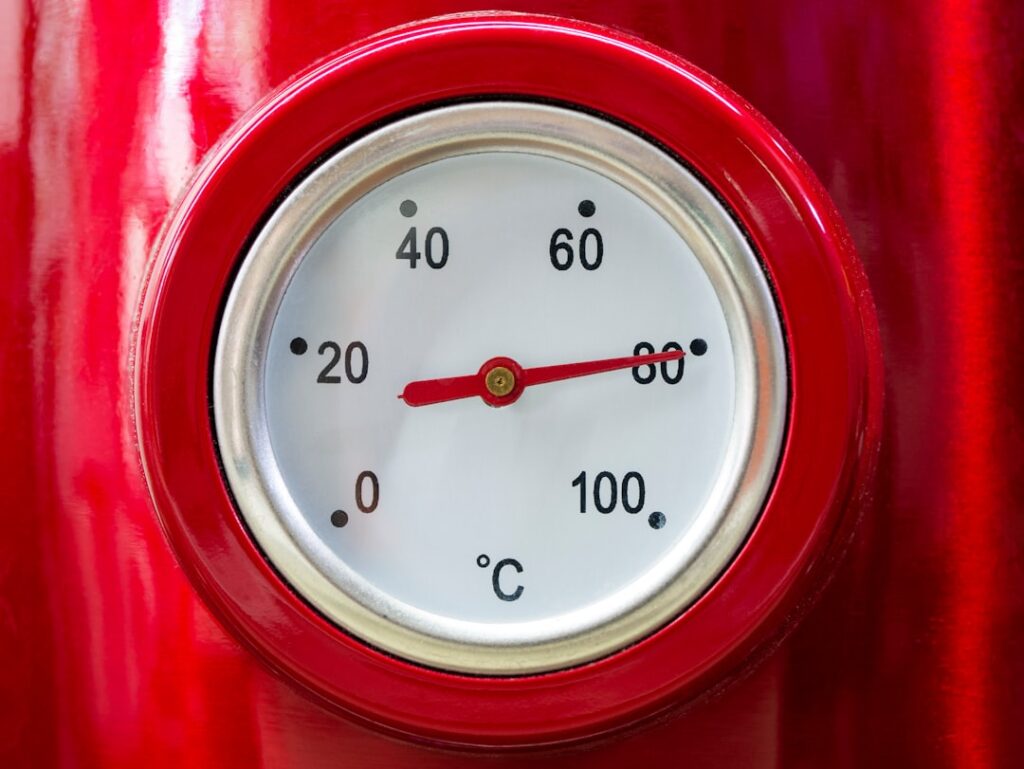
The Department of Energy recommends 120°F because it’s the balance point. At 120°F, hot water still sanitizes dishes, runs a comfortable shower, and keeps your laundry clean, but it’s cool enough to sharply reduce the risk of scald injuries. It also saves money: for every 10°F you lower the setting, you cut roughly 3 to 5 percent off your water-heating energy costs. Running at 120°F instead of 140°F can save a typical household $30 to $60 a year and slows mineral buildup and corrosion inside the tank.
Many new tanks ship from the factory pre-set around 140°F, so there’s a good chance yours is running hotter than it needs to right now.
The Scald Risk: Why Hot Water Is Dangerous
This is the part people underestimate. Hot water burns skin fast, and the timeline is brutal:
- At 120°F: it takes about 5 minutes of exposure to cause a third-degree burn.
- At 130°F: a serious burn happens in roughly 30 seconds.
- At 140°F: third-degree burns occur in as little as 5 seconds.
- At 150°F: it’s down to about 1 to 2 seconds.
Children and older adults are most at risk because their skin is thinner and their reaction time is slower. A toddler who bumps a faucet or an elderly relative who can’t jump out of the way fast enough can be badly injured before anyone realizes what happened. If you have young kids or seniors in the house, 120°F isn’t just about the energy bill — it’s a real safety margin.
The Legionella Tradeoff
Here’s the honest counterpoint. Legionella, the bacteria that causes Legionnaires’ disease, can grow in stagnant water between about 77°F and 108°F and is only reliably killed at higher temperatures — around 140°F. So there’s a genuine tension: 120°F is safer for scalds but sits closer to the range where bacteria can survive.
For most healthy households, 120°F is the right call and the scald risk outweighs the bacterial risk. But if someone in your home has a weakened immune system, a chronic lung condition, or is recovering from illness, talk to your doctor. A common professional solution is to store the water hotter — 130°F to 140°F — to kill bacteria, then install a thermostatic mixing valve at the tank that blends in cold water so the temperature at your faucets stays a safe 120°F. That gives you both protections at once.
How to Check Your Current Temperature
Don’t trust the dial markings — they’re often vague or inaccurate. Measure it directly:
- Turn on the hot water at the faucet closest to the water heater and let it run for a minute or two until it’s as hot as it gets.
- Fill a cup and stick a cooking or meat thermometer in it.
- Read the temperature. If it’s much above 120°F, it’s time to adjust.
For the most accurate picture, take the reading first thing in the morning before anyone has used hot water, so the tank has been sitting undisturbed. If the number reads high, it doesn’t mean your unit is broken — it almost always just means the factory setting was left untouched, and a two-minute adjustment fixes it.
Signs Your Temperature Is Set Wrong
You don’t always need a thermometer to suspect a problem. A few everyday clues point to a setting that’s off:
- Too hot: water that instantly stings at the tap, faucets you can’t comfortably run at full hot, a mineral-crusted showerhead, and a water-heating bill that creeps up for no obvious reason. Excessive heat accelerates scale buildup and corrosion inside the tank.
- Too cold: showers that go lukewarm fast, a faint musty or off smell from the hot tap, or laundry and dishes that don’t come as clean. Water sitting below about 120°F for long stretches invites bacterial growth.
When any of these show up, measure at the tap and adjust rather than guessing at the dial.
How to Adjust a Gas Water Heater
Gas units are the easy ones. There’s a dial on the gas control valve near the bottom of the tank, usually marked with settings like “Warm,” “Hot,” and “Very Hot,” or sometimes actual temperatures.
- Locate the dial on the gas valve at the base of the tank.
- Turn it to your target. If it only has vague labels, “Hot” is usually around 120°F to 130°F; use your thermometer test to fine-tune.
- Wait 2 to 3 hours for the tank to reach the new temperature, then re-test at the tap and nudge the dial as needed.
No tools, no cover removal, and the pilot or burner keeps running while you adjust.
How to Adjust an Electric Water Heater
Electric units take a few more steps, and one of them is non-negotiable for safety. Electric tanks have two thermostats — an upper and a lower — behind separate access panels, and both need to be set to the same temperature.
- Turn off the power first. Switch off the water heater’s breaker at your electrical panel. You’ll be working near 240-volt terminals, and this step is mandatory — don’t skip it.
- Remove the upper access panel screws, then fold back the insulation and the plastic safety cover.
- Use a flathead screwdriver to turn the thermostat dial to 120°F.
- Repeat on the lower thermostat and set it to the exact same temperature so the elements don’t fight each other.
- Replace the covers, insulation, and panels, restore power at the breaker, and wait a few hours before re-testing at the tap.
If you open the panel and feel unsure about working near live terminals even with the breaker off, stop and call an electrician or plumber. It’s a small job, but it’s a live-electrical one.
Setting the Temperature for Your Situation
- Households with kids or seniors: 120°F, no higher, for scald protection.
- Standard healthy households: 120°F for the best balance of safety, cost, and cleaning.
- Immune-compromised occupants: consider 130°F to 140°F storage with a mixing valve delivering 120°F to the taps, and check with a physician.
- Leaving town for a while: use the “Vacation” or lowest setting to save energy, but run the hot water for several minutes when you return to flush the tank before regular use.
Temperature and the Life of Your Tank
Setting matters for the equipment, not just for you. Every degree above 120°F drives faster mineral scaling on the elements or burner and speeds corrosion of the tank’s steel and its sacrificial anode rod. Running hot around the clock also means the heater fires more often, adding cycles and wear. Keeping the water heater temperature at 120°F is one of the quietest ways to help a tank reach and pass its warranty years instead of failing early. Pair that setting with an annual sediment flush from the drain valve and a T&P valve test, and you protect both your household and the appliance at the same time.
The Bottom Line
For the vast majority of homes, dial your water heater temperature to 120°F. It protects against fast, severe scald burns, trims your energy bill, and eases wear on the tank. If someone in the house is medically vulnerable, don’t just crank the heat — pair a higher storage temperature with a mixing valve so the water reaching your faucets stays safe. Check it with a real thermometer, adjust it carefully, and on an electric unit, always kill the power first.