When your tank starts leaking, the first thing you want to know is how much is a hot water heater going to set you back — unit, labor, and all the little code upgrades nobody warns you about. The honest answer is a wide range: most homeowners spend between $900 and $3,500 replaced and installed, but a straightforward swap can come in under $1,200 while a tankless conversion or fuel switch can climb past $5,000.
I’ve quoted and installed a lot of these. Below I’ll break down the real numbers by type, explain the hidden costs that pad an invoice, and show you where you can save without cutting corners on safety.
- The Quick Answer by Type
- Why the Range Is So Wide
- Standard Tank Water Heaters: The Baseline
- Heat Pump (Hybrid) Water Heaters: Costs More Now, Less Later
- Tankless Water Heaters: Higher Upfront, Endless Hot Water
- The Hidden Costs That Inflate Your Quote
- Gas vs Electric: Cost Over Time
- What Size Do You Actually Need?
- DIY vs Hiring a Pro
- How to Get the Best Price
- Ongoing Cost After Install
- The Bottom Line
The Quick Answer by Type
Here’s the unit price plus typical installed cost, so you can size up your situation fast:
- Standard gas or electric tank (40-50 gal): unit $500-$1,300, installed $900-$2,500
- Large tank (65-80 gal): unit $1,200-$2,000, installed $1,800-$3,500
- Heat pump / hybrid electric (50-80 gal): unit $1,600-$2,800, installed $2,500-$4,500 before rebates
- Gas tankless (on-demand): unit $1,000-$2,500, installed $3,000-$5,500
- Electric tankless (whole-home): unit $500-$1,200, installed $1,500-$3,500 including panel work
- Point-of-use mini tank (2.5-10 gal): unit $150-$400, installed $300-$700
Why the Range Is So Wide
Two identical houses on the same street can get quotes $1,500 apart. The spread comes down to fuel type, tank size, your local labor rate, and how much your existing setup has to change to meet current code. A like-for-like electric swap in an easy-access garage is cheap. Moving a unit, converting fuel, or upsizing to a tankless that needs new gas and venting is where the number balloons.
Standard Tank Water Heaters: The Baseline
A conventional 40- or 50-gallon tank is what most American homes run, and it’s the cheapest to buy and install. A basic 40-gallon electric unit with a 6-year warranty runs about $500 to $700; step up to a 12-year 50-gallon and you’re around $900 to $1,300. Gas versions of the same capacity cost a little more and heat faster.
Labor for a straight replacement is usually $500 to $1,000 for two to three hours of work. If the plumber is reusing your existing water lines, gas connection, and vent, you’re at the low end. Expect gas units to have a slightly higher install cost than electric because of the venting and gas-connection work involved.
Heat Pump (Hybrid) Water Heaters: Costs More Now, Less Later
Hybrid electric units pull heat from the surrounding air, and they’re two to four times more efficient than a standard electric tank. The unit runs $1,600 to $2,800, and installed you’re often looking at $2,500 to $4,500 because they need clearance space, a condensate drain, and sometimes an electrical upgrade.
The sticker shock softens fast. Federal tax credits and local utility rebates can knock $500 to $2,000 off, and the operating savings often run $300 to $550 a year versus resistance electric. If you have a warm mechanical room or garage with 700-plus cubic feet of space, this is frequently the lowest lifetime-cost option.
Tankless Water Heaters: Higher Upfront, Endless Hot Water
Tankless (on-demand) units heat water only as you use it, so you never run out and you save space. A gas tankless unit costs $1,000 to $2,500, but installation is the real expense — commonly $3,000 to $5,500 — because these units often need a larger gas line, new stainless or PVC venting, and sometimes a condensate drain for condensing models.
Electric whole-home tankless units are cheaper to buy but can demand serious electrical capacity — sometimes two or three 40-amp double-pole breakers and a service upgrade — which is why installed costs still land at $1,500 to $3,500. In cold-inlet climates, size the unit generously or you’ll get lukewarm showers in January.
The Hidden Costs That Inflate Your Quote
This is where the “how much is a hot water heater” question gets real. These line items show up constantly:
- Permit and inspection: $50 to $500 depending on the city. Skipping it can void your homeowner’s insurance if something goes wrong.
- Thermal expansion tank: $40 to $200 installed, required on closed plumbing systems.
- Drain pan and discharge line: $40 to $150, required over any finished space.
- Bringing venting to code: $100 to $600 if the old vent is undersized or improperly sloped.
- New shutoff valves, flex connectors, or a sediment trap on the gas line: $50 to $250.
- Seismic strapping: $20 to $80 in earthquake zones — and code-required there.
- Hauling away the old unit: $30 to $100.
A reputable plumber includes these in the quote. If a bid looks suspiciously low, ask specifically whether the permit, expansion tank, and pan are included.
Gas vs Electric: Cost Over Time
Electric tanks are cheaper to install because there’s no venting or combustion air to deal with — just a 240-volt, 30-amp dedicated circuit per National Electrical Code. Gas tanks cost a bit more to install but usually cost less to run in regions with cheap natural gas. Over a 10- to 12-year life, the fuel difference can outweigh the install gap, so factor your local utility rates, not just the day-one price.
Run the math over the whole lifespan, not the receipt. A standard electric tank might cost $300 to $500 a year to operate where electricity is expensive; a gas tank in the same house could run $200 to $300. Across twelve years that’s a few thousand dollars — real money that can flip which fuel is actually cheaper. A heat pump hybrid changes the picture again, cutting electric operating cost to roughly $100 to $180 a year, which is why the higher install price often pays back inside four to six years.
What Size Do You Actually Need?
Buying too big wastes money twice — once on the unit and again every month keeping extra water hot you never use. Buying too small means cold showers. The usual guidance: a 40-gallon tank fits one to three people, 50 gallons suits three to four, and you move to 65 or 80 gallons for large families or homes with a soaking tub and back-to-back showers.
Look past raw gallons to the first-hour rating (FHR) on the yellow EnergyGuide label — it tells you how much hot water the unit delivers during a busy hour. A gas 50-gallon often posts an FHR near 80 to 90 gallons because it reheats fast, while an electric 50 might sit around 62. Matching FHR to your peak morning demand keeps you from overpaying for storage you don’t need.
DIY vs Hiring a Pro
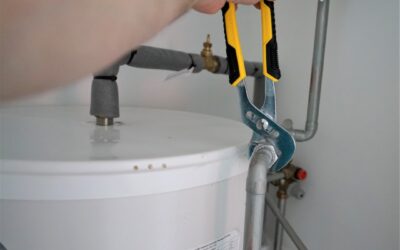
You can buy the unit yourself and save the plumber’s markup, but I’d stop short of a DIY install on anything involving gas or venting. A botched gas connection or vent is a carbon monoxide hazard, and an unpermitted install can bite you at resale or on an insurance claim. Electric tank swaps are more forgiving for a confident DIYer, but you’re still working with 240 volts and the temperature and pressure relief (T&P) valve has to be plumbed correctly. For gas, tankless, or any fuel conversion, hire a licensed plumber — the labor is a fraction of the risk.
How to Get the Best Price
- Get three itemized quotes and compare the line items, not just the bottom number.
- Ask whether the unit is contractor-grade or a builder-basic model — the warranty tier tells you.
- Check for utility and federal rebates before buying, especially on heat pump units.
- Replace before it fails. Emergency after-hours calls carry a premium, and a flooded floor adds cleanup cost.
- Buy one warranty tier up from the cheapest tank; the small upcharge buys a thicker anode and better lining.
- Bundle the job — if your plumber is already on site for other work, the water heater labor is often discounted.
Ongoing Cost After Install
The purchase is only part of the picture. A little maintenance protects the investment and stretches the years you get out of the tank. Flushing a few gallons of sediment from the drain valve once or twice a year keeps efficiency up and prevents that rumbling, popping sound that signals a bottom crust of minerals. Checking the sacrificial anode rod around year three to five and swapping it when it’s chewed to the core wire can add years to the tank for a $30 part. Testing the temperature and pressure relief (T&P) valve annually costs nothing and guards against a dangerous pressure buildup. Skip all of this and you’ll simply be paying the full replacement cost sooner.
The Bottom Line
So how much is a hot water heater, really? For most homeowners doing a standard tank replacement, budget $1,200 to $2,500 all-in. Go tankless or hybrid and plan for $2,500 to $5,000, with rebates helping on the hybrid. Whatever you pick, get the permit, include the expansion tank and pan, and let a licensed pro handle the gas and venting. Spending a little more for a properly installed, code-compliant unit is far cheaper than fixing water damage or failing an inspection at resale.