
Most people never think about their water heater until it dies, usually on a Sunday and usually onto a finished floor. Understanding water heater lifespan is the difference between planning a calm, budgeted replacement and mopping up an emergency. After years of pulling out failed tanks and setting new ones, I can tell you the age on the label matters, but so does how the unit was treated.
This guide covers how long each type really lasts, what quietly kills them early, the warning signs worth acting on, and the small habits that push a tank from 8 years to 15.
- How Long Water Heaters Actually Last
- What Shortens a Water Heater’s Life
- Warning Signs the End Is Near
- Maintenance That Extends the Lifespan
- Repair or Replace? The Honest Math
- Choosing a Longer-Lasting Replacement
- How Water Quality and Climate Change the Numbers
- Simple Habits That Add Years
- The Takeaway
How Long Water Heaters Actually Last
Averages are a starting point, not a guarantee. Here is what I see in the field:
- Standard tank (gas): 8 to 12 years
- Standard tank (electric): 10 to 15 years
- Tankless (gas or electric): 18 to 20+ years
- Heat-pump/hybrid: 12 to 15 years
Electric tanks tend to edge out gas because they have no burner or flue to corrode and run at a gentler thermal cycle. Tankless units last roughly twice as long as any tank because there is no steel reservoir sitting full of hot water, which is the part that ultimately rusts through. When someone asks me to guess a tank’s age, I read the serial number: nearly every manufacturer encodes the month and year of manufacture in the first four characters.
What Shortens a Water Heater’s Life
Two identical tanks in two houses can differ by seven years, and it is rarely random. The usual culprits:
Hard water and sediment
Minerals precipitate out and settle on the tank bottom. On a gas unit that sediment insulates the steel from the burner, forcing it hotter and cracking the glass lining. You can often hear it as popping or rumbling. Water above 7 grains per gallon of hardness is aggressive; above 10 you should own a softener.
A neglected anode rod
The anode rod is a sacrificial metal core that corrodes so the tank does not. Once it is fully consumed, the tank itself becomes the sacrifice, and the clock starts ticking fast. This single overlooked part is the number-one reason tanks die young.
High pressure and thermal expansion
Incoming water pressure over 80 psi stresses the tank, valves, and every connection. In a closed system without an expansion tank, each heating cycle spikes the pressure and works the steel like bending a paperclip.
Temperature set too high
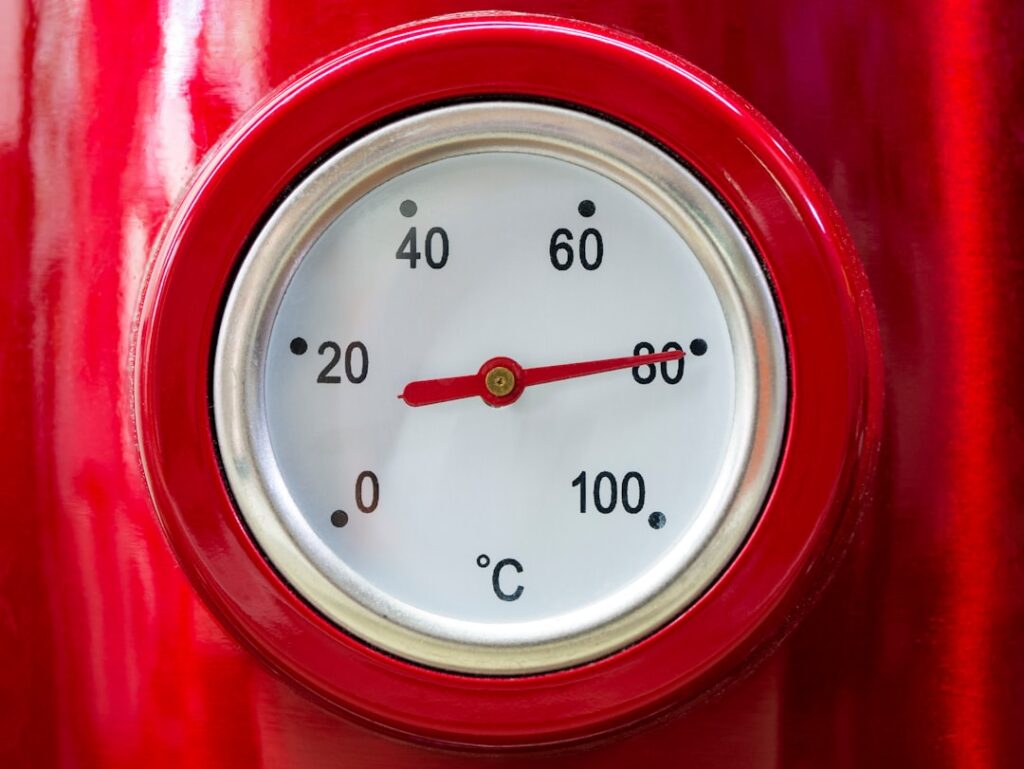
Running 140°F instead of 120°F accelerates corrosion and sediment, and it is a scald hazard. Unless you have a specific reason and a mixing valve, keep it at 120°F.
Warning Signs the End Is Near
A water heater usually tells you it is failing before it floods the room. Learn these signals:
- Rusty or discolored hot water that clears on the cold side points to corrosion inside the tank.
- Rumbling, popping, or crackling during heating means a sediment layer is cooking on the bottom.
- Water pooling or dampness at the base, especially from a seam, is a tank breach and is not repairable.
- Not enough hot water, or it runs cold fast, can mean sediment has stolen capacity or an element/dip tube has failed.
- Moisture, rust, or corrosion around fittings and the T&P valve.
A leak from the tank body is terminal. A drip from a valve or fitting might just be a $30 part. If you cannot tell which, shut off the water supply to the heater and call a plumber before it decides for you.
Maintenance That Extends the Lifespan
The gap between an 8-year tank and a 15-year tank is roughly one hour of work per year. This is the highest-return home maintenance there is.
- Flush the tank annually. Connect a hose to the drain valve and run several gallons until it comes out clear. Twice a year in hard-water areas.
- Inspect the anode rod every 2 to 3 years. Replace it, roughly a $35 part, when more than 6 inches of the steel core wire shows. Doing this once or twice can add years.
- Test the T&P valve yearly. Lift the lever and let it snap shut. If it weeps afterward, replace it, because it is your primary safety device against a pressure buildup.
- Confirm your pressure and expansion tank. Keep static pressure under 80 psi with a pressure-reducing valve if needed, and make sure any expansion tank is charged and not waterlogged.
- Insulate the tank and the first few feet of pipe to cut standby losses and ease the workload.
Repair or Replace? The Honest Math
My rule of thumb: if a tank is under 8 years old and the failure is a component (element, thermostat, gas valve, T&P valve, anode), repair it. If it is past 10 years, or the tank itself is leaking, replace it. Sinking $400 into a 12-year-old tank that will rust through next winter is throwing good money after bad.
There is also a hidden cost to waiting for total failure: water damage. A ruptured 50-gallon tank in a finished basement can cause thousands in flooring and drywall repairs, which dwarfs the price of a planned swap. If yours is past its expected water heater lifespan and showing any warning sign, budget for replacement now rather than gambling on another year.
Choosing a Longer-Lasting Replacement
When it is time, you can buy longevity:
- Match the warranty to your stay. A 12-year tank simply has better anode protection and a thicker tank than the 6-year model. If you are staying a decade, the upgrade pays for itself.
- Add a softener if your water is hard; it protects the heater and every other fixture in the house.
- Consider a powered anode rod for problem water, or tankless if you want to roughly double the service life.
- Install a drain pan and a leak sensor so the next failure is a notification, not a flood.
How Water Quality and Climate Change the Numbers
Two things outside the tank quietly set its fate: your water and where you live. Hard water is the biggest variable. In the Southwest and much of the Midwest, hardness above 10 grains per gallon is common, and it can knock three to five years off a tank’s life through sediment and scale. Soft-water regions in parts of the Pacific Northwest and Northeast are far gentler, and tanks there routinely reach the top of their range.
Climate matters too. In cold northern states the incoming water can sit near 40°F in winter, so the burner or elements work harder and cycle more, which adds wear. Warm-climate homes with 65 to 70°F groundwater put an easier load on the same tank. Location within the house counts as well: a heater in an unconditioned garage that swings from freezing to baking ages faster than one in a stable, conditioned basement.
Water chemistry beyond hardness
Acidic water with a low pH is aggressive toward the tank lining and the anode, and high chloride or softened water can actually consume a standard magnesium anode faster. If you have a whole-home softener, check the anode more often, because the very water that protects your fixtures can shorten the sacrificial rod’s life. An aluminum-zinc or powered anode is the usual answer for tricky water.
Simple Habits That Add Years
Beyond the formal maintenance list, a few everyday habits protect your investment without any tools:
- Spread out heavy hot-water use. Running the dishwasher, laundry, and back-to-back showers all at once forces the tank to work at full tilt; staggering them eases the thermal cycling.
- Keep the area around the heater clear. Stored boxes and chemicals near a gas unit choke combustion air and create a fire hazard. Give it room to breathe.
- Watch your water bill and pressure. A sudden pressure change or an unexplained usage spike can be the first hint of a developing leak.
- Label the install date. Write the year on the tank with a marker the day it goes in, so you and the next owner never have to decode a serial number.
None of this is glamorous, but the tank that gets a little respect is the one still quietly working when its neighbor’s has already flooded a basement.
The Takeaway
Expect 8 to 12 years from a gas tank, 10 to 15 from electric, and closer to 20 from tankless, but treat those as ranges you can move. Hard water, a spent anode rod, high pressure, and a too-hot setting cut lifespan short; annual flushing, anode checks, and pressure control extend it. Watch for rusty water, rumbling, and dampness, and replace on your schedule rather than the tank’s. A little attention buys years and spares you the Sunday-morning flood.


