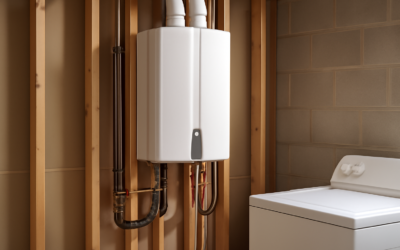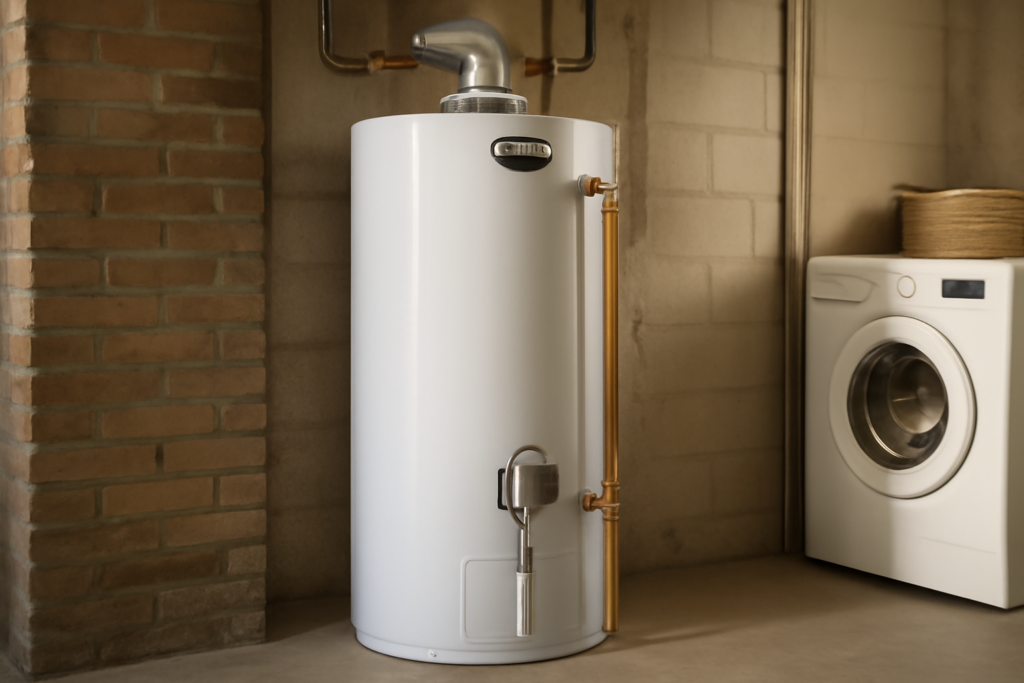
If you’ve stood in a basement staring at a rusting tank wondering what to replace it with, an AO Smith hot water heater is probably on your short list — and for good reason. AO Smith builds units sold under its own name, plus the ProLine, Signature, and Signature Premier lines you’ll find at big-box stores, and it manufactures many Kenmore, State, and Reliance tanks too.
I’ve installed and swapped out dozens of these over the years. This guide walks through the model lineup, how to size one, what gas versus electric really means for your house, real price ranges, and the venting and code details that trip up homeowners who try to DIY a gas swap.
- Who AO Smith Is and What They Sell
- The Main Model Lines
- How to Size the Tank
- Gas vs Electric: What It Means for Your Home
- What an AO Smith Hot Water Heater Costs
- Venting, Permits, and Safety You Can’t Skip
- Getting the Warranty You Paid For
- Common Problems and Quick Diagnoses
- Is an AO Smith Right for You?
Who AO Smith Is and What They Sell
AO Smith has been making water heaters for over a century, and today it’s one of the two giants in the North American market alongside Rheem. That scale matters when a part fails on a Sunday — parts availability is genuinely good, and most plumbers have a warehouse relationship that can get you a replacement gas valve or heating element same-day.
The confusing part is branding. The tank you buy at Lowe’s under the “A. O. Smith Signature” name and the “ProLine” model a plumbing supply house sells are close cousins built on the same platforms. Don’t get hung up on the badge. Focus on the tank capacity, the first-hour rating, the recovery rate, and the warranty term — those numbers tell you what you’re actually paying for.
The Main Model Lines
- Signature 100 — the entry-level retail line, typically a 6-year warranty. Fine for a small household or a rental.
- Signature 300 / Signature Premier — mid- and upper-tier retail units with 9- and 12-year warranties, thicker insulation, and better anode protection.
- ProLine and ProLine Master — the contractor-grade lines sold through supply houses, with 6-, 9-, and 12-year options and serviceable components.
- Voltex hybrid heat pump — an electric unit that pulls heat from the surrounding air. It sips electricity but needs roughly 700 to 1,000 cubic feet of space and drops the room temperature a few degrees.
- Tankless (ATI series) — gas condensing on-demand units for homes that want endless hot water and wall-mounted space savings.
How to Size the Tank
The classic rules of thumb: a 40-gallon tank suits one to three people, a 50-gallon covers three to four, and you jump to 65 or 80 gallons for larger families or homes with a soaking tub and multiple showers running back to back.
But gallons alone lie. Look at the first-hour rating (FHR) printed on the yellow EnergyGuide sticker — it tells you how many gallons of hot water the unit can deliver in a busy hour, combining stored volume and recovery. A 50-gallon gas AO Smith might post an FHR of 80 to 90 gallons because gas reheats fast, while a 50-gallon electric could sit around 62 gallons. If your mornings are a traffic jam of showers, chase FHR, not raw tank size.
Gas vs Electric: What It Means for Your Home
Gas atmospheric-vent models heat faster and cost less to run in most of the country, but they need a chimney or vent connector, combustion air, and — critically — proper venting to carry carbon monoxide outside. If your old unit was gas, replacing it with gas is usually straightforward. Switching from electric to gas means running a gas line and cutting a vent, which is a bigger, permitted job.
Electric units are simpler to install, have no combustion or venting, and work anywhere you have a 240-volt circuit. They recover slower. A standard electric AO Smith uses two 4,500-watt elements on a dedicated 30-amp double-pole breaker with 10-gauge wire — that’s a National Electrical Code (NEC) requirement, not a suggestion. The Voltex hybrid runs on the same circuit but can cut water-heating electricity costs by half or more if you have the space and a warm-ish mechanical room.
What an AO Smith Hot Water Heater Costs
Prices move with capacity, fuel, and warranty tier. As a working range for the unit alone:
- 40-gallon gas or electric, 6-year: roughly $500 to $750
- 50-gallon, 9- to 12-year: roughly $750 to $1,300
- 65 to 80-gallon: roughly $1,200 to $2,000
- Voltex heat pump hybrid: roughly $1,600 to $2,500 before any utility rebate
- Tankless ATI condensing: roughly $1,300 to $2,200
Installation adds $500 to $1,800 depending on your region, code upgrades, and whether the plumber has to add an expansion tank, a new drain pan, seismic straps, or bring venting up to current code. A straight gas-for-gas swap is on the low end; a fuel switch or a tankless conversion sits at the top.
Venting, Permits, and Safety You Can’t Skip
This is where I get firm. A gas water heater vents combustion byproducts, and a bad vent connection is a carbon monoxide risk — not a leak-and-mop problem. Atmospheric units need the correct vent pipe diameter, a proper upward slope, and adequate combustion air. Power-vent and condensing models use sealed PVC or polypropylene venting with tight length and termination limits.
Nearly every jurisdiction requires a permit for a water heater replacement, and the inspector will check the temperature and pressure relief (T&P) valve, its discharge pipe routed down to within a few inches of the floor, the drain pan on any unit above finished space, and the seismic strapping in earthquake zones. On a closed plumbing system, you also need a thermal expansion tank so pressure doesn’t spike every heating cycle. If you’re doing anything with gas or venting, hire a licensed plumber. The permit fee is cheap next to the cost of getting combustion wrong.
Getting the Warranty You Paid For
That 6-, 9-, or 12-year number is mostly about the anode rod and tank glass lining. The anode is a sacrificial magnesium or aluminum rod that corrodes so your steel tank doesn’t. Longer-warranty AO Smith units simply ship with more anode and thicker insulation.
You can dramatically extend any tank’s life by checking the anode rod around year three to five and replacing it when it’s chewed down to the core wire. Flush a few gallons of sediment from the tank drain valve once or twice a year, especially on hard water, and test the T&P valve annually by lifting its lever and confirming it snaps back and discharges. Keep your receipt and register the unit — AO Smith warranty claims go smoother with the serial number and proof of purchase on file.
Common Problems and Quick Diagnoses
- No hot water, electric: usually a tripped high-limit reset button on the upper thermostat, or a burned-out heating element. Kill the breaker before you touch anything.
- No hot water, gas: often a pilot or igniter issue, or a failed thermocouple. Follow the lighting sequence on the label; if it won’t stay lit, call for service.
- Rumbling or popping: sediment on the tank bottom. Flush it.
- Rotten-egg smell in the hot water: bacteria reacting with the anode. Switching to an aluminum-zinc or powered anode usually fixes it.
- Water pooling under the tank: if it’s coming from the tank body itself, the tank has rusted through and it’s replacement time — no repair for that.
Is an AO Smith Right for You?
For most homeowners doing a like-for-like replacement, an AO Smith hot water heater is a safe, widely supported choice with parts on every plumber’s truck. Buy up one warranty tier from the cheapest option — the jump from a 6-year to a 9- or 12-year unit is small money for meaningfully better build quality. If you have the space and want the lowest operating cost, price out a Voltex hybrid and check your utility’s rebate before you decide. And whatever you choose, pull the permit and let a licensed plumber handle any gas or venting work. Do that, and this tank will quietly outlast the day you forget it’s even there.