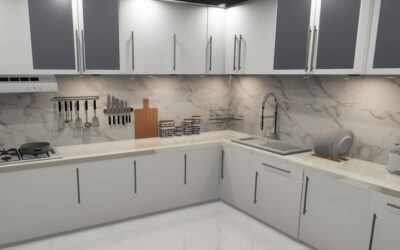
Few kitchen combinations deliver as much visual impact with as little effort as white cabinets with black hardware. This pairing works in farmhouse kitchens, modern minimalist spaces, and everything in between — and swapping out hardware is one of the cheapest upgrades you can make. At $2-$8 per pull, you can transform an entire kitchen for under $150 in an afternoon. Here is how to choose the right style, finish, and placement for a professional result.
Part of our Kitchen Remodeling guide — explore the full guide →
- Why This Combination Works So Well
- Choosing the Right Hardware Style
- Matte Black vs Other Black Finishes
- Coordinating Black Hardware Throughout the Kitchen
- Installation Tips for a Professional Look
- Best White Paint Colors for Black Hardware
- Budget Breakdown for a Full Hardware Swap
- Maintaining Black Hardware
Why This Combination Works So Well
White and black create the highest possible contrast in design. That contrast draws the eye to the hardware, giving your cabinets a defined, intentional look that all-chrome or brushed-nickel setups cannot match. Interior designers call this “jewelry for the kitchen” — the hardware becomes a deliberate style element rather than an afterthought.
The combination also has staying power. While trendy finishes like rose gold and champagne bronze cycle in and out of fashion, matte black hardware has remained popular for over a decade and shows no sign of fading. If you plan to sell your home within a few years, this is a safe choice that appeals to the widest range of buyers.
Choosing the Right Hardware Style
Black hardware comes in dozens of profiles. Matching the style to your cabinet doors and overall kitchen aesthetic makes the difference between a cohesive design and a mismatch.
Bar Pulls
Sleek, straight bar pulls suit modern and transitional kitchens. They work best on shaker-style and flat-panel doors. Standard lengths are 3-inch, 5-inch, and 7-inch center-to-center. Larger drawers look best with 7-inch or longer pulls, while upper cabinet doors typically take 3-inch or 5-inch pulls. Brands like Amerock and Franklin Brass offer solid bar pulls starting around $3-$5 each.
Cup Pulls
Bin-style cup pulls are a farmhouse and traditional kitchen staple. They mount on drawers and create a vintage look that pairs beautifully with white shaker cabinets. Most cup pulls use a 3-inch center-to-center mounting and cost $4-$8 each. Hickory Hardware makes some of the most popular options in matte black.
Knobs
Round or square knobs work on both doors and drawers, though many designers prefer using knobs on doors and pulls on drawers. This mixed approach is a standard practice in higher-end kitchens. Matte black knobs start at just $1.50-$3 each, making them the most budget-friendly option.
Arch Pulls
Slightly curved arch pulls split the difference between modern bar pulls and traditional designs. They add a subtle softness that works well in transitional spaces where you want the black contrast without a hard-edged industrial feel.
Matte Black vs Other Black Finishes
Not all black hardware is the same. The finish you choose affects the overall look and maintenance requirements.
- Matte black: The most popular choice. Hides fingerprints well and creates a soft, contemporary look. Pairs with nearly any white cabinet shade
- Satin black: Slightly more sheen than matte. Offers a subtle warmth that works well with cream-toned whites
- Flat black: Zero sheen, almost chalky appearance. Best for rustic and industrial kitchens
- Black with bronze undertones: Adds warmth and pairs well with warm wood accents, butcher block countertops, and brass lighting
- Glossy black: High shine that reads more formal. Works in contemporary and glam-style kitchens but shows every fingerprint
For most homeowners, matte black is the safest and most versatile choice. It reads well against both bright white (like Benjamin Moore Chantilly Lace) and warmer whites (like Sherwin-Williams Alabaster).
Coordinating Black Hardware Throughout the Kitchen
Once you commit to black hardware on cabinets, extend that finish to other elements for a cohesive look. Consider matching your faucet, light fixtures, and cabinet hinges in the same black finish. Exposed hinges in a different metal create a disjointed appearance that cheapens the overall design.
That said, intentional mixed metals can look sophisticated when done deliberately. A common designer approach pairs black cabinet hardware with a brass or gold faucet and matching pendant lights. The key is choosing no more than two metal finishes and repeating each one in at least two locations around the kitchen.
Installation Tips for a Professional Look
Hardware placement matters more than most people realize. Inconsistent spacing or crooked pulls are immediately noticeable on white cabinets because the contrast highlights every detail.
- Use a cabinet hardware jig ($10-$15 at any hardware store) for perfectly consistent placement on every door and drawer
- Standard placement for door pulls: start them 2.5-3 inches from the bottom corner on upper cabinets, and 2.5-3 inches from the top corner on base cabinets
- Center drawer pulls horizontally on the drawer face. For drawers taller than 8 inches, place the pull in the upper third rather than dead center
- Pre-drill with a bit slightly smaller than the mounting screws to prevent the wood from splitting
- If replacing existing hardware with a different hole spacing, fill old holes with wood filler, sand smooth, and touch up paint before drilling new holes
Best White Paint Colors for Black Hardware
The shade of white you choose affects how the black hardware reads in your space. Cool whites create sharper contrast, while warm whites produce a softer feel.
Bright, crisp whites: Benjamin Moore Simply White, Sherwin-Williams Extra White, and Farrow and Ball All White pair with matte black for a clean, modern look. These work best in kitchens with plenty of natural light.
Warm, creamy whites: Benjamin Moore White Dove, Sherwin-Williams Alabaster, and Behr Swiss Coffee create a more inviting feel. Black hardware against these tones looks sophisticated without feeling stark, which suits traditional and farmhouse kitchens.
Budget Breakdown for a Full Hardware Swap
Replacing all the hardware in a standard 30-cabinet kitchen typically runs between $90 and $300 depending on the style and brand you choose. Here is a rough breakdown:
- Budget tier ($90-$130): Amazon or Home Depot multi-packs, $2-$4 per piece. Brands like Ravinte and Goldenwarm offer solid quality at bulk pricing
- Mid-range ($130-$200): Amerock, Liberty, and Franklin Brass at $4-$7 per piece. Better weight and finish consistency
- Premium ($200-$400+): Top Knobs, Emtek, and Rejuvenation at $8-$15 per piece. Heavier solid construction and designer profiles
Even at the premium level, a hardware swap costs a fraction of a full kitchen renovation and delivers a dramatic transformation. It is consistently rated as one of the highest return-on-investment kitchen upgrades you can make.
Maintaining Black Hardware
Matte and satin black finishes are generally low-maintenance. Wipe them down with a damp microfiber cloth weekly to remove cooking grease and fingerprints. Avoid abrasive cleaners or scouring pads, which can scratch the finish and expose the base metal underneath. For stubborn grease buildup, a small amount of dish soap on a soft cloth works perfectly without damaging the finish.
Quality black hardware from reputable brands should maintain its color for years. Cheap hardware can chip or wear through to a silver base metal at contact points — another reason to spend a few extra dollars per piece on a mid-range or better option.