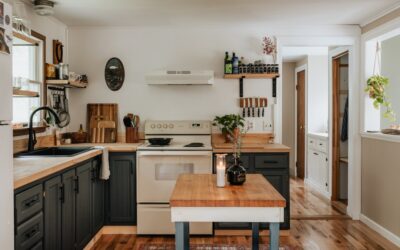
The combination has quietly become one of the most requested kitchen looks of the past decade, and it is easy to see why. White cabinets with butcher block counter surfaces pair the crisp, timeless brightness of white cabinetry with the warmth and grain of natural wood, striking a balance that reads as both fresh and inviting. It works in a farmhouse, a cottage, a modern space, or a transitional kitchen. This guide covers how to choose the wood, pair the finishes, and keep the look beautiful for years.
Part of our Countertops guide — explore the full guide →
Why the Pairing Works So Well
White cabinets can feel clinical on their own, all bright surfaces and hard edges. Butcher block solves that by introducing organic warmth, visible grain, and a natural material that softens the whole room. The contrast is the point: cool white against warm wood creates depth and keeps a white kitchen from feeling flat or sterile. It also happens to be budget-friendly, since wood counters cost far less than stone, letting you splurge elsewhere or keep the whole project affordable.
Choosing the Right Wood Species
Butcher block is not one material; the species you pick sets the tone and durability of the whole counter.
- Maple — the classic choice, pale creamy tone, very hard and durable, subtle grain that pairs cleanly with white; roughly $20 to $45 per sq ft
- Oak — pronounced grain and a golden-to-honey tone, durable and traditional, great for farmhouse looks
- Walnut — rich chocolate brown for high contrast against white cabinets, softer but stunning; $40 to $80 per sq ft
- Cherry — warm reddish tone that deepens with age, elegant and mid-priced
- Birch and beech — light, affordable alternatives to maple with a clean look
For a bright, airy Scandinavian feel, light maple or birch keeps things soft. For drama and a designer edge, walnut against white cabinets is hard to beat. Consider grain orientation too: edge-grain (long strips) looks refined, end-grain (the classic checkerboard) is the most durable for actual cutting, and face-grain shows the widest, most decorative figure.
Pairing Finishes and Fixtures
The white-and-wood base is a neutral canvas, so the metals and accents you add define the style. Matte black hardware and faucets create a modern, high-contrast farmhouse look that is currently everywhere. Brushed brass or gold warms the palette toward a cozy, collected feel. Polished chrome or brushed nickel keeps things classic and understated. For the sink, a white farmhouse apron-front sink reinforces the cottage look, while a stainless undermount reads more contemporary.
Backsplash choice ties it together. A white subway tile keeps the room bright and lets the wood counter stand out. A patterned cement or zellige tile adds personality. For flooring, warm wood-look or natural wood floors echo the counter, while black-and-white patterned tile leans hard into farmhouse charm.
Warm White vs Cool White Cabinets
Not all whites suit butcher block equally. Warm whites like creamy off-whites and antique whites harmonize naturally with the yellow and honey undertones of maple and oak, creating a soft, cohesive feel. Crisp, cool bright whites create sharper contrast with the wood, which reads as more modern and deliberate. Test paint samples against your actual wood counter in daylight, because a white that looks perfect on its own can clash with a counter’s undertone. If you want walnut’s cool brown, a bright white cabinet balances it; for warm oak, a warmer white avoids a jarring contrast.
What It Costs
Butcher block is one of the more affordable counter materials, which is a big part of its appeal. Prefabricated maple or oak tops from a home center run $150 to $400 per section and $20 to $45 per square foot; premium walnut or custom-milled tops reach $40 to $80 per square foot. Compared with quartz or granite at $50 to $120 installed, a full butcher block kitchen can cost half as much. Many homeowners install prefab tops themselves, cutting for the sink and finishing the edges, which keeps labor costs down further.
Sealing and Caring for Butcher Block
Wood counters need care that stone does not, and how you finish them determines that care. There are two main approaches. An oil finish, using food-safe mineral oil or a beeswax blend, keeps the wood looking natural and lets you use the surface as a cutting board, but it must be reapplied monthly at first, then every few months. A film finish, such as a food-safe polyurethane or a hard-wax oil, seals the wood so it resists water and stains and needs far less upkeep, but you should not cut directly on it.
Whichever you choose, wipe up standing water and spills promptly, since prolonged moisture is wood’s enemy, especially around the sink. Sand out deep scratches or water rings and re-oil, one of butcher block’s advantages is that it can be refreshed rather than replaced. Avoid leaving wet dish racks or hot pans directly on the surface, and use trivets and mats near high-moisture zones.
Styling the Look Across Kitchen Sizes
The white-and-wood pairing scales beautifully, but the execution shifts with the room. In a small galley or apartment kitchen, run butcher block across all the counters to keep the wood warmth present without overwhelming the space, and pair it with bright white uppers to bounce light and make the room feel larger. In a mid-size kitchen, a popular approach is white perimeter cabinets with butcher block counters and a contrasting stone or painted island for a layered, collected look.
In a large kitchen with an island, you can flip the ratio: stone perimeter counters with a butcher block island top that becomes a warm, tactile centerpiece and a natural spot for casual seating and food prep. Open shelving in matching wood, a few brass or black accents, and greenery complete the look in any size. The key is letting the wood provide the warmth and the white provide the light, and not letting either one fully take over.
Common Regrets and How to Avoid Them
The homeowners who love this look years later are the ones who went in clear-eyed about maintenance. The most common regret is choosing an oil finish and then not reoiling it, which leaves the wood to dry out, gray, and stain, particularly around the sink. If you know you will not keep up monthly oiling, choose a durable film finish from the start. The second regret is placing untreated butcher block right at the sink and dishwasher, where constant moisture eventually causes cracking. Seal that zone thoroughly, caulk the seams, and wipe up water promptly, or reserve stone for the wet area and wood elsewhere. Handled with these precautions, white cabinets and butcher block age gracefully into a warm, lived-in kitchen.
Frequently Asked Questions
What color butcher block goes best with white cabinets?
Light maple and oak create a soft, cohesive farmhouse look, while walnut gives bold contrast for a modern feel. Match warm-toned woods with warm whites and cool-toned walnut with crisp bright whites.
Is butcher block a good countertop for a kitchen?
Yes, if you are willing to maintain it. It is warm, affordable, and can be sanded and refinished rather than replaced. It requires periodic oiling or sealing and prompt cleanup of standing water, especially near the sink.
How much does a butcher block counter cost?
Prefab maple and oak tops run $20 to $45 per square foot, and premium walnut reaches $40 to $80. That is often half the cost of quartz or granite, making it a budget-friendly upgrade.
Do you seal butcher block with oil or polyurethane?
Use food-safe mineral oil if you want a natural surface you can cut on, reapplying regularly. Use a food-safe polyurethane or hard-wax oil for a durable, water-resistant film that needs less upkeep but should not be cut on.
Does butcher block near a sink hold up?
It can, with a good film finish and diligent care. Seal the area well, caulk the seam at the sink, and wipe up standing water immediately. Some homeowners use butcher block on perimeters and stone around the sink.
White cabinets with a butcher block counter give you a warm, timeless kitchen at a friendly price. Choose a wood species that suits your undertone, pair it with hardware that sets your style, and commit to simple upkeep, and the look will stay as inviting as the day it was installed.