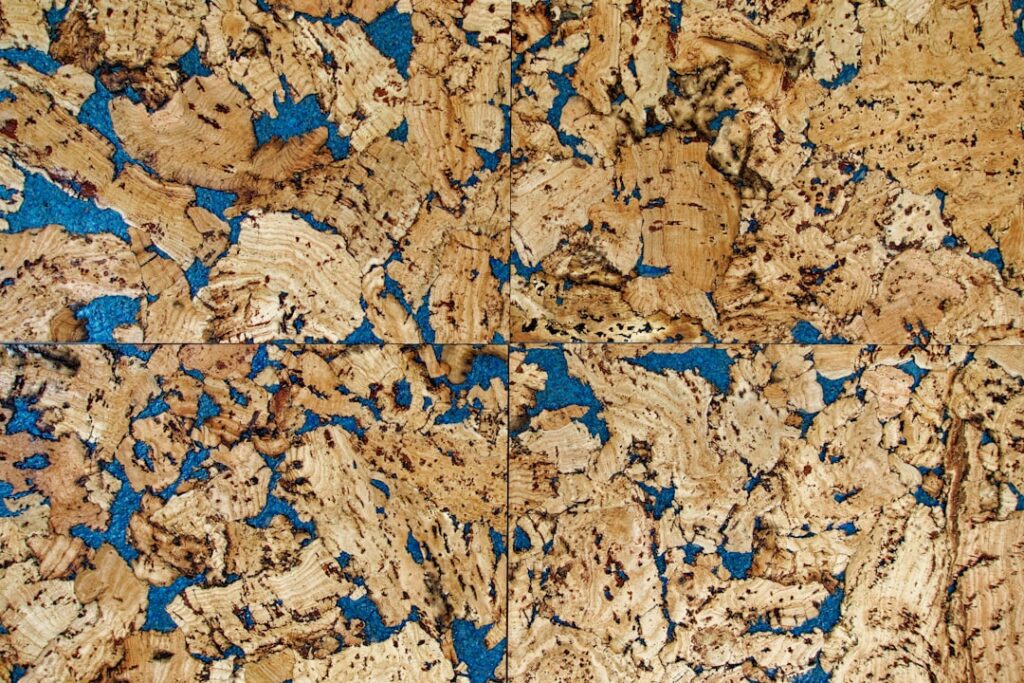
Walk into a Scandinavian-styled home and you may be standing on cork without realizing it. White cork flooring sidesteps the dated honey-amber look that hurt the material’s reputation in the 1980s, delivering instead a soft, light surface that brightens rooms and warms up under bare feet. This guide explains how white cork is made, what it actually costs in 2026, the brands worth shortlisting, and the failure points installers will not bring up unless you ask.
How Cork Becomes White
Raw cork is harvested from the bark of Quercus suber, the cork oak, every 9 years without harming the tree. The natural color is a warm amber to medium brown. Manufacturers achieve white tones through three methods: bleaching the granules before pressing, applying a white pigmented topcoat, or laminating a white-printed wear layer over a cork core.
Bleached cork retains the visible cellular structure but in a soft cream tone. Pigmented and printed versions look more uniform and can mimic linen, concrete, or limewash. Each method handles wear and refinishing differently, so identifying the construction matters before you buy.
Real Costs in 2026
White cork is one of the more expensive cork variants because the bleaching or pigmenting adds steps to manufacturing. Material prices currently fall in these ranges:
- Click-lock floating planks (10.5mm): $4.50 to $8.50 per sq ft material only
- Glue-down tiles (4mm or 6mm): $3.80 to $7 per sq ft material only
- Premium European brands (Wicanders, Amorim): $7 to $12 per sq ft material
- Professional installation labor: $2.50 to $5 per sq ft
- Total installed cost: $7 to $17 per sq ft
Add $1 to $2 per sq ft if you need self-leveling underlayment to bring the substrate within 3/16 inch over 10 feet, the standard most cork warranties require.
Where White Cork Performs Best
Bedrooms, home offices, reading nooks, and finished basements are the sweet spot. The material absorbs sound at roughly 0.15 noise reduction coefficient, dampens impact for tired feet and joints, and feels noticeably warmer underfoot than tile or vinyl because cork’s cellular structure traps air pockets.
It also works in low-moisture kitchens if the floor is glue-down, sealed properly, and you accept the maintenance commitment. Avoid full bathrooms, mudrooms, and entries with daily snow or rain exposure regardless of finish quality.
The Pros Worth Highlighting
White cork punches above its weight on comfort, sound, and sustainability. The material is harvested without felling trees, the cork oak forests of Portugal and Spain sequester an estimated 14 million tons of CO2 annually, and finished cork is recyclable at end of life.
Thermal performance is another genuine win. Cork has an R-value of about 0.6 per inch, roughly double what laminate or LVP offers, which translates to lower heating bills in cold climates and warmer floors over uninsulated basements. The forgiving surface also reduces breakage when you drop a glass, a wine bottle, or a phone, a small detail that adds up over years of household use.
The Drawbacks You Need to Hear
White cork shows dirt more visibly than darker tones. Daily sweeping is genuinely necessary, not optional. A pet with muddy paws will track visible streaks across a 200 sq ft room within an hour.
UV exposure is the bigger long-term issue. Cork yellows under direct sunlight, and the white tones make this shift more noticeable than amber or chestnut versions. Rooms with floor-to-ceiling south-facing windows will show shading patterns from area rugs and furniture within 18 to 24 months. Rotate rugs quarterly or accept the patina as character.
Heavy furniture leaves dents. Cork compresses under sustained point loads above 200 psi, which means dining chair feet, refrigerator wheels, and piano legs will all leave marks. Use felt pads under every chair and broad coasters under appliances. The dents partially recover within 24 to 48 hours after the load is removed, but full recovery is rarely complete after 6 months of pressure.
Top Brands to Consider
Stick with manufacturers that have been making cork for decades and offer documented warranties.
- Wicanders Hydrocork White Washed Oak: $6 to $9 per sq ft, click-lock with cork core and waterproof rating
- APC Cork Whitewash Plank: $7.50 to $11 per sq ft, traditional Portuguese cork with UV-cured topcoat
- Amorim Wise Sprint White: $8 to $12 per sq ft, recycled cork core with vinyl wear layer for water resistance
- USFloors Almada Tira Branco: $4.50 to $7 per sq ft, glue-down tiles in true white pigmented finish
- Globus Cork Custom Color White: $9 to $14 per sq ft, made-to-order in any Benjamin Moore color match
Installation Notes That Matter
Most homeowners can install click-lock white cork in a weekend with basic tools: a tapping block, pull bar, miter saw, and rubber mallet. Acclimate the cartons in the install room for at least 72 hours at 65 to 75°F and 40 to 60 percent relative humidity before opening any boxes.
Glue-down tiles are a different project. The contact adhesive used for cork tile flashes off in 30 to 45 minutes, requires a notched trowel, and gives you no second chances on placement. Hire a flooring contractor for any glue-down job over 100 sq ft unless you have prior tile-setting experience.
Floating cork needs a vapor barrier on concrete substrates and a 1/4 to 3/8 inch expansion gap at every wall. Skip either step and you will see buckling or seam separation within the first heating season.
Maintenance Schedule
Daily care is light: vacuum on a hard-floor setting or dry sweep with a microfiber pad. Avoid beater-bar vacuums, which tear at the surface texture over time. Damp mop weekly with a pH-neutral cleaner like Bona for Stone or Method Squirt + Mop diluted per label.
Re-coat the polyurethane finish every 5 to 8 years in residential use. Catch this maintenance window and your white cork floor will last 25 to 40 years. Miss it and the wear layer thins to the point where surface stains penetrate the cork itself, requiring full replacement.
Frequently Asked Questions
Does white cork flooring yellow over time?
Yes, gradually. The cork core under the white finish darkens with age, and UV exposure accelerates this shift. Expect visible warming of the white tone within 5 to 10 years. Choose pigmented finishes over bleached ones if minimizing yellowing is a priority.
Is white cork waterproof?
Standard cork is not waterproof. Hybrid products like Wicanders Hydrocork and Amorim Wise Sprint use a vinyl wear layer over the cork core, making them suitable for kitchens and powder rooms. Always check the manufacturer’s water-exposure rating before installing in wet areas.
Can I refinish white cork like hardwood?
You can re-coat the polyurethane topcoat with a buff-and-recoat service every 5 to 8 years, which costs $1.50 to $3 per sq ft. Full sanding is not recommended because the wear layer is typically 0.5mm or less, leaving little material to remove without damaging the pattern.
Prefer to explore on your own?
See how new flooring looks in your actual room in seconds — free, no signup.
Try the free Floor Studio →