
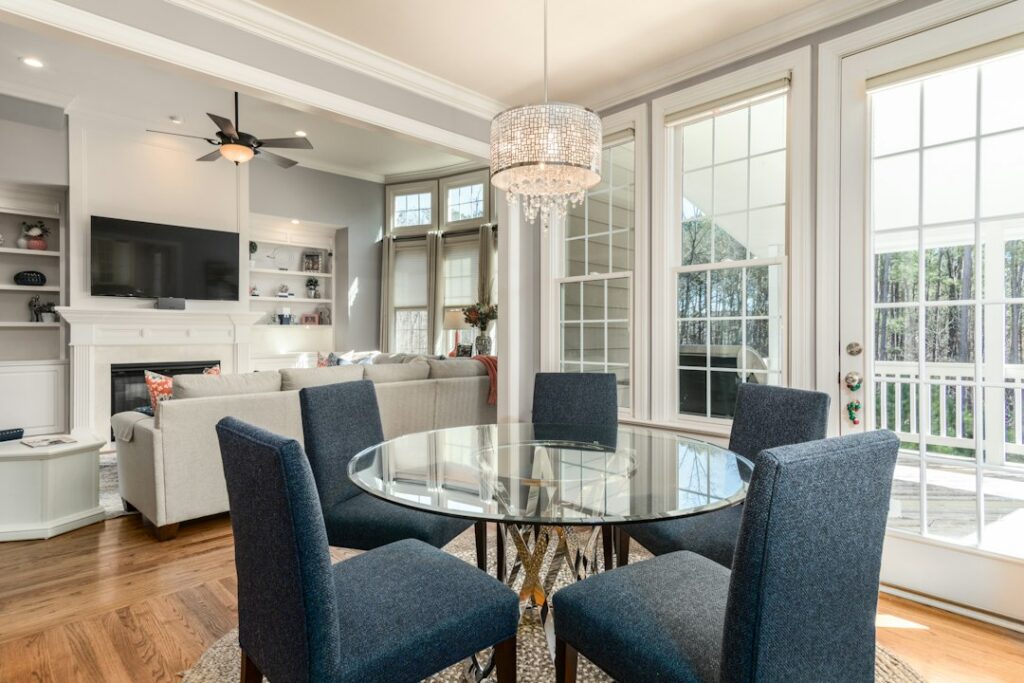
Ask a room full of designers for a safe white and a surprising number will name the same one. The White Dove paint color from Benjamin Moore (OC-17, part of its Off-White Collection) is a soft, slightly warm white with a light reflectance value (LRV) of about 83. It is warm enough to feel welcoming, but restrained enough that it rarely turns yellow or creamy on a wall.
Part of our Paint & Walls guide — explore the full guide →
That balance is why it shows up on walls, trim, ceilings and cabinets alike. A touch of gray in the mix softens it, so it never looks as stark as a pure white, and it plays well with both warm wood tones and cooler gray finishes. If you need one white to carry through an entire house, it is one of the most forgiving options to sample.
- White Dove Paint Color at a Glance
- Understanding the Undertones
- How White Dove Compares With Near Whites
- Best Rooms and Surfaces for White Dove
- Trim, Wall and Accent Pairings
- Choosing the Right Sheen
- How to Sample It Properly
- Troubleshooting Common Issues
- Cost and Coverage
- When to Call a Pro
- Frequently Asked Questions
White Dove Paint Color at a Glance
These specs come from Benjamin Moore’s own color page. Use the hex code only as a rough screen reference.
| Spec | Value | What it means |
|---|---|---|
| Color name and number | White Dove, OC-17 | Ask for OC-17 to avoid mix-ups with similar names |
| Collection | Off-White Collection | Grouped with soft whites rather than bright, pure whites |
| LRV | About 83 (listed as 83.16) | Light and bright while still showing some softness |
| Undertone | Soft warm, with a hint of gray | Reads gently warm, not yellow, not blue |
| Interior or exterior | Both | Tint it into the right product for the surface |
| Coordinating colors listed by the maker | Balboa Mist, Revere Pewter, Kendall Charcoal | Easy starting points for walls, accents and doors |
An LRV in the low 80s sits just below the brightest whites on the market, which is part of the appeal. It reflects plenty of light without the glare that very high-LRV whites can create in sunny rooms. Some regional versions of the maker’s site list a slightly different LRV, so check the chip or current color page if you need an exact figure.
Understanding the Undertones
The warmth in this white comes from a subtle yellow-beige note, softened by a whisper of gray. The gray is what keeps it from reading cream. Hold it next to a sheet of printer paper and the warmth becomes obvious; on its own in a room, most people simply see a soft white.
Light changes it in predictable ways:
- North-facing rooms: the cool light pulls out the gray, and it can look a little muted or shadowy. It still avoids the icy look that pure whites get in north light.
- South-facing rooms: warm sun brings the creamy side forward, giving a glowing, soft white.
- East-facing rooms: brighter and cleaner in the morning, softer and grayer by afternoon.
- West-facing rooms: fairly neutral in the morning and noticeably warmer at sunset.
- Bulbs: warm white bulbs (2700K) make it cozy; 3000K to 3500K keeps it closer to its chip.
How White Dove Compares With Near Whites
Most people shortlist White Dove alongside a few other popular whites. LRVs come from each maker’s color page.
| Color | LRV | Compared with White Dove |
|---|---|---|
| Benjamin Moore White Dove OC-17 | About 83 | Soft warm white with a touch of gray |
| Benjamin Moore Chantilly Lace OC-65 | About 90 | Brighter and crisper, with very little warmth |
| Benjamin Moore Simply White OC-117 | About 90 | Brighter, with a cleaner, sunnier warmth |
| Benjamin Moore Swiss Coffee OC-45 | About 82 | Creamier and slightly deeper, with a more visible yellow lean |
| Valspar Swiss Coffee 7002-16 | About 86 | A little lighter, similar soft warmth |
| Sherwin-Williams Alabaster SW 7008 | About 82 | A similar soft warm white; often looks a touch creamier |
If White Dove looks too warm in your room, step toward Chantilly Lace. If it looks gray or flat, Simply White adds brightness while keeping some warmth. If you want a cozier, creamier white, Swiss Coffee from the same maker sits just to the warm side.
Best Rooms and Surfaces for White Dove
Living rooms and open plans
Its flexibility is the big advantage here. It works with oak, walnut and painted floors, with linen and leather furniture, and with both warm and cool accent colors, so it carries well from room to room.
Kitchens and cabinets
White Dove is a classic cabinet color because it looks clean without looking clinical. It pairs well with white or warm-veined quartz, marble-look counters, butcher block, brass and matte black hardware. Use a cabinet-grade enamel in satin or semi-gloss.
Trim and doors
As a trim color, it softens the contrast with warm or greige walls. Next to very bright white walls, though, it can look slightly dingy, so pair it with walls of similar or warmer temperature.
Bedrooms and bathrooms
The gentle warmth feels restful in bedrooms. In bathrooms it softens white tile and porcelain, though under very cool vanity bulbs it can look grayer than expected.
Ceilings
Using it on walls and ceiling together creates a calm, enveloping look. A flat finish on the ceiling hides imperfections.
Trim, Wall and Accent Pairings
- All-over color: walls in matte or eggshell, trim and doors in semi-gloss, ceiling in flat. Simple and cohesive.
- With greige walls: White Dove trim softens the edges of greige and warm gray walls, such as Revere Pewter, which the maker lists as a coordinating color.
- With dark accents: charcoal, navy, black and deep green islands, doors or accent walls create strong contrast against it.
- With soft colors: pale blues, sage greens and blush tones look fresh rather than sugary next to its warmth.
- Metals and woods: brass, bronze, matte black and natural or white oak all suit it.
Choosing the Right Sheen
Sheen changes how any white reads, and the White Dove paint color is no exception. Flat and matte finishes absorb more light and make it look softer and slightly deeper, which suits ceilings and low-traffic walls. Eggshell adds a gentle glow and better washability for living rooms and bedrooms. Satin is the usual pick for kitchens, bathrooms, hallways and kids’ rooms, where walls get wiped often. Semi-gloss and gloss reflect the most light, so the color looks brighter and cleaner on trim, doors and cabinets.
Because glossier finishes look lighter, using the same white dove paint color on matte walls and semi-gloss trim creates a subtle two-tone effect without needing a second color. If you want stronger contrast, choose a brighter white for the trim or go darker on the walls.
How to Sample It Properly
- Use large samples. Peel-and-stick paint sample swatches are easy to move around and avoid patchy test spots on the wall.
- Test on several walls, including the darkest corner and the window wall.
- Compare against fixed finishes like flooring, counters, tile and cabinets.
- View it morning, afternoon and evening with your normal lighting.
- Put it next to a pure white paper to see the undertone clearly.
- Test trim and walls together if you plan to use different whites.
Troubleshooting Common Issues
It looks gray. Low light and north exposure bring out the gray. Add warm lamps, or switch to a brighter white with a higher LRV.
It looks yellow or creamy. Strong south light, warm bulbs and orange-toned wood floors push it warm. Try 3000K to 3500K bulbs, or move to a crisper white.
The trim looks dirty. Trim in White Dove next to brighter walls can look off-white in a bad way. Match the trim temperature to the walls.
Coverage is patchy. Over dark colors, use a tinted primer and two finish coats. Light colors hide poorly over strong ones.
Cabinet paint is chipping. Poor adhesion usually traces back to skipped degreasing, sanding or primer. A bonding primer and a cabinet enamel solve most problems.
Cost and Coverage
A gallon generally covers about 350 to 400 square feet per coat, so an average bedroom takes around 2 gallons for two coats on the walls. Premium paint for a room typically falls in a range of about $80 to $200, depending on the product line and sheen. Professional painting for a single room usually costs a few hundred dollars up to around $1,000, and professional cabinet painting often runs several thousand dollars for an average kitchen.
When to Call a Pro
Walls in a single room are easy DIY territory. Consider a professional for cabinet refinishing, high ceilings and stairwells, full exteriors, and any home built before 1978, where existing paint should be tested for lead before sanding or scraping. A painter can also do large sample boards in your real light, which helps when choosing among similar whites.
Frequently Asked Questions
What color is Benjamin Moore White Dove?
It is a soft, slightly warm white with a hint of gray. It looks gentle and welcoming without reading cream or yellow in most rooms.
What is the LRV of White Dove?
Benjamin Moore lists an LRV of about 83 (83.16) for White Dove OC-17, which makes it a light, bright white with some softness.
Is White Dove warm or cool?
It is a warm white, but a restrained one. The touch of gray keeps it close to neutral, especially in north-facing light.
Is White Dove good for trim?
Yes, especially with greige, warm gray or soft white walls. Next to very bright pure white walls, it can look slightly off, so match temperatures.
What is the difference between White Dove and Chantilly Lace?
Chantilly Lace is brighter, with an LRV of about 90, and much crisper. White Dove is softer and warmer, with an LRV of about 83.
Can I use White Dove in a north-facing room?
Yes. It may look slightly grayer there, but it stays softer than pure whites, which often look cold in north light.


