Fresh white doors can brighten an entire hallway, but the wrong product leaves brush marks, sticky edges, and yellowing within a year. Choosing the right white interior door paint is about matching the sheen, the formula, and the shade of white to a surface that gets touched, slammed, and scrubbed constantly. Doors are one of the hardest-working painted surfaces in a home, so they demand a durable, self-leveling finish. This guide covers the best paint types, which white to pick, and a proven method for a smooth, factory-like result.
Part of our Paint & Walls guide — explore the full guide →
Why Doors Need Special Paint
Interior doors take abuse walls never see. Fingers, pets, cleaning rags, and constant opening and closing wear on the finish. A flat wall paint would scuff and stain almost immediately on a door. That is why doors call for a harder, more washable coating that resists sticking when the door closes against its jamb, a problem called blocking. The goal is a smooth, wipeable surface that holds up to daily contact and cleans easily.
Choosing the Right Sheen
Sheen is the first decision, and it affects both durability and looks.
- Semi-gloss: The traditional and most popular choice for doors. Durable, highly washable, and reflects light for a crisp look, though it shows surface flaws.
- Satin or eggshell: A softer sheen that hides imperfections better but is slightly less scrubbable.
- Gloss: The most durable and dramatic, common on high-end and traditional homes, but it magnifies every brush mark and dent.
Semi-gloss is the safe, versatile pick for most homeowners, balancing durability, cleanability, and a clean appearance.
Water-Based Enamel vs. Oil-Based
The formula matters as much as the sheen. Old-school oil-based paint self-levels beautifully and dries rock hard, but it yellows over time, off-gasses strong fumes, and takes forever to cure. Modern water-based alkyd or acrylic enamels, like Benjamin Moore Advance or Sherwin-Williams Emerald Urethane Trim Enamel, level almost like oil, dry faster, clean up with water, and stay white without yellowing. For white doors especially, a water-based enamel is the clear winner because it resists that dreaded amber tint.
Not All Whites Are the Same
White is a whole spectrum, and the undertone changes the mood of a room. A true bright white like Sherwin-Williams Extra White reads crisp and modern. A soft warm white like Benjamin Moore White Dove has a gentle, creamy feel that flatters traditional trim. Cool whites lean blue or gray for a contemporary look. Sample your top choices against your existing trim and wall color, since a white that looks perfect on the chip can clash once it is up. Match your doors to your trim white for a unified look.
Prep Is Everything
A smooth finish is 80 percent preparation. Clean the door with a degreaser to remove hand oils, then lightly sand the whole surface with 220-grit paper to dull the sheen and give the new paint something to grip. Wipe off all dust with a tack cloth. Fill any dents with wood filler and sand smooth. If the door is bare wood, stained, or previously oil-painted, prime it first with a quality bonding primer so the new paint adheres and covers evenly.
Should You Prime First?
Priming is essential in several cases: bare or new wood, doors with stains or water marks, glossy surfaces, and any time you are painting over a dark color or oil-based paint with water-based enamel. A stain-blocking primer prevents wood tannins and old stains from bleeding through your fresh white. If you are simply refreshing an already-painted light door in good condition, a quality self-priming enamel may let you skip the separate primer coat.
The Brush-and-Roll Method
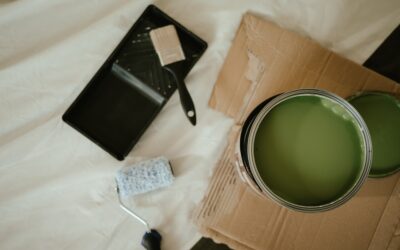
- Remove the door and lay it flat on sawhorses if possible, which prevents drips and lets paint level.
- Remove or tape the hardware, and take off the knob for a clean edge.
- Cut in the panel details and edges with a high-quality angled brush.
- Immediately roll the flat areas with a small foam or microfiber roller, then lightly tip off with the brush.
- Let the first coat dry fully, sand lightly with 320-grit, wipe clean, and apply a second coat.
For panel doors, work in a consistent order: panels first, then the horizontal rails, then the vertical stiles, to avoid overlap marks.
Avoiding Brush Marks and Drips
Self-leveling enamel does most of the work, but technique helps. Do not overwork the paint; lay it on and leave it to level rather than brushing repeatedly. Use a fine foam roller for the smoothest flat surfaces. A paint conditioner like Floetrol extends the drying time so the paint levels out before it sets, a trick that hides brush strokes. Keep a wet edge and never go back over paint that has started to skin over, or you will drag marks into it.
Curing and Rehanging
Paint dries to the touch in a few hours but takes days to fully cure and harden. Wait at least 24 hours, and ideally longer for enamel, before rehanging the door and closing it against the jamb, or the fresh paint may stick and pull. Some enamels take up to two weeks to reach full hardness, so treat the door gently during that window.
Spraying for a Flawless Finish
For the smoothest possible result, an HVLP sprayer beats brush and roller, laying down an even coat with no marks at all. Spraying takes more setup, masking, thinning the enamel, and controlling overspray, so it makes the most sense when you are painting several doors at once. If you go this route, spray in a dust-free space, keep the gun a consistent distance from the surface, and apply light, overlapping passes. Two thin sprayed coats over a primed door produce a finish that rivals a factory-painted slab.
Final Thoughts
The right white interior door paint transforms a tired door into a crisp, durable focal point. Choose a water-based enamel in semi-gloss to avoid yellowing and get easy cleaning, pick a white that harmonizes with your trim, and never skip the sanding and priming. Follow the brush-and-roll method with a leveling additive, give it time to cure, and your doors will look factory-smooth for years.