
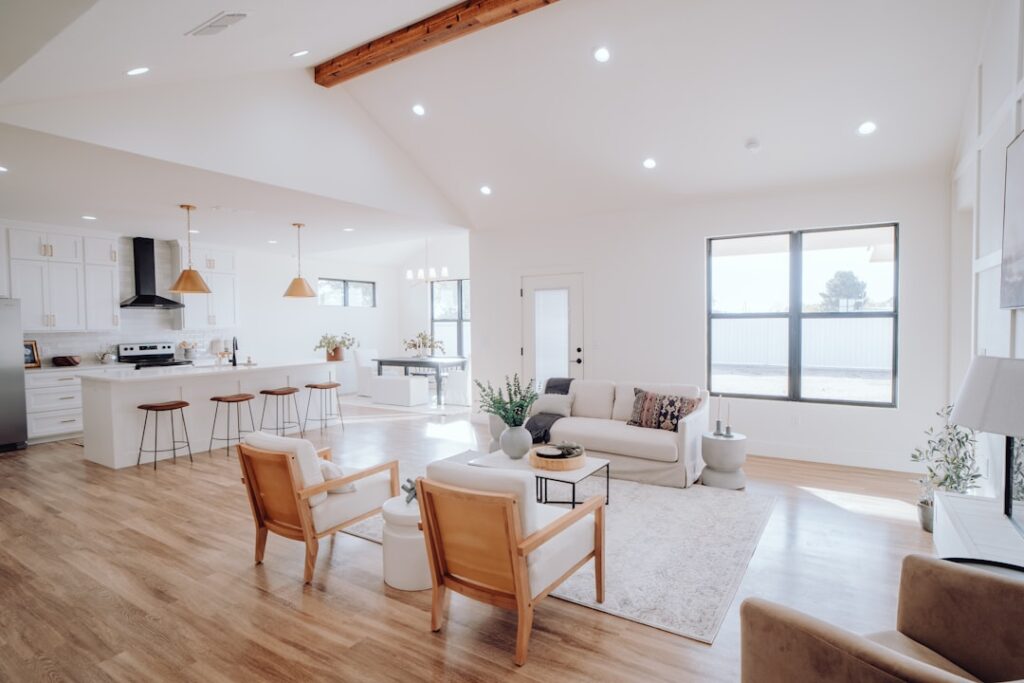
There is no such thing as “just white.” Walk into any paint store and you will find well over 150 whites on the swatch rack, each with an undertone that can read crisp and clean in one room and cold and clinical in another. Choosing the right white interior paint is less about picking the whitest chip and more about reading undertones, matching sheen to the room, and testing under your own light. Get it right and white makes a space feel larger, brighter, and timeless. Get it wrong and your fresh coat looks gray, yellow, or hospital-blue by dinnertime.
Part of our Paint & Walls guide — explore the full guide →
- Why White Is the Hardest Color to Get Right
- Warm White vs Cool White
- Reading the Undertone Like a Pro
- Choosing the Right Sheen
- Top White Interior Paints Worth Testing
- Always Test Before You Commit
- Matching White to Your Fixed Elements
- Ceilings and Trim: Do Not Default to the Same White
- Common White Paint Mistakes
- Whole-House White vs Room-by-Room
- Prepping Walls for a Flawless White Finish
- The Bottom Line
Why White Is the Hardest Color to Get Right
White reflects nearly everything around it, so it borrows color from your flooring, furniture, and especially your light. A north-facing room bathes white in cool blue light that can make a bright white look dingy, while a west-facing room floods it with warm afternoon gold. That is why the same gallon can look completely different in two rooms of the same house. The trick is to choose an undertone that counteracts or complements the light you already have.
Warm White vs Cool White
Every white leans one of two directions, and understanding that split solves most decisions.
Warm Whites
Warm whites carry yellow, cream, or beige undertones. They feel cozy and inviting, and they flatter warm-toned oak floors, brass fixtures, and traditional trim. Benjamin Moore White Dove and Sherwin-Williams Alabaster are the two most-specified warm whites in the country for good reason — they read clean without tipping into stark. Use warm whites in bedrooms, living rooms, and any north-facing space that needs its cool light softened.
Cool Whites
Cool whites lean gray, blue, or green. They feel modern, airy, and razor-sharp, which suits contemporary kitchens, bathrooms, and rooms with lots of natural light to spare. Benjamin Moore Chantilly Lace and Sherwin-Williams Extra White are go-to cool whites for a bright, gallery-clean look. Be careful using them in low-light or north-facing rooms, where they can slide into a sterile, bluish cast.
Reading the Undertone Like a Pro
The fastest way to spot an undertone is to place your candidate chip next to a true, pure white — the back of the swatch card or a piece of printer paper works. Against that reference, a warm white suddenly looks noticeably yellow and a cool white looks faintly gray or blue. Never judge a white in isolation; your eye will call almost anything “white” until it has something to compare against.
Pay attention to the LRV, or Light Reflectance Value, printed on many chips. Whites range from roughly 80 to 95 LRV. A high number near 90+ delivers maximum brightness; something in the low 80s reads soft and creamy. For trim you generally want the higher end so it pops against walls.
Choosing the Right Sheen
Sheen matters as much as color, because it controls durability and how much the undertone shows. Higher gloss reflects more light and exaggerates surface flaws.
- Flat/Matte: Hides drywall imperfections beautifully; best for ceilings and low-traffic adult bedrooms. Harder to wipe clean.
- Eggshell: The all-around living-room and bedroom standard — subtle glow, easy touch-ups, decent washability.
- Satin: A slight sheen that wipes down well, ideal for hallways, kids’ rooms, and busy family spaces.
- Semi-Gloss: The classic choice for trim, doors, cabinets, and bathrooms where moisture and scrubbing are constant.
A common designer move is walls in eggshell and trim in semi-gloss using the same white or a slightly brighter one, which creates crisp definition without introducing a second color.
Top White Interior Paints Worth Testing
These consistently perform across real homes:
- Benjamin Moore White Dove (OC-17): Soft warm white, the most versatile whole-house pick.
- Sherwin-Williams Alabaster (SW 7008): Creamy, forgiving, gorgeous on trim and walls alike.
- Benjamin Moore Chantilly Lace (OC-65): Crisp near-pure white for modern spaces and bright trim.
- Sherwin-Williams Pure White (SW 7005): A balanced white with just enough warmth to avoid sterility.
- Benjamin Moore Simply White (OC-117): Bright and fresh with a whisper of warmth.
Expect to pay roughly $50 to $75 a gallon for premium lines like Benjamin Moore Aura or Sherwin-Williams Emerald, and $35 to $50 for solid mid-tier lines. One gallon covers about 350 to 400 square feet per coat, and white almost always needs two coats for even coverage.
Always Test Before You Commit
Never buy three gallons off a one-inch chip. Buy sample pints — about $8 each — and paint two-foot squares on at least two walls in the room, ideally one that gets direct light and one in shadow. Better yet, paint a poster board you can move around and prop it against your trim, floor, and furniture. Watch it for a full day: morning, midday, evening, and under your artificial lights at night. Warm LED bulbs push whites yellow, while daylight-balanced 5000K bulbs cool them down.
Matching White to Your Fixed Elements
Your floor and trim make the decision easier. Warm oak or hickory floors and cream-toned tile pair naturally with warm whites; gray-wash floors, marble with gray veining, and chrome or matte-black fixtures call for cool whites. If your trim is already painted a specific white and you like it, sampling that exact color for the walls one shade softer creates a seamless, high-end look.
Ceilings and Trim: Do Not Default to the Same White
Contractor “ceiling white” is usually a flat, ultra-bright white that can clash with a carefully chosen warm wall. A polished approach uses your wall white tinted at 50 percent strength on the ceiling, which keeps everything in the same family while letting the walls stay the star. For trim, a slightly brighter and higher-sheen white than the walls gives rooms that crisp, tailored edge without looking mismatched.
Common White Paint Mistakes
Homeowners most often go wrong by ignoring exposure, over-relying on the internet, and skipping samples. A white that dazzled in a friend’s sunny kitchen may fall flat in your shaded one. Screens distort color badly, so a photo is never a reliable guide. And picking a stark, high-LRV white for a cozy bedroom frequently backfires, leaving the room feeling cold rather than restful. Slow down, sample, and let your own light make the final call.
Whole-House White vs Room-by-Room
One of the smartest moves in a repaint is choosing a single versatile white to run throughout the main living areas, then letting light and furnishings make each room feel distinct. A soft warm white like White Dove or Alabaster flows seamlessly from hallway to living room to bedroom, creating a calm, cohesive backdrop and eliminating awkward transitions where two whites meet at a doorway. The continuity makes a home feel larger and more considered, and it simplifies touch-ups years later because you are only tracking one color. Reserve a different white — usually a brighter one — for a specific-use room like a modern bathroom or a north-facing office that genuinely needs a cooler tone.
Practically, a whole-house approach also saves money and headaches. Buying a single color in a five-gallon bucket costs less per gallon than multiple one-gallon cans, and your painter works faster without constantly swapping products and cleaning equipment between colors. If you want subtle variety, tint the same white to 75 or 50 percent strength in a room or two rather than introducing an entirely new hue, which keeps everything in the same undertone family.
Prepping Walls for a Flawless White Finish
White is unforgiving of surface flaws because it reflects so much light, so preparation matters more here than with any darker color. Fill nail holes and dents with spackle, sand them flush, and skim any rough patches so the wall reads perfectly smooth under a bright coat. Wipe away dust with a damp cloth, and prime any repairs or previously dark walls with a quality primer — going from a bold color to white almost always needs a primer coat plus two finish coats to avoid a shadow bleeding through. Cutting corners on prep shows up instantly once the light hits a fresh white wall, revealing every ripple and patch you thought you had hidden.
The Bottom Line
White interior paint delivers the brightest, most timeless backdrop in your home — but only when the undertone matches your light and finishes. Decide warm or cool first, match the sheen to the room’s traffic, sample generously, and view your top two whites across a full day before buying in bulk. With a little testing up front, you will land on a white that looks intentional and elegant in every light, not just on the swatch card.


