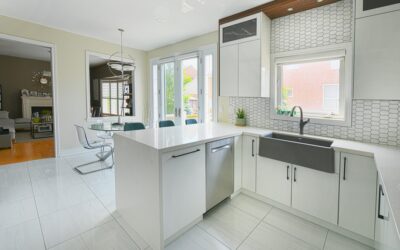
Walk through any kitchen showroom and the surface drawing the most attention is almost always a bright, clean slab of engineered stone. A white quartz counter top has become the default choice for modern and transitional kitchens because it delivers the airy, marble-inspired look homeowners crave without marble’s fussy maintenance. Made from roughly 90 to 94 percent ground natural quartz bound with resins and pigments, these countertops are nonporous, consistent, and tough, which is exactly why designers reach for them when a client wants timeless brightness that will not stain after the first glass of red wine.
Part of our Countertops guide — explore the full guide →
Why White Quartz Is So Popular
Quartz solves the central problem with natural stone: porosity. Granite and marble must be sealed regularly, and marble in particular etches when acidic liquids like lemon juice or wine touch it. Engineered quartz is sealed from the factory and never needs resealing. White, in turn, makes small kitchens feel larger, reflects light, and pairs with virtually any cabinet color from navy to walnut. The combination of a forgiving surface and a versatile color is hard to beat.
Popular White Quartz Styles
Not all white quartz looks the same. The main looks include:
- Pure or solid white: A clean, uniform field with no veining, perfect for minimalist and contemporary kitchens.
- Marble-look with gray veining: Soft, flowing gray veins mimic Carrara or Calacatta marble. This is the best-selling category by far.
- Speckled / flecked: Fine gray and beige flecks add subtle texture and hide crumbs well.
- Warm white / cream: Slightly off-white tones that pair with warm woods and traditional cabinetry.
Popular brand patterns include Caesarstone Calacatta Nuvo, Silestone Eternal Calacatta Gold, Cambria Brittanicca, and MSI Calacatta Laza, each offering a different vein scale and warmth.
What It Costs
A white quartz counter top typically runs $50 to $120 per square foot installed, with most kitchens landing in the $60 to $90 range. Dramatic marble-look patterns from premium lines like Cambria can push $100 to $150 per square foot. For an average 40-square-foot kitchen, budget roughly $2,500 to $4,500 installed. Edge profiles, waterfall sides, and cutouts for undermount sinks and cooktops add to the total. Always confirm whether your quote includes templating, fabrication, and installation, not just the slab.
Pros and Cons to Weigh
The advantages are significant: nonporous and stain-resistant, no sealing required, highly scratch and chip resistant, antimicrobial because nothing soaks in, and remarkably consistent slab to slab so your sample matches what gets installed. The trade-offs are real too. Quartz is not heatproof, and resin can scorch or yellow if you set a hot pan directly on it, so always use trivets. It is also less heat tolerant and less UV-stable than natural stone, meaning it can discolor in a sunny outdoor kitchen. And true white shows coffee rings and crumbs more readily than a busy granite.
Keeping White Quartz Bright
Daily care is genuinely easy. Wipe with mild dish soap and warm water or a quartz-safe spray and a soft cloth. For dried spills, a nonabrasive cleaner like Method or a dedicated quartz cleaner lifts residue without dulling the finish. To remove stubborn marks, a paste of baking soda and water rubbed gently then rinsed works well. Avoid these surface-killers:
- Bleach, oven cleaner, and high-alkaline degreasers, which can discolor the resin
- Abrasive scouring pads that scratch the polish
- Direct heat from pots, pans, and hot styling tools
- Permanent markers and harsh solvents
Choosing an Edge Profile
The edge profile shapes how your white quartz counter top reads, and it affects cost. An eased or straight edge with a slightly softened top corner is the most modern and economical choice, usually included in the base price. A beveled edge cuts a small angle for a touch of detail. An ogee edge carves an S-curve for a traditional, ornate look and costs more per linear foot. A bullnose rounds the entire edge for a soft, family-friendly profile. For contemporary kitchens, a thicker mitered edge that makes the counter appear 2 to 3 inches deep is popular and dramatic, while a waterfall edge that runs the material down the side of an island is the splurge statement. Premium edges typically add $10 to $30 per linear foot.
Removing Tough Stains and Marks
Even a stain-resistant surface picks up the occasional mark. For dried food or grease, a quartz-safe degreaser or a magic eraser used gently lifts it without dulling the polish. Permanent marker, ink, or nail polish respond to a small amount of isopropyl alcohol on a soft cloth, followed by a rinse. Hard water spots and limescale around the faucet wipe away with a 50/50 vinegar-water solution applied briefly, then rinsed quickly, do not let acidic cleaners sit on quartz. For stubborn dried-on residue, scrape gently with a plastic putty knife rather than anything metal. Never reach for bleach, oven cleaner, or abrasive powders, which can permanently discolor or scratch the resin binder that holds white quartz together.
White Quartz vs the Alternatives
Compared to white marble, quartz wins on durability and maintenance while marble wins on natural depth and the fact that it ages gracefully. Against white granite, quartz offers more consistent color and no sealing, while granite handles heat better. Versus quartzite, a natural stone often confused with engineered quartz, quartzite is harder and heat-resistant but porous and pricier. For most homeowners who want the marble look without the worry, a white quartz counter top is the most practical match.
Is a White Quartz Counter Top Right for You?
If you want a bright, low-maintenance kitchen surface that resists stains and looks current for years, white quartz is one of the safest investments you can make, and it consistently appeals to buyers at resale. Just commit to using trivets and cutting boards, keep harsh chemicals away, and choose a vein pattern you will still love a decade from now. Order a full-size slab viewing rather than judging from a small sample, since vein scale reads very differently across a big counter. With reasonable care, a quality white quartz counter top stays gleaming for 15 to 25 years or more.