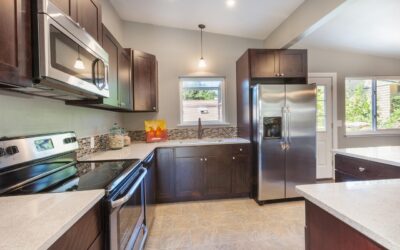
Walk through any new-construction kitchen or renovation showroom and one surface dominates: white counters with soft gray veining. White quartz kitchen countertops have become the default choice for American remodels because they deliver the bright marble look buyers want without marble’s etching, staining, and sealing headaches. But “white quartz” spans everything from $45-per-square-foot builder slabs to $120-plus designer patterns, and the differences matter. This guide covers the styles, real installed costs, honest durability facts, and the details that separate a stunning kitchen from a flat, clinical one.
Part of our Countertops guide — explore the full guide →
What Quartz Actually Is
Engineered quartz is roughly 90 percent ground natural quartz crystals bound with polymer resins and pigments, pressed and cured into slabs. That composition explains its behavior: the quartz content makes it harder than granite in everyday scratch resistance, while the resin makes it non-porous — nothing to seal, ever — but also vulnerable to high heat, which can scorch or discolor the resin binder. Major brands include Caesarstone, Cambria, Silestone, MSI Q Quartz, LG Viatera, and Corian Quartz, and most offer dozens of whites alone. Slabs typically come in 2 cm and 3 cm thicknesses, with 3 cm standard for kitchens in most of the country.
Do not confuse engineered quartz with quartzite, the natural metamorphic stone with a similar name. Quartzite is quarried, needs periodic sealing, and tolerates heat far better; engineered quartz is factory-made, sealed by nature, and heat-shy. Salespeople occasionally blur the two, and the maintenance expectations differ enough that the distinction is worth confirming on any quote you sign.
The Main White Quartz Styles
White is not one color in the quartz world. The market breaks into four broad looks:
- Pure and bright whites: uniform, nearly veinless slabs for minimalist and modern kitchens. Crisp, but can read sterile in large expanses without warm elements nearby.
- Marble-look whites: the bestsellers — warm or cool white grounds with gray veining that mimics Calacatta and Carrara marble. Premium versions carry veining through the slab edge for realistic mitered corners and waterfalls.
- Speckled and granular whites: small flecks of gray, beige, or mirror chips; forgiving of crumbs and fingerprints and usually the budget tier.
- Warm whites and creams: ivory grounds with taupe or gold veining that pair with wood cabinetry and brass hardware in transitional kitchens.
Finish matters as much as pattern. Polished is the classic bright surface; matte or “suede” finishes look sophisticated and hide smudges but show fingerprints’ oils more on dark colors — on white, matte is very livable.
What White Quartz Costs Installed
Nationally, expect $50 to $150 per sq ft installed, with most homeowners landing between $60 and $100. Builder-grade speckled whites from wholesale brands sit at the low end; heavily veined Calacatta-style patterns from premium lines occupy the top. A typical 40 sq ft kitchen therefore runs roughly $2,400 to $4,800 including fabrication and installation. Budget separately for the extras that quietly add up: sink cutouts ($100 to $300), cooktop cutouts, upgraded edge profiles like ogee or mitered waterfall ($10 to $40 per linear foot or more), and full-height quartz backsplashes, which can add $800 to $2,500. Get itemized quotes from at least three fabricators — pricing for the identical slab commonly varies 20 to 30 percent across shops in the same metro.
Durability: What It Resists and What It Doesn’t
Quartz earns its reputation on the daily abuse tests. It shrugs off knife nicks (though cutting directly on it dulls your knives), does not harbor bacteria, and — the big one versus marble — does not etch when lemon juice, wine, or tomato sauce sits on it. Because it is non-porous, coffee and red wine wipe away even hours later in most cases.
Its two genuine weaknesses: heat and UV. Setting a 350°F pan directly on quartz can leave a permanent ring or crack from thermal shock, so trivets are non-negotiable; most manufacturers void warranties for heat damage. Direct sunlight through a big south-facing window can slowly yellow some resins, which is why quartz is not recommended for outdoor kitchens. Chips at sink edges and corners can happen with a hard impact, though a fabricator can usually fill them with color-matched resin for $150 to $350.
Keeping White Quartz White
White quartz also hides less than you might hope, in one specific way: crumbs and dust vanish on it, but anything darker than the surface — coffee drips, stray pen marks, burnt toast shavings — stands out immediately. Households that prefer counters to conceal daily mess between wipe-downs sometimes find speckled patterns more forgiving than pure whites, which is worth an honest conversation before you fall for the brightest slab in the showroom.
Maintenance is genuinely easy, which is most of the sales pitch. Daily care is dish soap, water, and a soft cloth. For dried spills, a plastic scraper and a non-abrasive cleaner handle it. What to avoid on white surfaces specifically: undiluted bleach, oven cleaners, and abrasive powders, all of which can dull or discolor the resin over time. The metal-mark quirk surprises people — dragging aluminum pans or cast iron across quartz can leave gray pencil-like marks. They are metal deposits on the surface, not scratches, and a soft scrub with a non-abrasive cleaner like Bar Keepers Friend (used gently and rinsed promptly) usually lifts them.
Choosing a Slab Without Regrets
Small samples lie. A 4-inch chip cannot show you vein scale, pattern repeats, or how the ground color reads across 8 feet, so view full slabs at the fabricator or distributor before committing — and view them under lighting similar to your kitchen’s, because cool LED lighting turns warm whites gray and warm bulbs turn cool whites cream. Three more decisions worth deliberate thought: ask to see the actual slabs reserved for your job (patterned quartz varies between production lots), approve the fabricator’s vein layout for seams and the sink area, and confirm seam placement in writing. A skilled fabricator can make a seam nearly disappear on veined white quartz; a careless one can put a hard line right at the center of your island.
Is White Quartz Right for Your Kitchen?
Choose white quartz kitchen countertops if you want a bright, low-maintenance surface with strong resale appeal and you are willing to use trivets. Consider alternatives if your heart is set on the depth and cold-slab feel of real Calacatta (nothing fully replicates it), if you need outdoor durability (go porcelain or granite), or if your budget tops out below $50 per sq ft installed (look at builder-grade granite or laminate). For the broad middle of American kitchens — busy households, resale-conscious owners, marble taste without marble tolerance — white quartz remains the sensible default for a reason.