
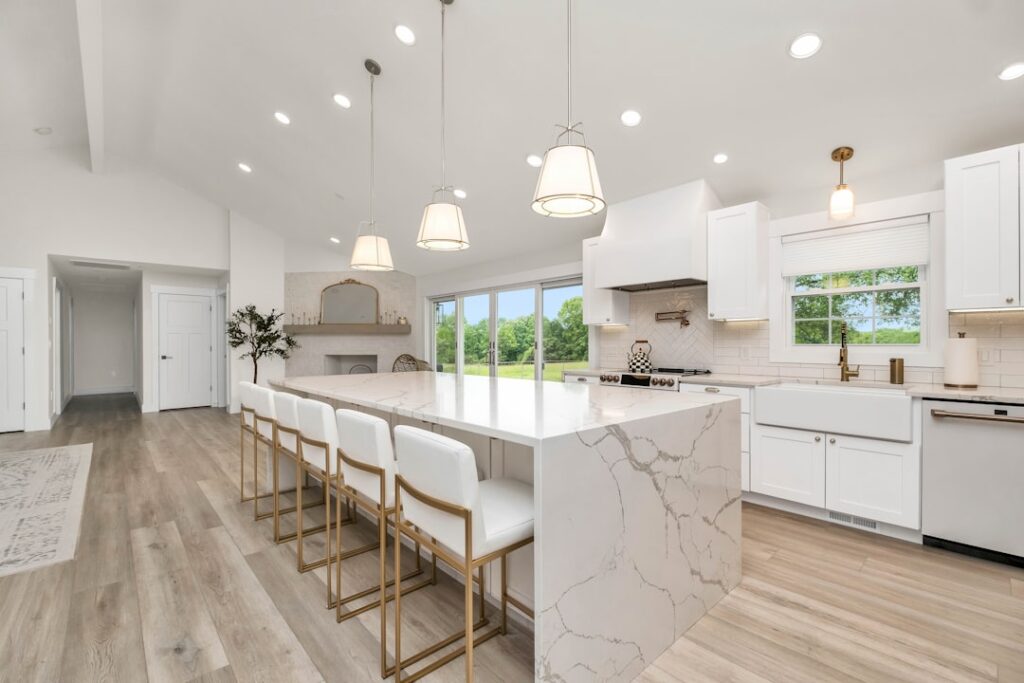
Engineered stone has moved well beyond the kitchen counter. A quartz table top brings the same tough, low-maintenance surface to dining tables, kitchen islands, side tables, and even outdoor-adjacent furniture. If you want a table that survives daily life without the fuss of natural stone, quartz deserves serious consideration.
Part of our Countertops guide — explore the full guide →
What a Quartz Table Top Actually Is
Despite the name, engineered quartz is not a single slab cut from the earth. It is roughly 90 to 93 percent ground natural quartz combined with resins and pigments, then pressed and cured into dense, uniform slabs. That manufacturing process is exactly why it performs so well: the result is non-porous, consistent in color, and far less prone to the surprises you get with natural stone.
For a table, this matters. Unlike a kitchen counter that stays put, a table top is seen and touched from every angle, so the consistency and finish quality are front and center. Quartz delivers a flawless, repeatable look that natural materials cannot always guarantee.
Why Homeowners Choose Quartz for Tables
Durability tops the list. The surface resists scratches, chips, and stains better than wood or marble, which makes it ideal for a busy household. Spilled wine, coffee, and tomato sauce wipe away because there are no pores for liquids to seep into.
- Non-porous: no sealing required, ever.
- Stain-resistant: handles food, drinks, and ink with a simple wipe.
- Scratch- and chip-resistant: stands up to keys, dishes, and daily wear.
- Hygienic: the sealed surface gives bacteria nowhere to hide.
- Design range: from solid colors to convincing marble-look veining.
The Trade-Offs to Weigh
No material is perfect. Quartz is heavy, so a large table top needs a sturdy, well-built base to carry the load safely. It is also sensitive to high heat. The resins can scorch or discolor if you set a hot pot directly on the surface, so always use trivets and hot pads.
Prolonged direct sunlight can cause some quartz to fade or yellow over time, which makes it a better fit for indoor tables than a sunny patio. And while quartz is tough, a sharp impact on a thin edge can still chip it. Weigh these against the near-zero maintenance and you will see why many people accept the trade.
Cost Expectations
Pricing depends on slab quality, color, thickness, and edge work. As a rough guide, fabricated quartz typically runs $50 to $120 per square foot installed, with premium designer patterns and thicker profiles reaching higher. A custom dining table top can therefore represent a meaningful investment compared to a wood table.
Remember these are estimates that vary by region, fabricator, and how complex your design is. Curved edges, cutouts, and oversized one-piece tops add labor and cost. Always request a detailed quote that includes templating, fabrication, edge profile, and installation rather than relying on a price-per-square-foot figure alone.
Edge Profiles and Style
The edge you choose shapes the whole personality of the table. A few common options include the following.
- Eased or square: a clean, modern line with a slightly softened corner.
- Beveled: an angled cut that adds a crisp, dimensional detail.
- Bullnose: a fully rounded edge that is soft to the touch and family-friendly.
- Mitered: two pieces joined to create the look of a thick, substantial slab.
For tables, a softened or rounded edge is often the practical pick because people brush against it constantly. Pair the edge with a thickness that suits the room, where a thicker mitered profile reads bold and contemporary.
Choosing the Right Base
Because a quartz top is heavy, the base is not an afterthought, it is a structural requirement. A large dining-table slab can weigh well over a hundred pounds, so the frame, legs, or pedestal must be engineered to carry that load without flexing or wobbling over time.
Solid hardwood, welded steel, and substantial pedestal bases all work well. Avoid lightweight or flimsy frames that can sag or tip, and make sure the top is properly secured or supported so it cannot shift. If you are repurposing an existing table base or commissioning a custom one, tell the fabricator the slab’s weight and dimensions so the support is rated correctly. A well-matched base also affects proportions, since a thick quartz top wants a base visually strong enough to balance it.
Color and Style Options
One of quartz’s biggest advantages is the sheer range of looks available. Solid whites, soft grays, and deep charcoals deliver clean, modern simplicity. Marble-look patterns with flowing veins bring luxury and drama, mimicking Carrara or Calacatta without the upkeep of real marble. Speckled and concrete-look finishes suit industrial and transitional spaces.
Because the color and pattern are engineered, what you see in the sample is what you get across the whole top, with no surprise blotches or weak spots. That predictability lets you plan a room with confidence. Consider the finish too, since most quartz is polished, but matte and honed surfaces are increasingly available for a softer, more contemporary feel.
Care and Cleaning
Caring for quartz is refreshingly simple. Wipe it with warm water and a mild dish soap or a pH-neutral cleaner, then dry with a soft cloth. Skip abrasive scrubbing pads and harsh chemicals such as bleach or oven cleaner, which can dull the finish over time.
Protect the surface from heat with trivets, clean spills promptly even though staining is rare, and avoid cutting directly on the top so you do not dull your knives or mar the polish. Follow any specific guidance from the slab manufacturer, since warranties often spell out approved cleaning products.
Is a Quartz Table Top Worth It
For most homeowners who want a striking, hardworking surface with almost no upkeep, the answer is yes. A quartz table top combines the elegance of stone with practical resistance to stains and scratches, making it a smart choice for dining rooms, kitchens, and high-use furniture. Just give it a strong base, protect it from direct heat and harsh sun, and it will look as good in a decade as it does on day one.


