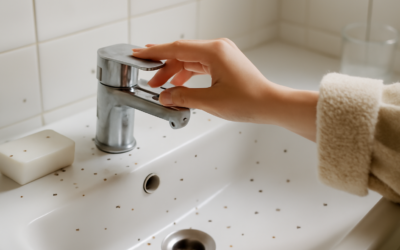
You walk into the bathroom and notice small, fuzzy gnats clinging to the wall near the sink or tub, and they never seem to fully go away. If you are asking why are there flies in my bathroom, the most likely answer is drain flies, also called moth flies or sewer gnats. These insects breed in the slimy organic film that builds up inside drains, and they thrive on the constant moisture a bathroom provides. Killing the adults you see does nothing if you ignore the breeding site. The real fix is finding and cleaning the source.
Part of our Bathroom Remodeling & Flooring guide — explore the full guide →
Identifying Drain Flies
Before you treat anything, confirm what you are dealing with. Drain flies are tiny, about an eighth of an inch, with a fuzzy, moth-like body and rounded wings held roof-like over the back. They are weak fliers that tend to sit on walls and surfaces and move in short, hopping flights rather than buzzing around your head. That behavior distinguishes them from fruit flies, which hover near food and produce, and from fungus gnats, which are slender and associate with houseplant soil. If the flies congregate near drains and the tub, drain flies are almost certainly your culprit.
Where They Breed
Drain flies lay eggs in the gelatinous organic muck that coats the inside of pipes, the so-called biofilm made of hair, soap scum, skin cells, and grease. Their larvae feed on that gunk in standing or slow-moving water. Common breeding spots in a bathroom include:
- The sink and tub drains, especially the slime just below the drain opening.
- The overflow opening in a sink or tub, which rarely gets cleaned.
- A floor drain or a rarely used shower drain with a dried-out trap.
- The toilet area if there is a hidden leak or wax-ring failure.
The Confirmation Test
To pinpoint the breeding drain, tape a clear plastic cup or strip of tape, sticky side down, loosely over each drain overnight when the bathroom is not in use. In the morning, check for flies stuck to the tape or trapped under the cup. The drain that produces flies is your breeding source. This simple test saves you from cleaning the wrong drain and chasing the problem in circles.
Cleaning the Drain Is the Real Solution
Once you know the source, scrub out the biofilm. Work through these steps:
- Remove the stopper or cover and pull out any visible hair and gunk.
- Scrub the inside of the pipe with a long, stiff drain brush to physically scrape off the slimy film where larvae live.
- Flush with very hot water, then pour an enzyme-based drain cleaner formulated to digest organic buildup. Enzyme cleaners work better here than harsh chemicals because they break down the biofilm itself.
- For a natural pass, follow boiling water with baking soda and vinegar, let it fizz, then rinse again with hot water.
- Repeat over several days to catch the full life cycle, since eggs and pupae you missed will hatch.
Avoid pouring bleach as your main strategy; it may rinse past the film without removing it, leaving the breeding layer intact.
Check for Moisture and Leaks
If flies persist after you clean every drain, look for a hidden water source. Drain flies can breed under or behind the toilet if the wax ring leaks, in a damp wall cavity from a pipe leak, or even in sewage seeping below a floor drain. Persistent, hard-to-kill drain flies are sometimes a warning sign of a sewage or plumbing leak under the floor or behind a wall. Inspect for soft flooring, musty smells, or water stains, and bring in a plumber if you suspect a leak, since the moisture problem must be fixed for the flies to stop.
Knocking Down the Adults
Cleaning the source ends the breeding, but you may still have adult flies for a few days while the cycle finishes. Because drain flies are slow, you can swat them or vacuum them off walls. A small bowl of apple cider vinegar with a drop of dish soap traps some adults. There is no need for heavy pesticide spraying; the adults die off quickly once they cannot reproduce. Resist the urge to rely on insecticide alone, because it never addresses the gunk producing new flies.
Could It Be a Different Fly?
If your confirmation test comes back empty and the flies do not match the fuzzy, moth-like description, reconsider the species. Fruit flies are tan and hover around any food residue, even a forgotten cup or a trash can, so check for organic matter rather than drains. Fungus gnats are thin and dark and breed in the damp soil of houseplants, including one kept on the bathroom windowsill; let the soil dry out and they vanish. Phorid flies also breed in decaying organic matter and can signal a broken sewer line. Identifying the right insect points you to the right fix, so do not assume drain flies if the evidence does not fit.
Why They Show Up in Guest and Rarely Used Bathrooms
It is no accident that drain flies often appear in a guest bath, a basement bathroom, or any sink and tub that sits idle for stretches. When a drain goes unused, the water in its P-trap evaporates and the slime layer inside the pipe dries into a perfect breeding bed, while the empty trap also lets sewer gases and flies travel up. The fix is simple: run water down every drain in the home weekly, even the ones you do not use, to keep traps full and flush the pipe. Pouring a little water and a splash of mineral oil into a rarely used floor drain slows evaporation and keeps the trap sealed longer between uses.
Preventing a Return
Keeping drain flies away comes down to denying them the wet, gunky habitat they need. Clean your drains regularly with hot water or an enzyme treatment, use drain strainers to catch hair, and run water down rarely used drains, like a guest tub or floor drain, every week or two so the trap stays full and the pipe does not develop a dry slime layer. Fix leaks promptly and keep the bathroom ventilated to reduce standing moisture. Do that consistently, and the next time you wonder why are there flies in my bathroom, the answer will simply be: there aren’t.