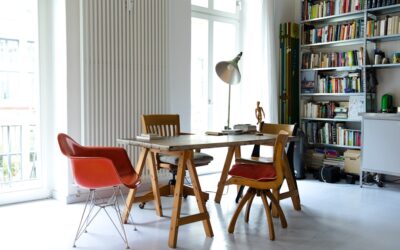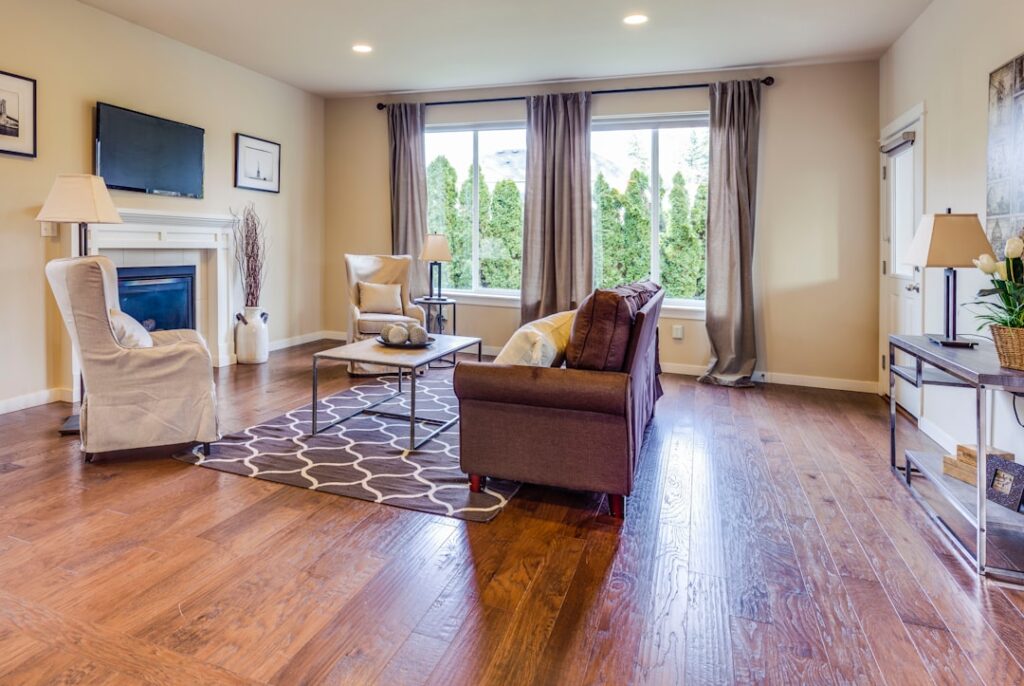
Maple has a quiet, almost creamy look that reads clean and modern the moment you walk into a room. Wide plank maple flooring takes that smooth grain and stretches it across boards 5 to 12 inches wide, so a floor shows fewer seams and feels calmer underfoot. It is a favorite in Scandinavian-inspired kitchens and bright open-plan living rooms. But maple has quirks that trip up buyers who assume all hardwoods behave alike. Knowing them before you order saves both money and regret.
- What Makes Maple Different
- The Case for Wide Planks
- Solid vs. Engineered Wide Plank Maple
- The Staining Problem Nobody Warns You About
- What Wide Plank Maple Flooring Costs
- Finishes and Grades to Consider
- Installation Considerations
- How Maple Compares to Oak
- Living With Maple Day to Day
- Is Wide Plank Maple Flooring Right for You?
What Makes Maple Different
Domestic hard maple, also called sugar maple, carries a Janka hardness rating of about 1,450, which lands it above red oak’s 1,290. That puts it among the harder floors you can install in a home. The grain is tight and subtle, with a pale near-white to light amber color and only faint figure. Soft maple, a separate group of species, rates closer to 950 Janka and is better suited to furniture than floors, so confirm you are buying hard maple.
The pale, even canvas is maple’s signature draw. In wide planks that uniformity becomes a design statement rather than a background. It also shows dirt and pet hair less than very dark floors, which is a practical bonus for busy households.
The Case for Wide Planks
Standard strip flooring runs 2 1/4 to 3 1/4 inches wide. Wide plank maple flooring starts at 5 inches and climbs to 10 or even 12 inches. The visual payoff is real: fewer seams make a space feel larger and more contemporary, and the broad boards show off maple’s smooth surface without the busy lines that narrow strips create.
- Fewer seams mean fewer places for dirt to collect.
- Wide boards suit large rooms and open floor plans without looking chopped up.
- The look feels current, echoing high-end European flooring trends.
- Installation can go faster since each board covers more area.
Solid vs. Engineered Wide Plank Maple
Wood expands and contracts across its width, and wide boards magnify that movement. This is why engineered construction matters more with wide planks than with narrow strips. Solid maple planks over 5 inches are prone to gapping in dry winters and cupping in humid summers, especially in climates with big seasonal swings.
Engineered wide plank maple layers a real maple veneer of 1mm to 4mm over a cross-laminated plywood core. That core resists movement, making it the smarter pick for widths above 6 inches, for basements, and for homes over radiant heat. Expect to see most quality wide plank maple sold as engineered for exactly this reason. If you want solid, keep the width at 5 inches or under and keep indoor humidity between 35 and 55 percent year-round.
The Staining Problem Nobody Warns You About
Here is maple’s biggest catch. Its dense, tight grain does not absorb stain evenly, so dark stains often come out blotchy, with muddy dark patches and light streaks. Contractors who work mostly with oak sometimes learn this the hard way on a maple job.
If you love maple’s natural pale tone, this is a non-issue; a clear or whitewashed finish looks stunning. But if you want a rich walnut or espresso floor, maple fights you. Getting an even dark color requires a conditioner or a two-step dye-and-stain process that adds labor and cost. Many pros will steer you toward oak if dark is the goal. For medium and light tones, or wire-brushed and lightly wire-brushed looks, maple performs beautifully.
What Wide Plank Maple Flooring Costs
Pricing swings with construction, veneer thickness, and grade. As a general range for materials:
- Engineered wide plank maple: $4 to $9 per square foot.
- Premium and select-grade engineered: $9 to $14 per square foot.
- Solid maple (narrower widths): $5 to $10 per square foot.
- Professional installation: $3 to $8 per square foot on top.
For a 400-square-foot room, plan on $2,800 to $8,800 all in, depending on the product and your market. Prefinished planks cost more per board but skip the on-site sanding and finishing labor, which usually nets out cheaper and faster than a raw-and-finish job.
Finishes and Grades to Consider
Prefinished maple typically ships with an aluminum-oxide topcoat carrying a 25 to 30 year residential warranty, and it resists scratches better than most site-applied finishes. Site-finished maple lets you control sheen and color on the spot, but remember the staining caveat above.
Grade affects appearance and price. Select and better grade shows the cleanest, most uniform color with minimal mineral streaks. Character or rustic grade includes more color variation, small knots, and mineral lines, which some homeowners love for warmth and others find distracting. For a serene, uniform wide-plank look, pay up for the higher grade.
Installation Considerations
How wide plank maple goes down depends on its construction and your subfloor. Engineered planks offer three methods: floating with a click-lock system over a foam underlayment, glue-down over concrete or plywood, or nail-down over a wood subfloor. Floating installs fastest and suits DIYers, while glue-down gives the most solid feel underfoot and is preferred over slabs.
Wide boards demand a flat subfloor. Any dip greater than 3/16 inch over a 6-foot span should be leveled first, or the planks will flex and the joints can loosen over time. Acclimate the flooring in the installation room for at least three to five days so it reaches equilibrium with your home’s humidity, and leave a 1/2-inch expansion gap around the perimeter. With maple’s tendency to move, that gap is not a suggestion; it is what keeps a summer humidity spike from buckling the floor.
Plan your layout so the longest, cleanest boards land in the most visible sightlines, and stagger end joints by at least 6 to 8 inches for a natural, structurally sound pattern. Because wide planks show every seam, careful racking of the boards before installation pays off in the finished look.
How Maple Compares to Oak
Buyers cross-shopping maple almost always look at oak too, so the comparison is worth spelling out. Oak has an open, pronounced grain that hides scratches, dents, and dirt well, and it accepts stain evenly across the whole color spectrum. Maple has a smooth, subtle grain that shows a cleaner, more contemporary face but reveals wear and resists dark stain.
- Hardness: hard maple 1,450 Janka vs. red oak 1,290, so maple is slightly tougher.
- Staining: oak takes any color evenly; maple blotches with dark stains.
- Look: maple is smooth and modern; oak is textured and traditional.
- Hiding wear: oak’s grain camouflages scratches; maple shows them more.
- Price: the two are broadly comparable, with premium grades of each overlapping.
The verdict is simple. Choose maple for a bright, smooth, natural or light floor, and choose oak if you want a dark stain or maximum scratch camouflage.
Living With Maple Day to Day
Maple is hard, but its finish still needs care. Use felt pads under furniture, keep grit off with a soft-bristle broom or vacuum, and wipe spills quickly. Clean with a pH-neutral hardwood cleaner and a barely damp microfiber mop; never wet-mop or use vinegar, which dulls the finish over time. Because the surface is pale, it hides fine scratches from certain angles but shows dark scuffs, so entry mats at doors earn their keep.
Sun is worth a mention. Maple can amber slightly with UV exposure, and area rugs can leave lighter patches. Rotate rugs occasionally and consider UV-filtering window film in south-facing rooms to keep the color even.
Is Wide Plank Maple Flooring Right for You?
Choose wide plank maple flooring if you want a bright, smooth, modern floor and you are happy with natural, whitewashed, or light-stained tones. Go engineered for anything over 6 inches wide, for concrete subfloors, or for humid climates. Look elsewhere, likely white oak, if your heart is set on a deep espresso floor, since maple resists dark stain. Weighed honestly, maple rewards buyers who match it to the right finish and construction, delivering a clean, durable floor that stays quietly beautiful for decades.
Prefer to explore on your own?
See how new flooring looks in your actual room in seconds — free, no signup.
Try the free Floor Studio →