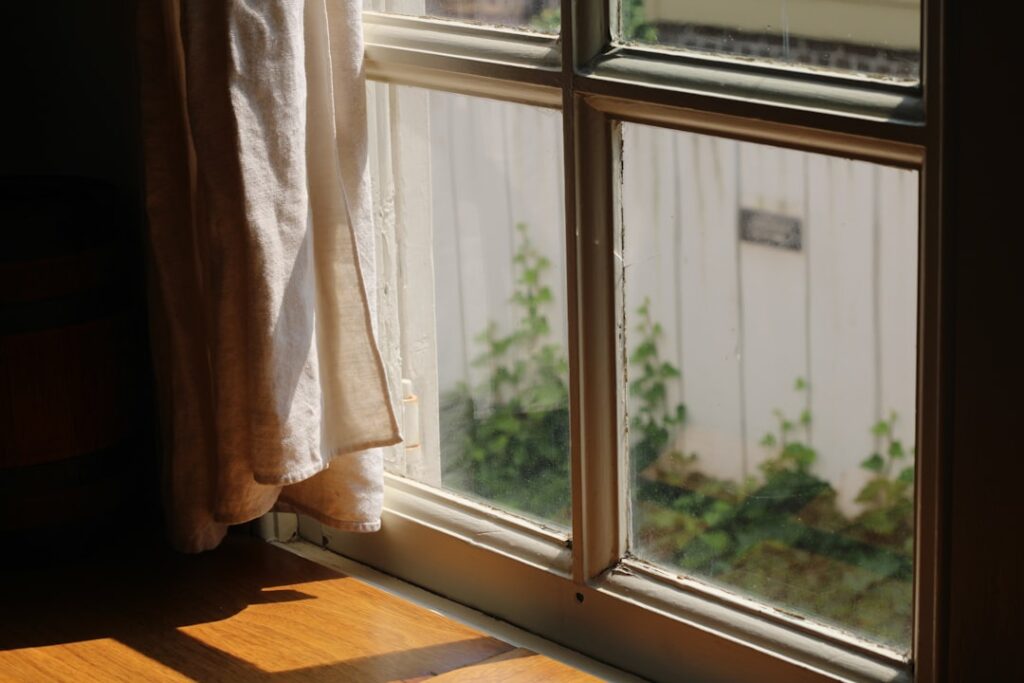
Type it one way and your spell-checker shrugs; type it the other and half the style guides side with you anyway. The windowsill or window sill question is one of those English compounds caught mid-migration, and the short answer is that both spellings are correct and widely published. If you’re deciding windowsill or window sill for a listing, a contract, or a blog post, the one-word form windowsill is the safer modern default — it’s the primary entry in Merriam-Webster and the Oxford dictionaries — while the two-word form remains common in construction specs and older texts. Here’s the full story on the spelling, and then, because you’re probably standing next to one, a contractor’s quick tour of what the sill actually is and why it matters more than any other stick of wood in the window.
Part of our Windows & Doors guide — explore the full guide →
- What the Dictionaries Say
- How English Compounds Drift Together
- Which Form to Use Where
- Sill, Stool, or Apron? The Part Most People Point At Isn't the Sill
- Practical Sill Facts Worth Knowing
- Don't Confuse It With the Sill Plate
- A Few Windowsill Facts for the Curious
- Quick Answers to the Follow-Up Questions
- The Bottom Line
What the Dictionaries Say
Merriam-Webster lists windowsill (one word) as the headword, defining it as the horizontal member at the bottom of a window opening. The Oxford English Dictionary and Oxford’s learner dictionaries do the same, as do American Heritage and Collins — with “window sill” acknowledged as a variant. Dictionary consensus, then, leans clearly to the closed compound. You’ll also occasionally meet the hyphenated window-sill in 19th- and early-20th-century books; that form is effectively obsolete in contemporary editing, surviving only in reprints and deliberately antique prose. No major dictionary treats any of the three as an error — this is a matter of preference and register, not correctness.
How English Compounds Drift Together
The migration follows a well-worn pattern in English: two words become a hyphenated pair, then fuse. Base ball became base-ball became baseball; to day became to-day became today. Frequency drives the fusion — the more often a pair is spoken as a single concept with single-word stress (WIN-dowsill, not window SILL), the faster print closes the gap. Google’s book-scanning data shows “windowsill” overtaking “window sill” in published American English around the 1930s–40s, with the closed form now appearing roughly twice as often. British usage followed the same curve slightly later. Meanwhile door sill, a rarer phrase, still floats between forms — less frequency, less fusion. Language being what it is, expect “window sill” to keep fading but never quite disappear.
Which Form to Use Where
- General writing, journalism, fiction, web copy: use windowsill. It matches AP-style dictionaries and reads as current.
- Construction documents and the trades: window sill (two words) persists in architectural specs, building codes, and manufacturer literature — largely because specs treat “sill” as the component noun and “window” as its modifier, parallel to “door sill” and “sill plate.” Nobody will red-line either form.
- SEO and real-estate listings: search engines treat the two as near-equivalents, so write for your audience and be consistent within a document. Consistency is the only real rule.
Sill, Stool, or Apron? The Part Most People Point At Isn’t the Sill
Here’s the twist the dictionaries won’t tell you: in trade terminology, the flat interior shelf where the cat sleeps and the plants live is technically not the sill at all. Window anatomy, from outside in:
- Sill: the bottom horizontal member of the window frame itself, sloped 5–14 degrees toward the exterior so water drains away from the house. On traditional wood windows it projects past the siding with a drip groove milled underneath.
- Stool: the interior horizontal shelf that caps the sill and projects into the room — the ledge everyone calls the windowsill. Typically 3/4″–1″ thick, projecting about 3/4″ past the apron, with “horns” extending past the casing on each side.
- Apron: the trim board fastened flat against the wall directly beneath the stool, hiding the joint and supporting the stool’s edge.
In everyday speech, “windowsill” covers the stool and nobody’s confused. But if you’re ordering trim stock or reading a window quote, the distinction saves real money — replacement “sill” pricing and replacement “stool and apron” pricing are different line items.
Practical Sill Facts Worth Knowing
However you spell it, the sill is the hardest-working piece of the assembly, because gravity delivers every drop of rain and condensation to it.
- Slope matters: exterior sills should fall away from the building — historically about 1″ of drop across the sill’s depth. A sill that’s settled dead-level ponds water and is the number-one rot entry point on wood windows.
- Materials: traditional sills are vertical-grain fir or pine; modern options include cellular PVC (rot-proof, $15–$30 per 6′ of sill nosing), composite, aluminum-clad wood, and stone or cast concrete on masonry homes. Interior stools come in paint-grade pine or poplar ($10–$20 per opening), oak, or PVC for bathroom humidity.
- The screwdriver test: press a flathead into the sill’s lowest exterior corner each spring. Firm wood shrugs it off; soft, punky fibers mean water has found the end grain, and a $30 epoxy consolidant repair now beats a $400 sill replacement later.
- Repair vs. replace: localized rot under 20% of the sill responds well to two-part epoxy systems (Abatron-style, $40–$60 a kit). Beyond that, sills on most double-hungs can be cut out and replaced individually in 2–3 hours without removing the window.
- Condensation duty: interior stools on single-pane and aluminum windows take a winter-long soaking; a bead of paintable caulk at the stool-to-jamb joints and a gloss or semi-gloss finish keep the water sitting on top of the paint film instead of wicking into joints.
Don’t Confuse It With the Sill Plate
One genuine terminology trap hides nearby: the sill plate. In framing, the sill plate (or mudsill) is the pressure-treated 2×6 bolted flat on top of the foundation wall that the entire house frame stands on — no relation to windows at all beyond sharing a word. The overlap causes real confusion in inspection reports and contractor quotes: “sill rot” on a foundation report is a structural issue involving jacking and framing carpentry at $100–$300 per linear foot, while “sill rot” on a window report is a $30–$400 trim repair. If a document just says “sill,” make someone specify which one before any money moves. Related cousins you’ll meet in the same paragraph of a spec: the door sill (the exterior threshold member under an entry door), the saddle (an interior threshold, often stone or metal, bridging flooring changes at a doorway), and the subsill (a secondary drainage pan or flashing piece under a window sill in commercial and coastal construction).
A Few Windowsill Facts for the Curious
The word has been fused long enough to grow idioms. Cats and pie-cooling aside, sill depth is a design spec worth knowing: standard interior stools in modern 2×4-wall construction project barely 2″, while older homes with thick masonry walls offer 6–10″ — genuinely usable shelf space, and the reason plant-on-the-windowsill culture comes from prewar housing. Deep sills are also why remodelers furring out walls for insulation often extend stools with matching hardwood rather than replacing them; a spliced extension with a biscuit joint and matching paint reads as original. And if you’re staging a house to sell, agents will tell you cleared, freshly painted windowsills photograph disproportionately well — the sill line is where the eye lands in every listing photo of a bright room, whichever way the listing copy spells it.
Quick Answers to the Follow-Up Questions
- Is “windowsill” one word in American and British English? Yes — both national varieties now prefer the closed form, with the two-word variant accepted everywhere.
- What’s the plural? Windowsills or window sills, matching whichever form you chose.
- Does spell-check flag either? Most checkers accept both; a few older dictionaries flag “window sill” as two accepted words rather than an error.
- Interior ledge vs. exterior piece? Casually, “windowsill” covers both; in trade language the exterior member is the sill and the interior ledge is the stool.
The Bottom Line
Write windowsill if you want the modern, dictionary-preferred form; write window sill if you’re drafting specs or matching an existing document’s style; and reserve window-sill for Dickens cosplay. Neither choice is wrong, and no editor, inspector, or search engine will penalize you for the variant. Spend the attention you save on the object itself: check the slope, probe the corners, and keep paint and caulk intact — because whatever you call that piece of wood, it’s the part of the window that decides whether water stays outside your walls.