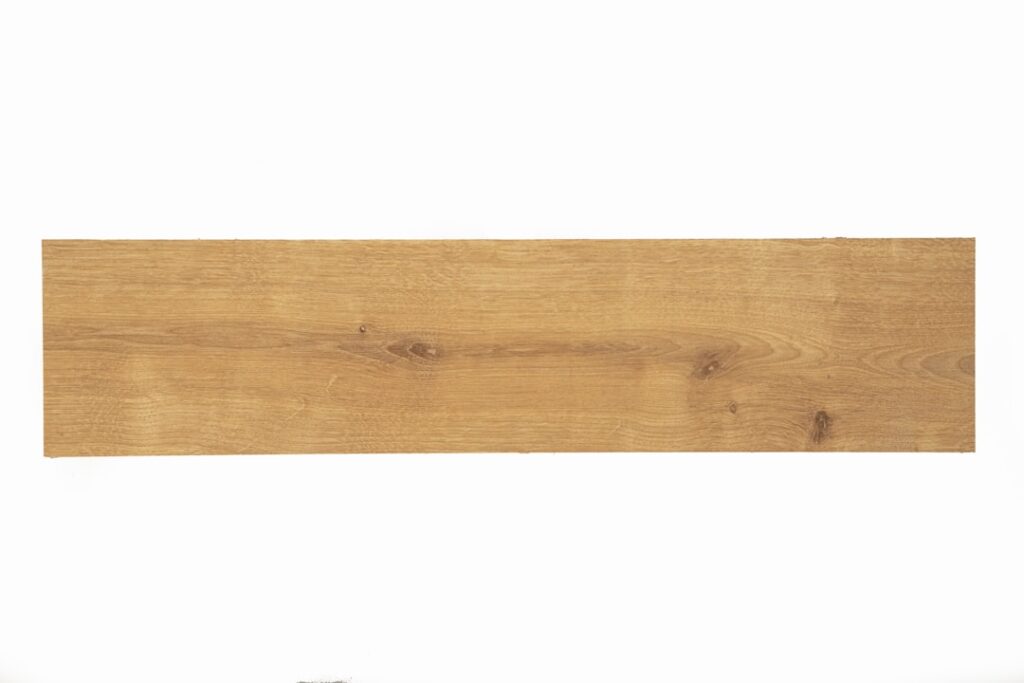
If you love the warmth of hardwood but dread water, scratches, and refinishing, wood plank porcelain tile may be the smartest floor you can buy. These are long, narrow porcelain tiles printed and textured to mimic real wood grain, then fired hard enough to handle bathrooms, kitchens, basements, and patios where solid wood would warp or rot. Modern printing technology has made the imitation convincing enough that many guests never realize the floor is tile until they touch it.
Part of our Tile & Grout guide — explore the full guide →
What Makes It Different From Hardwood
Real wood is organic, so it expands, contracts, scratches, and stains. Wood plank porcelain tile is a manufactured ceramic product fired at high temperatures, giving it a near-zero water absorption rate, exceptional hardness, and total immunity to moisture damage. You get the visual warmth of oak, walnut, or weathered barnwood with the practicality of tile. There is no sanding, no refinishing, and no fear of a leaking dishwasher ruining the floor.
Sizes and Realistic Looks
Plank tiles come in lengths that emphasize the wood illusion, commonly 6 by 24, 6 by 36, 8 by 48, and even longer planks. Longer, narrower formats look most like real boards. Surface textures range from smooth to embossed grain that you can feel underfoot, and finishes span glossy to matte. Quality manufacturers use multiple face designs per box so the grain pattern does not obviously repeat across the floor.
Color options cover the full wood spectrum: pale whitewashed and gray tones, honey and natural oak, rich espresso, and rustic reclaimed looks with knots and saw marks.
Where to Use It
Because it is fully waterproof and frost-resistant in the right ratings, wood plank porcelain tile goes places real wood cannot:
- Bathrooms and laundry rooms — no swelling or water staining.
- Kitchens — spills and dropped pans do little harm.
- Basements — handles below-grade humidity that wrecks solid wood.
- Patios and porches — frost-rated tiles work outdoors in many climates.
- Over radiant heat — tile conducts warmth efficiently.
It is a particularly good fit for homes that want a single, continuous wood look from living areas into wet rooms without changing materials.
Layout Patterns and the Stagger Rule
How you arrange the planks dramatically affects the result. The most natural look uses a random or one-third offset, where each plank starts about a third of the way along the one before it. Avoid a 50 percent brick offset with long planks, because slight bowing common to long tiles can create lippage, the uneven height between tile ends that catches feet and light.
Other layouts include herringbone and chevron for a high-end statement, though these increase cutting and waste. Whatever pattern you choose, dry-lay a section first and mix planks from several boxes to distribute the face patterns.
Installation Tips
Plank porcelain demands a flat substrate. Because the tiles are long, even small dips in the floor show up as lippage. Self-leveling underlayment or careful screeding may be needed on uneven slabs.
- Use a high-quality, large-format thin-set mortar and back-butter the planks for full coverage.
- Set tile leveling clips along the long edges to keep ends flush during curing.
- Keep grout joints tight, typically 1/8 to 3/16 inch, and choose a grout color close to the tile for a seamless wood appearance.
- Maintain expansion joints at walls and at large room transitions per the tile guidelines.
This is a job where prep and patience pay off. If your subfloor is wavy or you are tackling herringbone, hiring an experienced tile setter is worth the cost.
Cost Expectations
Wood plank porcelain tile typically falls in a moderate price range per square foot for the material, with premium and large-format lines costing more. Installation usually adds a comparable or higher amount depending on layout complexity and floor prep. While the upfront cost can rival or exceed engineered wood, you avoid refinishing and replacement costs over the floor’s long life.
Care and Maintenance
Upkeep is one of the biggest advantages. Sweep or vacuum grit, then mop with a neutral pH cleaner. There is no waxing, oiling, or refinishing. The main maintenance item is the grout: seal cement grout after it cures and keep it clean, or use a stain-resistant grout to minimize upkeep. Address any cracked grout promptly so moisture cannot reach the substrate.
Choosing the Right Look
Because the wood pattern is printed, quality varies between budget and premium lines. Lower-cost tiles may repeat the same few grain images often, creating an obvious pattern across the floor. Better lines offer a dozen or more unique faces, plus realistic embossing that follows the printed grain so the texture you feel matches the wood you see. When shopping, ask how many distinct face patterns are in the line, and lay several pieces side by side to check for repetition. Spending a little more on a high-variation product is what makes the floor read as real wood rather than a copy.
Consider plank width and color carefully too. Wide, long planks in muted tones feel contemporary, while narrower planks with knots and color variation lean rustic. Match the look to your home’s style and the amount of natural light in the room, since dark tones can make a dim space feel smaller.
Grout Color and Seamless Looks
One detail separates a convincing wood-look floor from an obvious tile floor: the grout. Real wood has no grout lines, so the closer your grout matches the tile and the tighter the joint, the more wood-like the result. Choose a grout color that blends with the dominant plank tone rather than contrasting with it. Keep joints tight within the tile’s guidelines, and consider a stain-resistant grout so the lines stay clean and uniform. This single choice has an outsized effect on how authentic the floor looks.
Is It Right for Your Home?
Wood plank porcelain tile is ideal if you want hardwood looks with worry-free durability, especially in wet or high-traffic areas. The trade-offs are that it feels harder and cooler underfoot than wood unless paired with radiant heat, and a flat substrate plus skilled installation are essential for a flawless result. Choose a high-variation product, blend the grout color, and prep the floor properly. For homeowners who value longevity and easy care, it delivers the best of both worlds.
Prefer to explore on your own?
See how new flooring looks in your actual room in seconds — free, no signup.
Try the free Floor Studio →