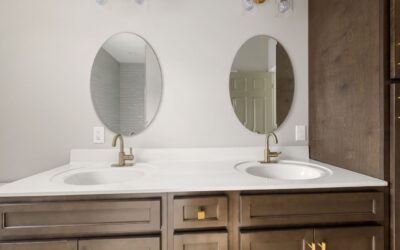
A wooden bathroom vanity anchors the room with natural warmth, character, and durability that painted particleboard simply cannot match. Whether you want the rich grain of solid walnut, the classic look of painted oak, or the rustic charm of a reclaimed-wood piece, wood remains the most versatile and enduring vanity material. This guide walks through wood types, construction quality, sizing, finishes, moisture protection, and realistic pricing so you can choose a vanity that looks beautiful and survives years of humidity and daily use.
Part of our Bathroom Remodeling & Flooring guide — explore the full guide →
- Why Choose Wood for a Bathroom Vanity
- Solid Wood Versus Engineered Wood
- Popular Wood Species
- Sizing Your Vanity
- Finishes and Moisture Protection
- Countertop and Sink Pairings
- Freestanding, Floating, and Vessel Styles
- Hardware and Finishing Touches
- Buying New vs. Repurposing Furniture
- What a Wooden Vanity Costs
- Common Mistakes to Avoid
- Bringing Warmth to Your Bath
Why Choose Wood for a Bathroom Vanity
Wood offers a combination of beauty, strength, and longevity that keeps it the top vanity material despite the bathroom’s humid environment. A solid-wood vanity can be sanded and refinished years down the road, repaired if it gets nicked, and passed down or resold. Wood also brings a tactile, organic quality to a room otherwise full of hard tile, glass, and porcelain, softening the space and adding visual warmth.
Solid Wood Versus Engineered Wood
The single most important quality distinction is what the vanity is actually made of.
- Solid hardwood: boards of real wood throughout. The most durable and refinishable option, but it expands and contracts with humidity, so quality joinery matters.
- Plywood: layered wood veneers that resist warping better than solid boards and hold up well to moisture. Marine or exterior-grade plywood is excellent for wet areas.
- MDF (medium-density fiberboard): a smooth, affordable engineered board that paints beautifully but swells permanently if water penetrates the finish. Fine for budget builds if kept sealed.
- Particleboard: the cheapest core, the least water-resistant, and prone to crumbling when wet. Avoid it for anything near a sink.
For a bathroom, a vanity built with a solid-wood face frame and doors over a plywood cabinet box is often the sweet spot of durability and value.
Popular Wood Species
Different woods bring different looks, hardness, and price points:
- Oak: hard, affordable, and prominently grained. Red and white oak are classic and take stain well.
- Maple: smooth, tight grain that paints cleanly and resists dents; a favorite for painted vanities.
- Walnut: rich, dark, luxurious grain that suits modern and midcentury designs; premium price.
- Teak: naturally water- and rot-resistant thanks to its oils, making it ideal for wet environments, though costly.
- Reclaimed and rustic pine: softer and more prone to dents but full of character for farmhouse and rustic styles.
Sizing Your Vanity
Standard vanity widths run 24, 30, 36, 48, 60, and 72 inches, with 72-inch units typically configured as double-sink vanities. Standard depth is about 21 inches and standard height is 32 to 36 inches; taller comfort-height vanities around 36 inches are increasingly popular for adults, while 30 to 32 inches suits a children’s bath. Measure your available wall space, account for door swings and drawer clearance, and leave at least a few inches between the vanity and adjacent walls or the toilet. Confirm your plumbing rough-in location so the drain and supply lines fit the chosen cabinet.
Finishes and Moisture Protection
In a bathroom, the finish is what keeps a wooden vanity alive. Water is wood’s enemy, and an unprotected or worn finish lets moisture into the grain, causing swelling, staining, and joint failure. Good vanities are sealed with durable, moisture-resistant finishes such as conversion varnish, catalyzed lacquer, or polyurethane. Painted vanities should have fully sealed edges, and any raw wood inside the cabinet or on the underside benefits from a coat of sealer.
To protect your investment over time, wipe up standing water promptly, run the exhaust fan during and after showers to control humidity, and re-coat or touch up the finish if it wears thin near the sink. A well-sealed vanity in a properly ventilated bathroom will last for decades.
Countertop and Sink Pairings
Most wooden vanities are sold as a base cabinet that you top with a separate counter, or as a complete unit with an integrated top. Popular counters include quartz, granite, marble, and solid-surface, all of which pair handsomely with wood. The sink can be an undermount for a sleek look, a drop-in, or a vessel sink that sits on top for a statement. Match the faucet finish and cabinet hardware for a cohesive result, and make sure the counter overhangs the cabinet face slightly to shed water away from the wood.
Freestanding, Floating, and Vessel Styles
Wooden vanities come in several configurations, each with its own look and practical implications. A freestanding vanity sits on the floor like a piece of furniture and is the most common and forgiving choice, hiding plumbing behind doors and drawers and offering the most storage. A floating or wall-mounted wooden vanity attaches to the wall with open space beneath, creating a light, modern look and making the floor easier to clean, though it requires solid blocking in the wall to carry the weight and a bit more planning around the plumbing height. A vessel-sink vanity, where a basin sits on top of the counter, showcases the wood surface and adds a spa-like feel but sits higher, so factor that into your overall height. Furniture-style vanities that repurpose or mimic an antique dresser bring the most character and are especially popular in traditional and farmhouse baths.
Hardware and Finishing Touches
The knobs, pulls, and hinges you choose shape how a wooden vanity reads in the room. Matte black hardware gives a modern farmhouse or contemporary look, brushed brass and gold lend warmth and a touch of luxury, and brushed nickel or chrome keep things classic and neutral. Coordinate the hardware finish with the faucet and other bathroom fixtures for a pulled-together result. Soft-close hinges and drawer glides are worth insisting on; they prevent the slamming that loosens joints and chips finish over years of use. For extra durability at the point of heaviest wear, some homeowners add a thin protective tray or liner inside the sink cabinet to catch drips from supply lines and cleaning products.
Buying New vs. Repurposing Furniture
A popular way to get a genuinely solid-wood vanity on a budget is to convert an existing dresser or cabinet into a vanity. A well-built vintage hardwood dresser often has better construction than an inexpensive new vanity, and converting it involves cutting openings for the plumbing, sealing the wood thoroughly against moisture, and topping it with a counter and sink. The trade-off is labor and the risk of water exposure on wood that was never intended for a bathroom, so meticulous sealing is essential. For those who want the character of old wood without the conversion work, many manufacturers now sell new vanities styled to look like antique furniture but built with proper moisture-resistant finishes from the start.
What a Wooden Vanity Costs
Prices span a wide range based on size, wood species, and construction. Budget engineered-wood and MDF vanities start around $200 to $500. Mid-range solid-wood or plywood-box vanities with a stone top run $600 to $1,500. Custom or high-end solid-hardwood vanities in walnut, teak, or reclaimed wood, especially double-sink units, can run $2,000 to $5,000 or more. Professional installation, including plumbing hookup, typically adds $200 to $600.
Common Mistakes to Avoid
- Buying particleboard for a wet area: it fails fast once water gets in.
- Ignoring ventilation: a bathroom without a working exhaust fan will destroy any wood finish over time.
- Skipping the plumbing check: confirm rough-in placement before ordering.
- Neglecting finish maintenance: touch up worn spots before water penetrates.
Bringing Warmth to Your Bath
A wooden bathroom vanity is a lasting investment that brings natural warmth and genuine durability to a hardworking room. Prioritize solid-wood or plywood construction over particleboard, choose a species that fits your style and budget, insist on a quality moisture-resistant finish, and keep the bathroom well ventilated. Do those things and your vanity will remain a beautiful, functional centerpiece for many years, and unlike disposable engineered pieces, it can be refinished to look brand new whenever you want a change.