A wood floor is not a single decision you make once for the whole house — it is a different decision in every room. A wooden floor room that works beautifully in a living area can be the wrong call in a bathroom or a basement, where humidity and standing water will destroy solid hardwood within a few seasons. The trick is matching the type of wood flooring to how each room actually gets used. This guide walks through the home space by space, so you put the right wood (or wood-look) floor where it will thrive instead of fail.
Living Rooms and Dining Rooms
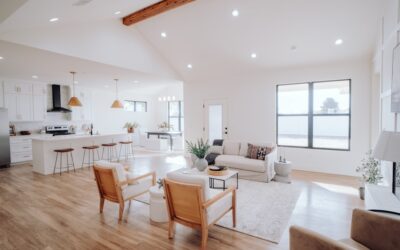
These are wood flooring’s home turf. Above-grade living and dining rooms have stable humidity, moderate traffic, and no standing water, so solid hardwood shines here. A 3/4-inch red or white oak floor, nailed down over a wood subfloor, can be refinished for a century. Wide planks of 5 to 7 inches read as upscale and modern; narrower 2.25- to 3.25-inch strips give a classic look. Add area rugs under dining tables and seating zones to absorb chair scuffs and define the space.
Bedrooms
Bedrooms are low-traffic and dry, making them ideal for wood. You can go softer here — a beautiful walnut (Janka 1010) that would dent in a busy hallway holds up fine in a bedroom. Many homeowners choose to carry the same hardwood from the hall into the bedrooms for a continuous, spacious look. Engineered hardwood works equally well and is a smart pick if the bedrooms sit over a concrete slab.
Kitchens
Kitchens are wood’s gray zone. Spills, dropped pans, and high traffic are constant, but the look of wood in a kitchen is hard to beat. Engineered hardwood handles the humidity swings better than solid wood and is the safer choice here. Whatever you install, wipe spills immediately, place mats at the sink and stove, and accept that a kitchen wood floor will need refinishing sooner than a living-room floor. If standing water is a real risk in your household, waterproof wood-look LVP delivers the look without the worry.
Bathrooms and Laundry Rooms
This is where you stop using real wood. Full bathrooms and laundry rooms see standing water, high humidity, and the constant threat of a leak, and solid hardwood cups, warps, and grows mold in those conditions. For the wood look in these rooms, go with waterproof vinyl plank, wood-look porcelain tile, or wood-effect linoleum. Wood-look porcelain in particular gives you genuine wood aesthetics with the bulletproof water resistance a bathroom demands.
Basements
Below-grade basements rule out solid hardwood entirely — the slab wicks moisture and the humidity swings are too extreme. Engineered hardwood is the only real-wood option here, and even then only over a proper vapor barrier in a basement that stays reliably dry. For most basements, waterproof engineered vinyl or wood-look laminate over a vapor barrier is the more practical, worry-free choice.
Hallways and Stairs
High-traffic corridors and stairs need the hardest, most durable wood you can get. Hickory (Janka 1820) and white oak (Janka 1360) resist the dents and wear that hallways inflict. Always run hallway planks down the length of the corridor, never across it, so the floor reads as continuous rather than choppy. On stairs, matching prefinished treads and risers to the floor gives a cohesive, custom look and stands up to the heaviest wear in the house.
Choosing the Right Wood Type Per Room
To summarize the room-by-room logic:
- Solid hardwood: Living rooms, dining rooms, bedrooms, hallways — above grade, dry, refinishable for decades.
- Engineered hardwood: Kitchens, basements, slab-on-grade rooms — real wood that tolerates humidity.
- Wood-look vinyl, tile, or linoleum: Bathrooms, laundry rooms, mudrooms — the look with true water resistance.
Acclimation and Humidity Control
Whatever wood floor you put in each room, two factors determine whether it stays beautiful: acclimation and humidity control. Let solid and engineered wood acclimate in the room where it will be installed for several days to a week before laying it, so the planks adjust to the home’s moisture level and do not gap or cup later. After installation, hold indoor humidity between 35 and 55 percent year-round. Wood that dries out in winter develops gaps between boards; wood that absorbs summer humidity can cup or crown. A whole-house humidifier tied to the HVAC keeps real wood stable through the seasons in every room.
Matching Wood to Your Climate Zone
Your region shapes the right choice as much as the room does. In humid Gulf Coast and Southeast climates, engineered hardwood’s dimensional stability makes it a safer bet than solid wood, even in living areas. In dry mountain and desert climates, winter heating pulls moisture from solid wood, so humidification matters more and tighter board widths help. In mixed northern climates with big seasonal swings, controlling indoor humidity year-round is the key to keeping any wood floor flat. Matching the flooring type and plank width to both the room and the local climate is how you avoid the gapping, cupping, and warping that ruin a wood floor prematurely.
Tying the Whole Home Together
For a cohesive feel, keep the wood tone and plank width consistent where floors connect visually, even if the material changes between rooms. A medium oak hardwood in the living areas can transition to a closely matched wood-look porcelain in the bathroom, so the eye reads continuity while each room gets the right material for its conditions. Use thresholds and transition strips at doorways where the material or height changes, and choose them in a matching tone so the joint reads as a deliberate detail rather than a patch.
Pick wood for the rooms that suit it, choose waterproof wood-looks where moisture rules, and every room ends up with a floor that both looks right and lasts. The homeowners who get this wrong are usually the ones who insisted on real solid hardwood everywhere, including the bathroom and basement, and paid for it within a few seasons with cupping and mold. Matching material to room is not a compromise — it is how you get a wood look you love in every space without setting up a future failure.
Prefer to explore on your own?
See how new flooring looks in your actual room in seconds — free, no signup.
Try the free Floor Studio →