
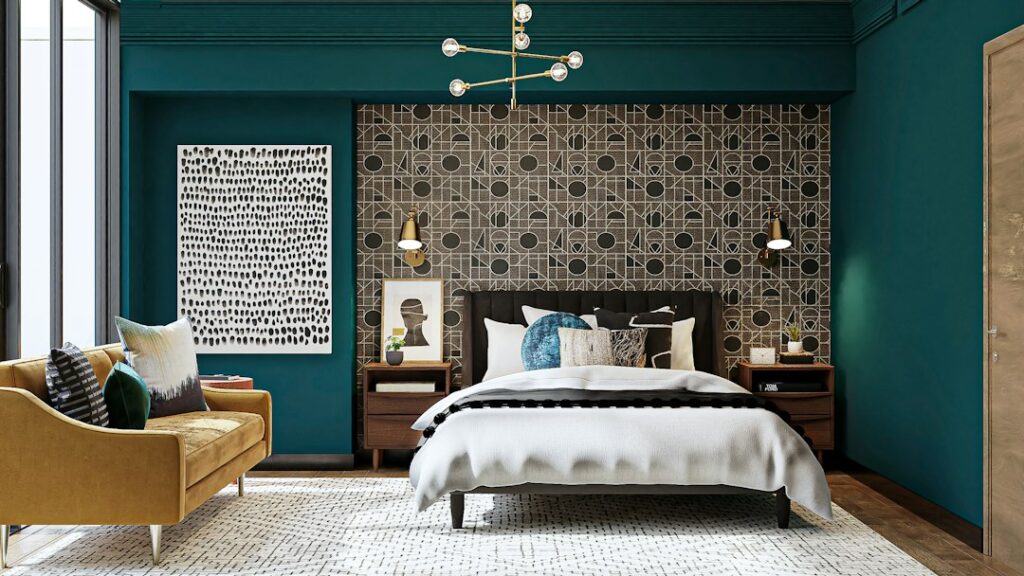
The sixties packed more design movements into ten years than most decades manage in thirty. A living room in 1961 might have been sleek walnut and atomic starbursts; by 1968 the same house could be full of molded plastic, op-art prints and orange shag. That range is exactly why 1960s decorating style is so easy to borrow from today: you can pick the strand you love and leave the rest behind.
To get the look without living in a museum, choose one sixties mood (early-decade atomic, pop-art color, or late-decade space age and mod), commit to a few hero pieces in that mood, and set them against a calm, modern background. A bold accent chair, a sputnik light or a graphic rug will say “sixties” more clearly than a room full of reproductions.
- The Three Moods of 1960s Decorating Style
- Signature Colors and How to Use Them Now
- Furniture That Defines the Decade
- Lighting: Sputniks, Globes and Arcs
- Floors, Walls and Textures
- Safety Before You Renovate an Original Sixties Home
- From Sixties to Seventies: A Natural Blend
- Room-by-Room Ideas
- Sourcing and Budget
- Mistakes to Avoid
- Frequently Asked Questions
Each strand has its signature colors, shapes and materials, along with practical ways to adapt them for current homes.
The Three Moods of 1960s Decorating Style
Designers often lump the decade into “mid-century,” but the look changed a lot between 1960 and 1969.
Early Sixties: Atomic and Refined
The first years carried the clean lines of the fifties forward. Think low walnut credenzas, tapered legs, starburst clocks, boomerang and atomic motifs, and Scandinavian-influenced teak. Colors leaned toward mustard, turquoise, olive and coral against warm wood.
Mid Sixties: Pop and Op Art
By the middle of the decade, pop art and optical art moved onto walls, fabrics and rugs. Saturated primary and secondary colors, bold circles, stripes, checkerboards and flower-power graphics appeared everywhere. Furniture got brighter, with lacquered finishes and molded fiberglass shells.
Late Sixties: Space Age and Mod
The moon race inspired egg chairs, bubble chairs, globe lamps and white plastic everything. Shag carpet, sunken conversation pits, chrome and smoked acrylic became status symbols. Toward the end of the decade, earthier browns and oranges started creeping in, setting the stage for the seventies.
Signature Colors and How to Use Them Now
Sixties palettes were confident. Typical combinations include:
- Atomic: mustard, teal, tomato red and avocado against walnut.
- Pop: hot pink, tangerine, lime and lemon yellow, often with white.
- Space age: white, silver and chrome with one strong accent such as orange or electric blue.
To modernize, keep walls in a warm white or a soft neutral, then let one or two saturated colors appear on furniture, art and textiles. A tangerine sofa against white walls feels fresh; tangerine walls, a tangerine sofa and a tangerine rug feel like a theme party. If you want a painted feature, try a single color-blocked wall or a painted door in teal or mustard.
Furniture That Defines the Decade
Furniture does the heavy lifting in any sixties-inspired room. Look for these shapes, whether vintage, reproduction or new pieces inspired by the era:
- Molded shell chairs: one-piece seats in fiberglass or plastic on wire or wood legs.
- Egg and pod chairs: enclosed, swiveling lounge chairs that create a cozy nook.
- Tulip tables: round pedestal tables with a single flared base.
- Low sofas: long, low-backed sofas with tight cushions and slim legs, often in tweed or velvet.
- Credenzas and room dividers: walnut or teak storage pieces with sliding doors.
- Acrylic and chrome: clear acrylic coffee tables and chrome-framed chairs for a space-age touch.
Comfort has improved since then. Many original sixties sofas are shallow and firm. If you buy vintage, consider reupholstering with new foam; if you buy new, look for a sixties silhouette with a deeper, softer seat.
Lighting: Sputniks, Globes and Arcs
Few things set the era faster than lighting. The sputnik chandelier, with arms radiating from a central sphere, is the most recognizable. Globe pendants in opal glass, mushroom table lamps, arc floor lamps with a marble base and lava-style lamps all fit too.
Vintage fixtures often have brittle wiring and may lack grounding. Have a lamp repair shop or licensed electrician rewire them before use. If you are swapping a ceiling fixture yourself, turn off the breaker and confirm power is off with a non-contact voltage tester, and never work on wiring that is still powered. Use LED bulbs in warm color temperatures; they run cooler than the incandescent bulbs these fixtures were designed for, which is easier on old shades and sockets.
Floors, Walls and Textures
Shag and Graphic Rugs
Wall-to-wall shag is iconic but hard to clean and quick to look tired. A shag area rug delivers the same tactile feel in a smaller dose. Graphic rugs with circles, stripes or flower shapes capture the pop side of the decade. Use a non-slip pad underneath and keep edges flat so they do not become a trip hazard.
Hard Floors
Terrazzo, cork, and bold checkerboard vinyl were all popular. Modern luxury vinyl and porcelain tile come in terrazzo and checkerboard looks that are easier to maintain. Warm wood-look planks pair well with atomic and early-sixties furniture.
Walls
Wood paneling, grasscloth and large-scale geometric wallpaper all appeared in sixties homes. Use one: a grasscloth accent wall in a den, a bold geometric paper in a powder room, or slatted wood behind a credenza.
Safety Before You Renovate an Original Sixties Home
If you own a house built in the 1960s, renovating to restore or update its style comes with hidden hazards. Paint applied before 1978 may contain lead, so test painted surfaces with a lead test kit or hire a certified inspector before sanding, scraping or demolishing anything, and follow lead-safe work practices if lead is present. Vinyl floor tiles, sheet flooring and black mastic adhesive, along with textured “popcorn” ceilings, plaster and joint compound from the era, may contain asbestos. Have suspect materials tested by an accredited lab before you disturb them; if they test positive, leave removal to a licensed abatement contractor. Often the safest route is to cover old flooring with a new floating floor rather than ripping it up.
From Sixties to Seventies: A Natural Blend
Many people searching for this look also love 1970s decorating style, and the two blend easily. The late-sixties shift toward earth tones, rattan, macramé, warm wood and low lounge seating flows straight into the seventies. A room that mixes a sixties egg chair with a seventies rattan side table, a rust velvet sofa and a few plants in macramé hangers reads as cohesive retro rather than confused. Keep the overall palette tight (for example, cream, rust, mustard and walnut) and the mix will feel intentional.
Room-by-Room Ideas
- Living room: a low sofa, one statement lounge chair, a tulip side table, an arc floor lamp and a graphic rug. Add a sunburst mirror over the sofa.
- Bedroom: a walnut platform bed, round mirrors, a globe pendant and bedding in a single bold color.
- Dining room: a tulip table with molded shell chairs and a sputnik chandelier overhead.
- Bathroom: colorful tile (pink, turquoise or mint), round mirrors and chrome fixtures in a sixties shape.
- Home office: a walnut desk with hairpin legs and a shell chair on casters.
Sourcing and Budget
Authentic vintage pieces range widely in price. Designer originals command high prices, while anonymous pieces from the same era often cost far less and look just as good. Estate sales, online marketplaces and vintage shops are good hunting grounds. Inspect for wobbly joints, veneer damage and old upholstery that may hide pests or mold. Reproductions are a budget-friendly way to get iconic shapes, and many new furniture lines offer sixties silhouettes with modern comfort.
As a general guide, accessories and lamps are the least expensive way in. A statement chair or a vintage credenza is a mid-range investment. Flooring and full renovation work are the costliest, which is why many people start small and build the look over time.
Mistakes to Avoid
- Going full time capsule: every surface from one year looks like a set. Mix in modern pieces.
- Too many bold colors: choose two or three saturated hues and repeat them.
- Ignoring comfort: test vintage seating before you buy it.
- Skipping safety checks: old wiring, lead paint and asbestos materials need attention before you start a project.
Frequently Asked Questions
What colors defined 1960s decorating style?
Early in the decade, mustard, teal, olive and coral paired with walnut. Mid-decade pop art brought hot pink, orange, lime and yellow. Late-sixties space-age rooms leaned on white, silver and chrome with a single bright accent.
How is 1960s decor different from mid-century modern?
Mid-century modern spans roughly the 1940s through the 1960s and emphasizes clean lines and wood. Sixties decor includes that early look but adds pop-art color, molded plastics and space-age shapes later in the decade.
Can I mix 1960s and 1970s decor?
Yes. Late-sixties earth tones, rattan and lounge seating blend naturally with seventies style. Keep the palette limited and repeat colors so the mix looks cohesive.
Is it safe to remove old flooring in a 1960s house?
Not without testing. Vinyl tile, sheet flooring and black mastic from the era may contain asbestos. Have samples tested by an accredited lab before disturbing them, and hire a licensed abatement contractor if they test positive.
What is the easiest way to add a sixties look?
Start with lighting and one statement piece, such as a sputnik chandelier or an egg chair, then add a graphic rug and a sunburst mirror against neutral walls.


