
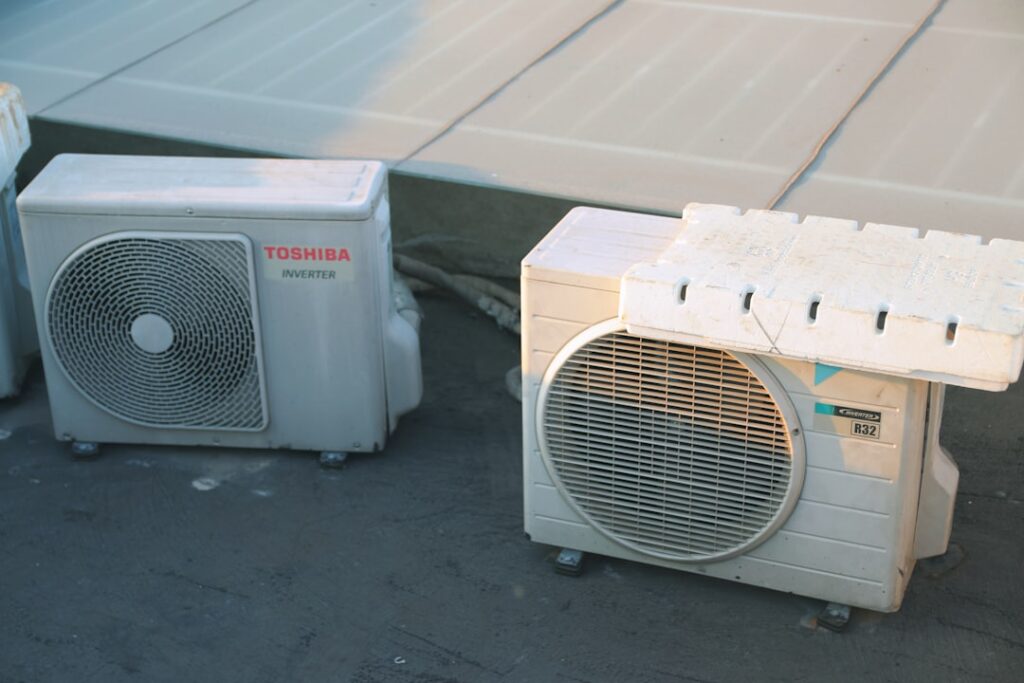
A 24k BTU mini split is the workhorse of the ductless world. At 24,000 BTU per hour, it lands at exactly 2 tons of capacity, which is the sweet spot for a large open-concept living area, a finished basement, a small home, or an above-garage apartment. I’ve installed dozens of these units over the years, and the biggest mistakes I see homeowners make happen before the equipment ever ships: wrong size, wrong voltage assumption, and an unrealistic budget. Let’s fix all three.
- What Square Footage Does 2 Tons Actually Cover?
- Single-Zone vs. Multi-Zone
- SEER2, HSPF2, and Why Efficiency Ratings Matter
- Popular 24,000 BTU Units
- Electrical: Voltage, Breaker, and Wire Size
- Line Set, Refrigerant, and Heating in the Cold
- What It All Costs
- Installation Pitfalls I See Most Often
- Is a 24k Mini Split Right for You?
What Square Footage Does 2 Tons Actually Cover?
The rule of thumb is roughly 20 BTU per square foot, which puts a 24,000 BTU unit at around 1,200 square feet. In practice, the real answer swings between 1,000 and 1,500 square feet depending on your climate zone, insulation, ceiling height, and sun exposure.
- Hot, humid South (Zone 2-3): plan on the low end, around 1,000-1,150 sq ft, because the unit works harder on latent heat and dehumidification.
- Mild/moderate climate (Zone 4-5): a comfortable 1,200-1,350 sq ft for a well-insulated space.
- Newer, tight construction: you can push toward 1,500 sq ft, especially with spray foam and modern windows.
Oversizing a mini split is a real problem, not a safety margin. An oversized inverter unit short-cycles, never runs long enough to pull humidity out of the air, and leaves you with a cold, clammy room. When in doubt, do a Manual J load calculation rather than guessing high.
Ceiling height throws a lot of people off, too. The square-footage rules assume a standard 8-foot ceiling. If your great room has 10- or 12-foot ceilings or a vaulted cathedral roof, you’re conditioning far more cubic footage than the floor plan suggests, and you should size up or lean toward the low end of the coverage range. Same goes for a room with a wall of west-facing glass, a kitchen with heat-producing appliances, or a bonus room over a garage with poor insulation below the floor. Those all add load that a raw square-footage number ignores.
Single-Zone vs. Multi-Zone
You can buy a 24k condenser two very different ways. A single-zone system pairs one outdoor unit with one indoor head, and it’s the most efficient, cheapest, and simplest to install. A multi-zone system uses that same 2-ton outdoor unit to feed two, three, or four indoor heads, each with its own thermostat.
Multi-zone is fantastic for cooling several bedrooms independently, but understand the tradeoff: efficiency drops, the line-set routing gets more complex, and you can’t run a 9k head plus a 9k head plus a 12k head at full tilt simultaneously without the condenser derating. For a single big room, always choose single-zone.
SEER2, HSPF2, and Why Efficiency Ratings Matter
Since 2023, the industry switched to SEER2 and HSPF2 ratings, which use tougher, more realistic test conditions. A budget 24k mini split runs around 18-20 SEER2, while premium hyper-heat units hit 22-25 SEER2. HSPF2, the heating efficiency number, typically falls between 8.5 and 11.
The higher numbers cost more upfront but pay you back on the utility bill, and they often clear the threshold for federal and utility rebates. Many ENERGY STAR ductless systems qualify for the 25C tax credit, worth up to $2,000 on a qualifying heat pump. Always check the AHRI certificate for the exact indoor/outdoor combination you’re buying, not just the marketing sheet.
Popular 24,000 BTU Units
These are the systems I see most often in the field, roughly from premium to value:
- Mitsubishi Electric (M-Series / Hyper-Heat H2i): the gold standard for cold-climate heating and quiet operation. Pricey, but it heats down to -13°F.
- Daikin (Aurora / LV Series): excellent build quality, strong low-temp heat, great warranty support.
- MRCOOL DIY 4th Gen: the homeowner favorite because it ships with pre-charged, quick-connect line sets so you skip the vacuum pump and gauges.
- Senville LETO / AURA: solid value with respectable heating down to about 5°F.
- Pioneer Diamante: the classic budget pick, widely available, easy to source parts for.
MRCOOL is the only one on this list truly designed for a handy homeowner. The others expect a licensed HVAC tech to pull a vacuum and check the charge, which is not a corner you want to cut on a professional system.
Electrical: Voltage, Breaker, and Wire Size
Here is where a lot of DIY projects stall. Virtually every 24k BTU mini split requires 208/230V power. Unlike the small 9k and 12k units, you will not find a plug-in 120V version at this capacity. You need a dedicated 240V circuit.
- Breaker: most 2-ton units call for a 15A or 20A double-pole breaker. Check the nameplate for the “maximum overcurrent protection” (MOP) number.
- Wire: a 20A circuit uses 12 AWG copper; a 30A circuit steps up to 10 AWG. Follow the unit’s minimum circuit ampacity (MCA) rating.
- Disconnect: code requires a fused or non-fused disconnect box within sight of the outdoor condenser.
Unless you’re genuinely comfortable working in your electrical panel, budget for an electrician here. Running a new 240V home run is not the place to learn.
Line Set, Refrigerant, and Heating in the Cold
A 24k system typically uses a 1/4-inch liquid line and a 5/8-inch (or 1/2-inch) suction line, with 16-25 feet of line set being standard. Longer runs may require adding refrigerant, so account for the vertical and horizontal distance between your indoor head and outdoor unit before ordering.
If you’re relying on the unit for winter heat, buy a hyper-heat or cold-climate model. Standard units lose serious capacity below 25°F, while a Mitsubishi H2i or Daikin Aurora holds most of its rated output down to 5°F and still produces usable heat to -13°F. Below your balance point, backup heat helps, but a true cold-climate 24k unit can carry a well-insulated home through a Northern winter on its own.
What It All Costs
Equipment for a 24,000 BTU single-zone system runs $1,000 to $2,800 depending on brand and efficiency. Add professional installation and the total lands in the $2,000 to $5,500 range. A MRCOOL DIY self-install can come in near $1,600-$2,200 all-in if your electrical is ready. Multi-zone setups and premium Mitsubishi installs push toward the top of the range.
Factor in the electrical work, a proper mounting pad or bracket, condensate handling, and a possible permit. My pro tip: spend the extra money on a cold-climate unit and a clean install now, because a mini split that’s sized right and charged right will run 15-plus years with nothing but filter cleanings.
Installation Pitfalls I See Most Often
Even a great 24k unit will disappoint if the install is sloppy. A few things separate a system that runs quietly for 15 years from one that leaks refrigerant in year three:
- Flare connections: a properly torqued flare (roughly 40-45 ft-lbs on the 5/8-inch line) with a drop of refrigerant oil on the seat is where most slow leaks start. This is why I’m cautious about first-time flares on non-DIY units.
- Vacuum: on any system except a pre-charged MRCOOL, the lines must be pulled down to 500 microns and hold. Skipping this traps moisture that turns acidic and destroys the compressor.
- Condensate slope: the drain line needs a continuous downhill run. A flat or back-pitched line means water backing up behind the indoor head and dripping down your wall.
- Line-set protection: use a proper lineset cover on exterior runs. Bare, UV-degraded insulation kills efficiency and looks terrible.
One more field note: mount the outdoor unit on a bracket or a raised composite pad, not directly on the ground in snow country. Getting the condenser 12-18 inches off the ground keeps it above snowpack and lets defrost meltwater drain away instead of refreezing under the coil. It’s a small detail that makes a big difference to winter heating reliability.
Is a 24k Mini Split Right for You?
If you’re conditioning one large space, adding comfort to a garage apartment, or replacing a tired window unit and a couple of space heaters, a 2-ton ductless system is often the smartest money in HVAC. It gives you inverter-driven efficiency, zone control, quiet operation, and heating and cooling from one box. Just respect the three fundamentals: size it with a real load calculation, give it the correct 240V circuit, and either buy a DIY unit or hire a tech who pulls a proper vacuum. Get those right and a 24k BTU mini split will be the appliance in your house you think about the least, which is exactly what you want from HVAC.


