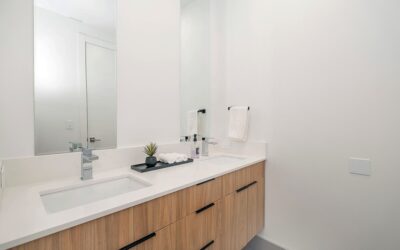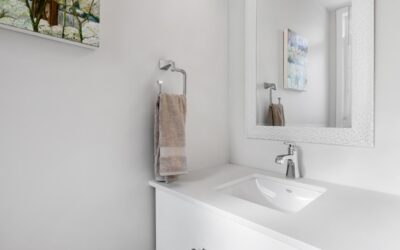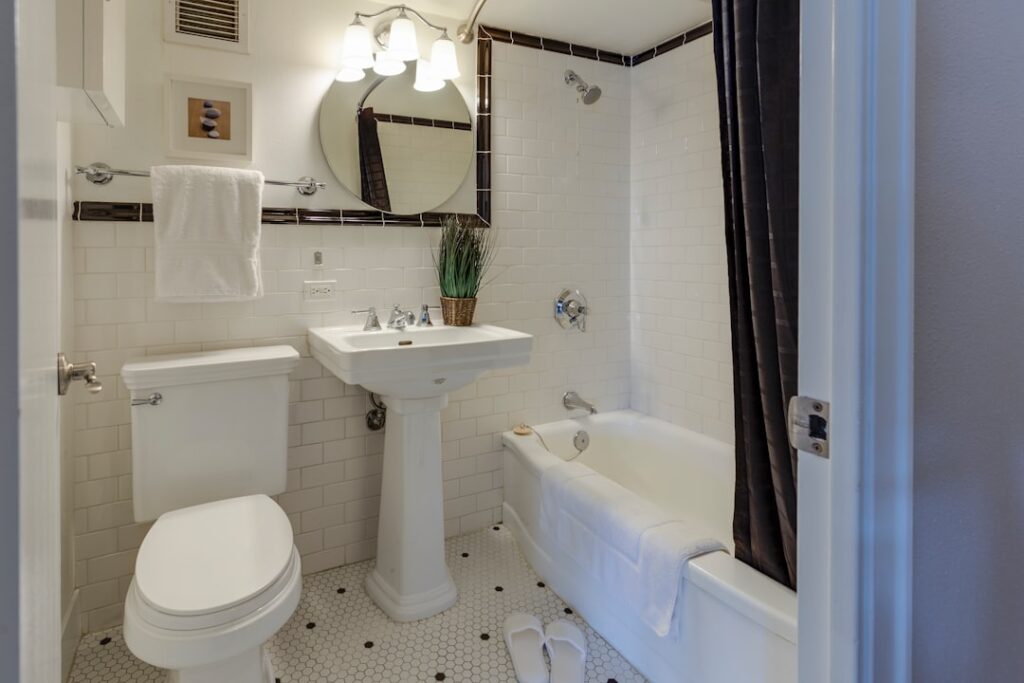
Of all the vanity widths on the market, one size threads the needle between cramped and oversized better than any other. A 36in bathroom vanity gives you a genuinely usable countertop and real storage while still fitting the medium-sized bathrooms most American homes are built around. It is wide enough to spread out a toothbrush, soap, and a decorative tray without crowding the sink, yet compact enough to leave clear floor space and door swing. If you are planning a bathroom refresh or a full remodel, understanding what a 36-inch vanity offers and where it fits will save you from ordering the wrong size.
Part of our Bathroom Remodeling & Flooring guide — explore the full guide →
This guide breaks down the true dimensions, layout choices, storage and countertop options, and installation basics so you can buy with confidence.
Why 36 Inches Is the Sweet Spot
Vanities commonly come in 24, 30, 36, 48, 60, and 72-inch widths. The 36-inch size lands right where function and footprint meet. It offers noticeably more counter and cabinet space than a 30-inch model, which is the difference between a workable surface and a constant juggling act, without demanding the wall space of a 48-inch unit.
For a single-user bathroom, a guest bath, or a modest primary bath, 36 inches is often the ideal. It suits rooms roughly 5 by 8 feet and up, and it pairs naturally with a single sink and a comfortable amount of drawer storage.
Standard Dimensions to Know
Width is only one measurement. Before you buy, confirm all three dimensions against your space and your plumbing.
- Width: 36 inches nominal, though actual cabinet width can run a fraction under.
- Depth: Typically 21 to 22 inches for a standard vanity; 18-inch shallow-depth models exist for tight rooms.
- Height: 32 to 36 inches. Older “standard” vanities sat around 32 inches, but 36-inch “comfort height” (matching kitchen counters) is now the popular default.
Leave at least 30 inches of clear floor space in front of the vanity for comfortable use, and confirm the door or drawer swing does not collide with an adjacent toilet, shower, or entry door.
Single vs Double Sink
At 36 inches, single-sink layouts dominate, and for good reason. A single basin leaves generous counter space on both sides and room for drawers below, which is what most people actually want. You can technically find a 36-inch double-sink vanity, but the basins end up small, the faucets crowd, and usable counter shrinks to almost nothing. Unless two people must brush teeth at the exact same moment in a very tight room, choose a single sink at this width and enjoy the extra surface.
If a double sink is a genuine priority, step up to a 48 or 60-inch vanity instead. The comfort difference is dramatic.
Storage Configurations
The interior layout matters as much as the width. A 36-inch cabinet can be arranged several ways, and the right choice depends on what you store.
Door Cabinets
Two doors over an open shelf offer the most raw volume, ideal for stashing bulky items like extra towels, a hair dryer, or cleaning supplies. The tradeoff is that everything sits in one deep cavity that can become disorganized.
Drawer Vanities
Full-height drawer banks keep small items visible and reachable, which is a game-changer for daily use. Drawers do sacrifice some space to the drawer boxes and must be notched around the P-trap, but most people find the organization well worth it.
Combination Units
A common and practical layout pairs a door cabinet on one side with a stack of drawers on the other, giving you both bulk storage and organized small-item space in a single vanity.
Countertop Options
The countertop shapes both the look and the price of your vanity. Many 36-inch vanities are sold with a top included, but you can also buy the base alone and pair it with a custom surface.
- Cultured marble: Affordable, often with an integrated sink, easy to clean but prone to dulling over time.
- Quartz: Durable, non-porous, and low maintenance; the most popular upgrade for good reason.
- Granite: Natural stone with unique veining; needs periodic sealing.
- Solid wood or butcher block: Warm and distinctive, but requires diligent sealing to survive splashes.
For a bathroom, quartz is hard to beat. It shrugs off toothpaste, cosmetics, and standing water without sealing, and a 36-inch top uses little material, keeping the upgrade affordable.
Mounting Styles
You will also choose between freestanding and wall-mounted (floating) designs. Freestanding vanities rest on the floor, hide the plumbing, and are the simplest to install and level. Floating vanities mount to the wall and leave the floor visible beneath, which makes a small bathroom feel larger and simplifies cleaning, but they require solid blocking in the wall to carry the weight and must be set at a comfortable height.
Installation Basics
Installing a 36-inch vanity is a manageable weekend project for a confident DIYer. The core steps are straightforward, but plumbing alignment is where care pays off.
- Shut off the water and disconnect the old vanity, then remove it.
- Locate wall studs and mark the vanity height, using a level line as your guide.
- Set the cabinet in place, shim it level front-to-back and side-to-side, and confirm the top will sit flat.
- Anchor the cabinet to the studs with screws through the back rail.
- Set the countertop, install the faucet and drain, then connect the supply lines and P-trap.
- Run a bead of caulk along the backsplash and check every connection for leaks.
The most common snag is a drain or supply line that does not line up with the new cabinet openings. Buying a drawer vanity? Confirm the P-trap location so the drawers can be notched or the plumbing adjusted before you finalize the order.
Matching Style to Your Bathroom
A 36-inch vanity comes in enough styles to suit almost any bathroom, and matching the design to your home ties the whole room together. Shaker-front vanities with clean recessed panels are the most versatile, fitting traditional, transitional, and farmhouse baths alike. Flat-panel slab doors read modern and minimalist, especially in dark wood tones or high-gloss finishes. For a period home, a furniture-style vanity with turned legs and decorative molding brings warmth and character.
Color plays a big role too. White and gray remain the safe, resale-friendly choices, but deep navy, forest green, and natural wood tones have surged in popularity and give a small bathroom a memorable focal point. Pair the finish with hardware that echoes your faucet and lighting, matte black, brushed brass, or polished nickel, so the vanity feels like a coordinated part of the room rather than an afterthought.
Common Mistakes to Avoid
A few missteps trip up homeowners buying a 36-inch vanity, and all are easy to sidestep with a little planning.
- Ignoring the plumbing location: A drawer vanity may clash with an existing P-trap; confirm before ordering.
- Forgetting door clearance: Measure the swing of the bathroom door and any adjacent cabinet doors.
- Choosing a shallow sink: A too-shallow basin splashes water onto the counter and floor.
- Skipping the backsplash seal: An uncaulked gap behind the counter lets water rot the wall.
- Buying comfort height without checking: A 36-inch-tall vanity can feel too high for small children.
Measuring twice and confirming your plumbing rough-in before you buy prevents the most common and frustrating installation surprises, and it is the single best way to guarantee the new vanity drops in cleanly the first time.
Budget Expectations
A 36-inch vanity spans a wide price range. Ready-to-assemble models start around $250 to $500, mid-grade units with quartz tops and soft-close drawers run $500 to $1,200, and premium solid-wood vanities with stone tops can exceed $1,800. Add $150 to $400 for professional installation if you are not doing it yourself.
Making the Right Choice
A 36in bathroom vanity is the safe, versatile pick for most medium bathrooms: enough counter to feel spacious, enough storage to stay organized, and a footprint that fits real rooms. Favor a single sink, choose drawers or a combination cabinet for daily convenience, and pair the base with a quartz top for durability. Confirm your dimensions and plumbing location up front, and you will end up with a vanity that looks great and works hard for years to come.