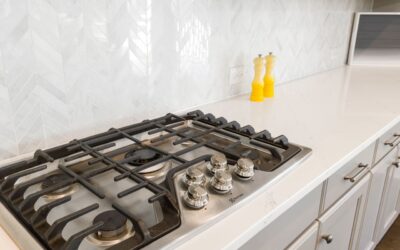
Moving from four burners to six changes more than cooking capacity. A 6 burner gas stove is almost always a 36-inch appliance, which means a wider cabinet opening, a larger range hood, more gas flow and, in many kitchens, an upgraded ventilation plan. Home cooks who entertain often find the extra burners worth it, but only when the kitchen is set up to support them.
Six-burner models come as full ranges with an oven below or as standalone cooktops set into a counter. Either way, you will need to understand burner layout, the BTU mix, oven options and the venting required to handle the heat and combustion byproducts. This article covers each of those, plus the safety rules that apply to any gas appliance.
- What to Expect From a 6 Burner Gas Stove
- Burner Layouts and BTU Mix
- Oven Sizes and Features
- Venting: Hood Size and CFM
- Gas Line and Fuel Requirements
- Carbon Monoxide and Combustion Safety
- Measuring and Planning the Space
- Troubleshooting Common Issues
- General Cost Ranges
- When to Call a Licensed Professional
- Frequently Asked Questions
What to Expect From a 6 Burner Gas Stove
Most six burner stoves are 36 inches wide, compared with 30 inches for a standard range. The extra six inches let manufacturers fit three rows of two burners, or two rows of three, under continuous cast-iron grates. Continuous grates let you slide heavy pots across the surface without lifting them.
A typical 6 burner range pairs one or two high-output burners with a mix of mid-range and simmer burners. That variety is what makes six burners genuinely useful: you can sear on one, boil pasta on another and hold a sauce on a gentle simmer at the same time.
Common configurations
- Six burner range with a single large oven: the most common 36-inch layout
- 36 inch gas stove with double oven: a large main oven plus a smaller secondary oven, handy for side dishes
- Six burner cooktop: a drop-in cooktop over cabinets, paired with a separate wall oven
- Four burners plus griddle or grill: a 36-inch variation that trades two burners for a flat cooking surface
Burner Layouts and BTU Mix
BTUs (British thermal units per hour) describe how much heat a burner can put out. Standard residential burners often range from about 5,000 to 12,000 BTU, while high-output burners reach 15,000 to 20,000 BTU or more. Simmer burners can drop well below 1,000 BTU on their lowest setting.
For a six burner stove, look for this general balance:
- One or two power burners for searing, stir-frying and fast boiling
- Two or three mid-output burners for everyday cooking
- At least one dedicated simmer burner or a burner with a very low turndown
Pay attention to where the power burners sit. Front placement makes them easy to reach but puts high heat closer to you. Some cooks prefer power burners on one side so a large stockpot does not crowd the neighboring pans. Sealed burners are easier to clean than open burners, which is why most home models use them.
Oven Sizes and Features
A single 36-inch oven usually offers more capacity than two 30-inch ovens combined in usable width, fitting full-size sheet pans and large roasting pans. Convection is common and helps even baking. Double oven layouts give you flexibility to cook at two temperatures, though the smaller oven is typically too narrow for a large turkey.
Gas ovens produce a slightly moister heat, which many bakers like for breads and roasts. Dual-fuel ranges combine gas burners with an electric oven for more precise baking, but they need both a gas line and a 240-volt circuit. Any new 240-volt circuit must be installed by a licensed electrician.
Venting: Hood Size and CFM
More burners mean more heat, grease and combustion byproducts, and ventilation needs to keep up. A hood should be at least as wide as the cooktop and ideally 3 to 6 inches wider, so a 36-inch stove often pairs with a 36-inch or 42-inch hood. Island installations benefit from the extra width because air currents pull smoke sideways.
A common starting point for gas cooking is to total the BTUs of all burners and divide by 100 to estimate hood CFM (cubic feet per minute). Six burners totaling 60,000 BTU suggests roughly 600 CFM. Ducted hoods that vent outdoors are strongly preferred for gas. Recirculating hoods filter grease but do not remove combustion gases or moisture.
Many local codes require makeup air when a kitchen exhaust exceeds a certain CFM, often around 400. A makeup air system brings fresh outdoor air in so the hood does not depressurize the house and pull exhaust gases backward from a water heater or furnace flue. Check local requirements with your building department, and have an HVAC contractor size makeup air correctly.
Gas Line and Fuel Requirements
A 6 burner gas stove needs enough gas volume to run all burners and the oven. That depends on line size, the length of the run from the meter and what other gas appliances share the line. An older kitchen plumbed for a 30-inch range may have a smaller line that cannot keep flames steady when several burners run at once.
Most models ship set up for natural gas and include a conversion kit for liquid propane. A 36 propane range must be converted by swapping orifices and adjusting the regulator. That conversion, like every gas connection, is work for a licensed gas fitter or plumber. Pressure settings and orifice sizes must match the fuel exactly.
Gas safety: never DIY gas connections, line extensions or conversions. A licensed pro should pull any needed permit, install the shutoff valve and flexible connector, and leak test every joint. If you ever smell gas, do not flip switches or use a phone inside. Leave the house immediately and call your gas utility or 911 from outside.
Carbon Monoxide and Combustion Safety
Gas burners and ovens produce carbon monoxide and nitrogen dioxide. Run the hood every time you cook, even for short tasks. Install CO alarms on every level of the home and near sleeping areas, and test them monthly. Never use a gas oven or burners to heat a room. Keep burners clean and adjusted so the flame burns mostly blue. Tall yellow or orange flames can signal poor combustion and need service by a qualified technician.
Measuring and Planning the Space
- Confirm a 36-inch opening between cabinets, measured at the top, middle and bottom.
- Check side clearance to any wall or tall cabinet per the installation guide.
- Measure overhead clearance to the hood, usually 30 inches or more for gas.
- Locate the gas shutoff valve and electrical outlet for the igniters and clock.
- Measure doorways and hallways, since 36-inch ranges are heavy and deep.
- Plan floor protection for delivery. Heavy ranges can crack tile and dent vinyl plank if dragged.
- Confirm the anti-tip bracket location and that it will anchor into solid framing or subfloor.
The anti-tip bracket keeps the range from tipping forward if someone leans on the open oven door. It must be installed and engaged on every range.
Troubleshooting Common Issues
Burners click but will not light. Food debris or moisture on the igniter is the usual cause. Let it dry and clean it gently with the stove off. If it persists, call a service technician.
Weak flames when several burners run. The gas line may be undersized. Have a licensed gas fitter evaluate the supply.
Smoke lingers despite the hood. The hood may be too narrow, mounted too high or underpowered. A wider hood or higher CFM with proper makeup air usually helps.
Uneven baking. Check that the range is level and use convection if available.
General Cost Ranges
Six burner gas ranges span a wide spread. Entry-level 36-inch models may start in the low thousands, mid-range options with convection and better grates cost more, and professional-style ranges with high-output burners can run many thousands. Six-burner cooktops alone are often less than full ranges. Budget separately for installation, possible gas line upsizing, a new ducted hood, makeup air and any cabinet modifications to widen a 30-inch opening.
When to Call a Licensed Professional
Hire a licensed gas fitter or plumber for all gas connections, line changes, propane conversions and leak testing. Use a licensed electrician for any new outlet or 240-volt circuit on dual-fuel models. An HVAC contractor should size and install ducting and makeup air, and permits are commonly required for gas and ventilation work. If cabinets need to be cut to fit a wider range, a finish carpenter can do it cleanly.
Frequently Asked Questions
How wide is a 6 burner gas stove?
Most are 36 inches wide. A few commercial-style or oversized models are wider, but 36 inches is the standard residential size.
What size hood does a six burner stove need?
At least 36 inches wide, and ideally 42 inches, with CFM matched to the total burner BTUs. Ducted hoods vented outdoors work best for gas.
Can a 6 burner range run on propane?
Many can, using a conversion kit. A licensed gas fitter must perform the conversion and adjust the regulator and orifices.
Do I need makeup air for a large range hood?
Many codes require makeup air above a certain CFM, often around 400. Check with your local building department and an HVAC contractor.
Is a six burner cooktop better than a range?
A cooktop frees up space for a wall oven at a comfortable height, while a range keeps everything in one appliance and usually costs less to install.