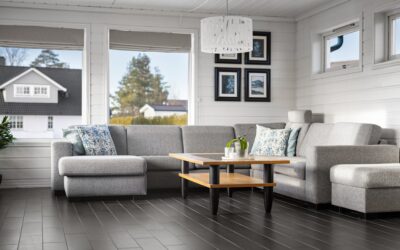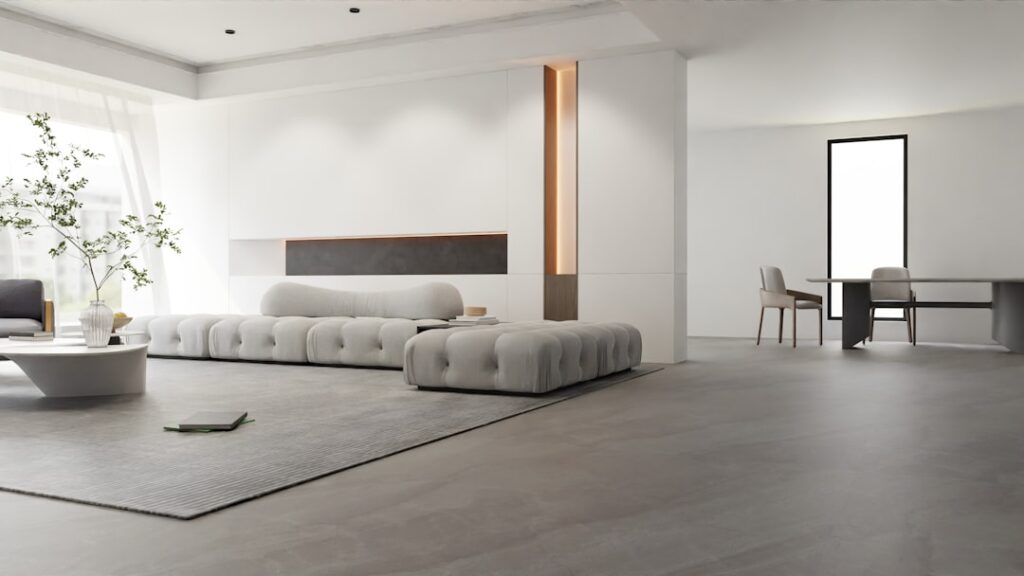
Rigid-core vinyl became the fastest-growing flooring category in North America for a reason, and the 8mm spec sits right at the value-to-quality cross-over. 8mm SPC flooring delivers waterproof construction, kid-and-pet durability, and a wide visual range at $2.99 to $4.99 per square foot. The extra 2mm over an entry 6mm board pays off in deeper embossing, better acoustic ratings, and more forgiving installs over imperfect subfloors. The trick is matching wear-layer thickness to your actual traffic, because total plank thickness alone does not predict longevity.
- What SPC Construction Actually Is
- Pros That Make 8mm SPC the Default Pick
- Cons Worth Knowing
- Wear Layer Decoded
- Brand Comparison at the 8mm Mark
- Subfloor Prep That Matters
- Step-by-Step Install
- Cost for a 600 Square Foot Project
- Sound Considerations
- Best Use Cases
- Common Install Mistakes That Cause Failures
- Final Word
What SPC Construction Actually Is
Stone Plastic Composite. The core is roughly 70 percent limestone calcium carbonate, 15 percent virgin PVC, and the balance plasticizers and stabilizers extruded into rigid planks. The result is a dimensionally stable board that holds shape from 32 to 140 degrees Fahrenheit without expansion gymnastics. On top of the core sits a printed decorative layer, a clear wear layer measured in mils, and a UV-cured topcoat.
WPC vinyl uses a wood-plastic composite core that is softer underfoot but less dimensionally stable. SPC is the more durable choice for kitchens, mudrooms, and basements. WPC feels warmer in bedrooms and family rooms.
Pros That Make 8mm SPC the Default Pick
- Fully waterproof construction with no expansion above or below the core
- Wear layers from 12 mil to 22 mil available within the 8mm thickness
- Click-lock install over most subfloors with minimal prep
- Service temperature range from 32 to 140 degrees Fahrenheit
- Lifetime residential warranties on quality lines
- FloorScore certified low VOC emissions on current product
- Pet-friendly with claw and dent resistance
Cons Worth Knowing
SPC is hard underfoot. Standing on it for hours in a kitchen feels noticeably less forgiving than WPC or even quality laminate. Sound transmission can be high without an acoustic underlayment, especially on second-floor installs over living space.
Phthalate-free chemistry is now standard on legitimate brands, but watch out for cheap imports that may still use older formulations. FloorScore or GreenGuard Gold certification is your best signal that the product has been independently tested.
Wear Layer Decoded
The single most important spec on any SPC plank. Measured in mils, where 1 mil equals 1/1000 of an inch. Recommended minimums:
- 6 mil: Light residential only, guest bedrooms and closets
- 12 mil: Family rooms, dining rooms, primary suites
- 20 mil: Kitchens, entryways, light commercial
- 22 mil and up: Heavy commercial, busy households with multiple pets
Brand Comparison at the 8mm Mark
COREtec Pro Plus
8mm rigid core with 20 mil wear layer and attached cork underlayment. $4.49 to $5.49 per square foot. The benchmark. Limited Lifetime Residential warranty.
Mohawk SolidTech Premium
8mm SPC with 20 mil wear layer, attached UltraQuiet pad. $3.99 to $4.99 per square foot. Strong visual selection in oak and hickory.
Shaw Floorte Pro
8mm SPC with 20 mil wear layer. $3.99 to $4.79 per square foot. ScufResist topcoat handles pet traffic well.
Pergo Extreme
8mm core, 20 mil wear layer. $3.49 to $4.29 per square foot. Often available at Lowes warehouse pricing.
Karndean Korlok Select
8mm SPC, 22 mil wear layer, register-embossed visuals. $5.49 to $6.99 per square foot. Visual quality leads the category.
Subfloor Prep That Matters
SPC tolerates 3/16 inch deviation over 10 feet for most click-lock systems. Anything wavier needs grinding or self-leveler. Roll out a 6 mil polyethylene vapor barrier over concrete even when the plank has an attached pad. Skipping that step over a moisture-prone slab is the most common cause of edge cupping and joint failure.
Test concrete moisture per ASTM F1869 calcium chloride or F2170 in-situ relative humidity. SPC handles moisture better than wood or laminate, but a saturated slab will still trap water under the floor and damage the subfloor itself.
Step-by-Step Install
- Acclimate sealed boxes flat in the room for 48 hours at 65 to 85 degrees Fahrenheit
- Check subfloor flatness and moisture levels
- Roll out vapor barrier with 6 inch seam overlap
- Snap a chalk line 3/8 inch from the longest straight wall
- Cut tongues off first row, lay groove side facing the wall
- Stagger end joints at least 8 inches between rows
- Mix planks from three boxes minimum for visual randomness
- Use a tapping block and pull bar, never strike planks directly
- Maintain 3/8 inch expansion gap at all walls and posts
- Install quarter-round or shoe to cover the gap, nail to wall not floor
Cost for a 600 Square Foot Project
Mid-grade 8mm SPC at $3.99 per square foot, 8 percent waste, vapor barrier, trim, and transitions runs $2,800 to $3,300 in materials. Pro install adds $1.50 to $2.50 per square foot. Turn-key project lands at $3,700 to $4,800. DIY install drops the total by $900 to $1,500.
Sound Considerations
8mm SPC over a hardwood subfloor reads IIC 50 to 55 bare and IIC 65 to 72 with an acoustic underlayment like QuietWalk Plus or MP Global LVT Quiet. Condo and HOA installs almost always require 65 minimum. Verify your association rules before ordering.
Best Use Cases
Kitchens, bathrooms, basements, mudrooms, laundry rooms, primary suites, and whole-house installs where consistency matters. Less ideal for second-floor bedrooms where you want soft underfoot feel or for showpiece great rooms where wide-plank engineered hardwood justifies the premium.
Common Install Mistakes That Cause Failures
Trapping the floor under base cabinets. Floating floors must move at the perimeter. If cabinets rest directly on the floor with no expansion gap, the floor buckles in the middle of the room. Skipping the vapor barrier over concrete. Even with attached pads, slab moisture migrates upward and trapped between barrier and floor causes joint failure.
Heavy furniture pinning the floor. Bookcases over 400 pounds and china hutches with feet that concentrate weight can immobilize a floating floor. Pin those pieces to wall framing or use felt sliders. Caulking the expansion gap rather than covering it with quarter-round eliminates the gap’s function entirely.
Final Word
8mm SPC at 20 mil wear layer is the highest-value spec in the rigid-core vinyl category right now. Pair a quality brand with a 6 mil vapor barrier and a 3mm acoustic underlayment, and you will own a floor that handles a decade of family life with only a microfiber mop and a felt-pad routine for maintenance.
Prefer to explore on your own?
See how new flooring looks in your actual room in seconds — free, no signup.
Try the free Floor Studio →