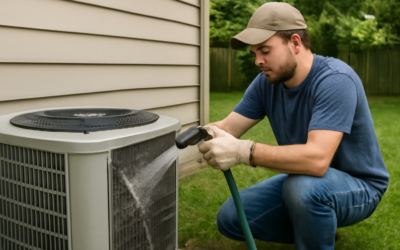
Most homeowners who hide an outdoor condenser end up paying for it twice: once for the screen and again in higher cooling bills, because the panels sit too close and the unit starts breathing its own hot exhaust. A privacy screen for AC unit placement can look great and still let the equipment run at full efficiency, as long as you respect the clearances the manufacturer prints in the installation manual and leave a clear path for a technician. The short answer is simple: keep the screen at least 2 to 3 feet from the coil sides, leave the top completely open, and use a design that is at least 50 percent open area.
Condensers and heat pumps work by pulling outdoor air across a large coil and pushing heated air straight up through the fan grille. Anything that restricts the intake sides or traps the discharge air raises head pressure, forces the compressor to work harder, and shortens its life. A well-planned screen works with that airflow instead of against it. Pick the right material, set it at the right distance, and plan one removable or hinged panel, and the result looks like a deliberate landscape feature rather than a box around a machine.
How to Plan a Privacy Screen for AC Unit Clearance
Start with the paperwork. Every condenser ships with an installation manual that lists minimum side clearances, a service-side clearance, and an overhead clearance. Typical figures are 12 inches on the coil sides for airflow, 24 inches or more on the side with the service panel and electrical disconnect, and 48 to 60 inches of open space over the fan grille. Those numbers are minimums for the unit itself. A screen adds a second barrier, so most HVAC technicians recommend going wider than the minimum when you add fencing.
A practical rule that works for most residential units in the 2 to 5 ton range:
- Coil sides: 24 to 36 inches between the coil and the inside face of the screen.
- Service side: 36 inches, or a hinged gate or removable panel that opens the full width.
- Top: no roof, pergola slats, lattice canopy or overhanging shrubs. Hot air must exit freely.
- Screen height: no more than about 6 inches taller than the cabinet. Taller walls create a chimney that recirculates warm air.
- Open area: 50 percent or more. Louvers or spaced slats beat solid boards every time.
Mark these distances on the ground with spray paint or string before you buy anything. You will often find that a three-sided screen is enough, with the fourth side facing the house wall. If your unit already sits closer to the house than the manual allows, fix that problem first; a screen will not make a cramped installation breathe better.
Do Not Forget Heat Pumps
Heat pumps run all winter, and in heating mode the outdoor coil gets cold enough to frost over. The unit periodically runs a defrost cycle that melts that ice, and the water needs somewhere to drain. Solid lower panels or a screen that traps snow drifts can block that drainage and refreeze around the base. Keep the bottom 4 to 6 inches of any screen open or slatted, and in snow country make sure the screen does not create a pocket where plowed or shoveled snow collects against the coil.
Screen Material Options Compared
Three styles cover nearly every yard: louvered vinyl or composite panels, slatted wood, and planter-based screens. Each one handles airflow, maintenance and cost differently.
| Option | Airflow | Upkeep | Typical cost |
|---|---|---|---|
| Louvered vinyl or composite kit | Good, angled slats | Very low | $150 to $500 |
| Horizontal slatted wood (DIY) | Very good with gaps | Stain every 2 to 3 years | $100 to $400 in materials |
| Planter boxes with shrubs or grasses | Variable | Pruning, watering | $200 to $800 |
| Custom built-in by a carpenter | Depends on design | Low to moderate | $800 to $2,500 |
Louvered Vinyl and Composite Panels
Prefabricated air conditioner fence screen kits are the fastest option. Most use vinyl or PVC panels with angled louvers that block the line of sight while letting air pass sideways. Many anchor with ground stakes, so there is no digging. Look for kits that list a free-air percentage and include at least one panel that lifts out or swings open. Cheaper kits sometimes have louvers angled too steeply, which looks solid from the patio and also acts nearly solid to the condenser fan. Hold a sample panel up to the light; if you can barely see through it at eye level when standing square to it, airflow will suffer.
Slatted Wood Screens
A horizontal slat screen built from 1×4 or 1×6 cedar or pressure-treated boards on 4×4 posts is the classic DIY ac unit screen fence. Leave a gap of 3/4 inch to 1-1/2 inches between boards. That spacing gives roughly 40 to 60 percent open area depending on board width, enough to break up the view without a wall effect. Vertical slats work too and suit modern exteriors. Use exterior screws or stainless fasteners so the boards do not streak.
Planter and Living Screens
Tall planters with ornamental grasses, columnar evergreens or bamboo in containers soften the look and can match your existing landscaping. The challenge is that plants grow. Choose varieties whose mature width will not crowd the coil, keep planters at least 3 feet from the cabinet, and trim every season. Avoid anything that drops heavy leaves, seeds or cottonwood-style fluff, because that debris gets sucked straight into the coil fins. If you want greenery without the maintenance, a slatted screen with a few planters set outside it gives the best of both.
Step-by-Step: Installing a Slatted Screen
This is the most common DIY build and costs far less than a custom enclosure. Plan a weekend, especially if you set posts in concrete.
Tools and Materials
- Tape measure, string line, stakes and marking paint
- Post-hole digger or auger (for set posts) or ground spikes (for lighter screens)
- 4×4 posts, 1×4 or 1×6 boards, exterior screws
- Level, drill/driver, circular saw or miter saw
- Spacer blocks cut to your chosen gap
- Gravel and fast-setting concrete if setting posts
- Hinges and a latch for the service gate
- Confirm the layout. Mark the screen line 24 to 36 inches out from the coil sides and 36 inches on the service side. Keep the disconnect box and refrigerant line set fully accessible.
- Call 811 before digging. Utility lines often run right next to a condenser, including the electrical feed to the disconnect. A free locate request takes a few days and prevents a dangerous strike.
- Set the posts. Space posts no more than 6 feet apart. Dig 24 inches deep (deeper where frost lines require), add 4 inches of gravel, then set and brace the posts plumb.
- Attach the slats. Start at the bottom, leaving 4 to 6 inches of open ground clearance. Use spacer blocks to keep gaps even. Stop the top board at no more than 6 inches over the cabinet height.
- Build the service gate. Frame a lightweight panel on hinges, or use a removable panel that drops into cleats. The technician needs to open the full width without tools.
- Finish the wood. Apply an exterior penetrating stain on all faces. Let it cure fully before the unit runs a hot season against it.
Electrical and Service Safety Around the Condenser
An outdoor condenser is line-voltage equipment, usually 240 volts on its own circuit, with a disconnect box mounted on the wall within sight of the unit. Your screen should never block that box, cover the conduit, or make it hard to reach in an emergency. Leave at least 36 inches of clear working space in front of the disconnect.
Building a screen does not require touching any wiring, and it should stay that way. If you need to move a disconnect, add an outdoor light to the screen, or relocate a receptacle, that is new circuit work for a licensed electrician. If you are working close to the unit, for example cleaning debris from the coil before installing the screen, turn off the breaker at the panel, pull the disconnect, and confirm power is off with a non-contact voltage tester before your hands go near the cabinet. Never work on powered wires, and never open the unit’s control panel yourself. Any outdoor receptacle you rely on for power tools during the build should be GFCI protected; plug tools straight into it rather than daisy-chaining extension cords.
Refrigerant lines also deserve respect. The insulated suction line and the smaller liquid line connect to service valves on the cabinet. Do not fasten screen framing to them, do not pinch the insulation, and route posts well clear so nobody steps on the lines while working.
Troubleshooting Common Screen Problems
The unit runs longer after the screen went up. That usually signals recirculation. Check that the top is open, the screen is not too tall, and the gap from the coil is at least 24 inches. Removing every other slat on the side facing the prevailing wind often fixes it.
Leaves and grass clippings pile up inside. Screens create still air pockets where debris settles. Clear the enclosure monthly in fall, and point mower discharge away from the screen. A clogged coil can cut efficiency noticeably.
Ice builds up around a heat pump. Open the bottom of the screen and make sure defrost meltwater has a path to drain. Raise the unit on a taller pad if the ground is poorly drained.
The technician cannot reach the service panel. Add a hinged gate or switch to drop-in panels. Many service companies will charge extra time, or decline the job, if they have to dismantle a fence to work.
Most of these issues trace back to one cause: a privacy screen for AC unit equipment that was designed for looks first and airflow second.
Noise seems louder. Hard, solid panels can reflect fan noise toward the patio. Slatted wood and plantings absorb and scatter sound better than flat vinyl sheets.
Costs and When to Hire Help
A basic stake-in vinyl kit runs about $150 to $500 and installs in an afternoon. A DIY cedar slat screen with set posts usually costs $100 to $400 in materials for a single unit. Hiring a fence installer or carpenter to build a matching three-sided enclosure with a gate typically lands between $800 and $2,500, depending on wood species, local labor and any matching planters.
Bring in a professional when the condenser sits on a slope, a rooftop or a deck, since those locations raise both structural and access issues. Ask an HVAC technician to check clearances against your specific model if the manual is lost; the model number on the data plate is enough for them to look it up. Any change to electrical service, disconnect location or outdoor receptacles belongs to a licensed electrician, and moving the condenser itself is a job for a licensed HVAC contractor because it involves refrigerant recovery.
If your goal is simply to hide the cabinet from a patio view, an air conditioner privacy screen with angled louvers is usually the cleanest, lowest-maintenance answer. When you want something that ties into fencing or decking, a slatted wood build lets you match the existing finish exactly.
Frequently Asked Questions
How close can a privacy screen be to an AC unit?
Keep the screen at least 24 inches from the coil sides and about 36 inches from the service side. Always check the minimums in your unit’s installation manual and treat them as the floor, not the target.
Can I put a roof or pergola over my condenser?
No. The fan discharges hot air straight up, and a cover traps it so the unit pulls it back in. Most manuals call for 48 to 60 inches of open space over the grille.
Does a privacy screen for an AC unit reduce efficiency?
Not when it is built correctly. A screen with at least 50 percent open area, an open top and proper spacing has little effect. Solid or tall screens placed tight to the coil can raise energy use and wear.
What is the best material for an AC unit screen fence?
Louvered vinyl or composite is the lowest maintenance. Cedar or pressure-treated slats are cheaper and easy to customize. Planters work well as a softening layer if you control plant size.
Do I need a permit to build a screen around my air conditioner?
A short freestanding screen usually does not need a permit, but local rules and HOA guidelines vary. Check both, and call 811 before digging post holes near the unit.