In my 20+ years of flooring experience, few species generate as much excitement — or as many questions — as acacia. This exotic hardwood offers some of the most stunning color variations and grain patterns you’ll find in any flooring product, at a price that often undercuts domestic hardwoods. But acacia isn’t without its quirks, and understanding those before you buy can save you real headaches down the road. Here’s everything you need to know.
What Is Acacia Wood?
Acacia is a genus of trees and shrubs comprising over 1,300 species found across tropical and subtropical regions worldwide. The acacia used in flooring typically comes from Southeast Asia, particularly Vietnam, Indonesia, and the Philippines, where species like Acacia mangium and Acacia confusa are commercially harvested for lumber. You may also see acacia marketed as “Asian walnut” — a trade name that references its visual similarity to American walnut, though the two species are completely unrelated.
Acacia trees grow relatively quickly compared to domestic hardwoods, reaching harvestable size in 15 to 25 years versus 60 to 100 years for species like oak or walnut. This faster growth cycle makes acacia a more sustainable choice than many slow-growing tropical hardwoods, and many acacia plantations operate under certified sustainable forestry practices.
Colors and Appearance
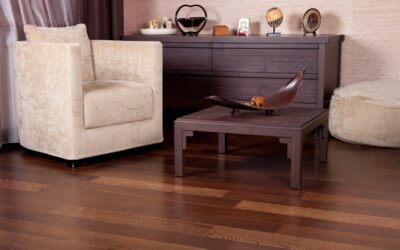
The color range of acacia flooring is genuinely remarkable. Within a single floor, you can find boards ranging from pale golden blonde to deep chocolate brown, with amber, honey, and reddish tones in between. The heartwood tends toward medium to dark brown with occasional reddish or purplish undertones, while the sapwood is dramatically lighter — sometimes nearly white.
Grain Patterns
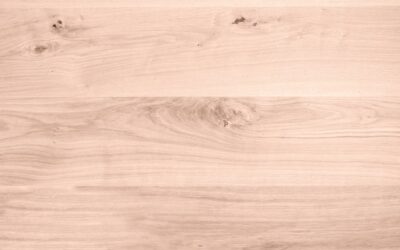
Acacia’s grain is typically interlocked and irregular, creating dramatic swirling and wavy patterns across each plank. This grain character is one of acacia’s most compelling visual features — it catches and reflects light in ways that create depth and movement across the floor. Many acacia products are hand-scraped or wire-brushed to enhance this natural texture even further.
Natural vs. Stained
Given acacia’s extraordinary natural coloring, most manufacturers and installers (myself included) recommend leaving it unstained. A clear matte or satin finish lets the wood’s natural beauty speak for itself. If you do want to modify the tone, light amber oils can warm up the lighter boards, while dark walnut stains can unify the color range — though you’ll sacrifice much of the natural variation that makes acacia special.
Durability and Hardness
Acacia is impressively hard. Depending on the exact species, it rates between 1,700 and 2,300 on the Janka hardness scale. For comparison, red oak is 1,290 and hickory is 1,820. Most acacia flooring products test around 2,000 to 2,200 Janka, making acacia one of the hardest commercially available flooring species.
This hardness translates directly to dent and scratch resistance. In my experience, acacia floors hold up exceptionally well in homes with kids, dogs, and heavy furniture. I installed an acacia floor in a family home with three large dogs nearly a decade ago, and it still looks remarkably good with basic maintenance.
Stability Concerns
Here’s the caveat: acacia’s interlocked grain makes it somewhat dimensionally unstable. It can expand, contract, and even warp more than straight-grained species in response to humidity changes. This is the single biggest concern with acacia flooring, and it’s why I strongly recommend engineered acacia over solid acacia for most installations. The cross-ply construction of engineered boards counteracts the wood’s natural movement tendencies.
Cost Breakdown
Despite its exotic origins, acacia is surprisingly affordable due to its fast growth and abundant supply from Southeast Asian plantations. Here’s what current pricing looks like:
- Engineered acacia flooring: $3 to $7 per square foot
- Solid acacia flooring: $4 to $8 per square foot
- Hand-scraped or premium acacia: $5 to $10 per square foot
- Professional installation: $3 to $6 per square foot
- Total installed cost: $6 to $14 per square foot
For a 1,000-square-foot project, you’re looking at $6,000 to $14,000 fully installed. That’s competitive with domestic oak and significantly less than other exotic hardwoods like Brazilian cherry ($10 to $20 installed) or teak ($12 to $25 installed). The value proposition of acacia is hard to beat — you get exotic looks at domestic prices.
Pros and Cons
Advantages of Acacia Flooring
- Exceptional hardness: At 2,000+ Janka, it resists dents and scratches better than most domestic hardwoods
- Stunning appearance: Dramatic color variation and unique grain patterns create one-of-a-kind floors
- Affordable pricing: Costs comparable to or less than domestic oak despite its exotic character
- Natural water resistance: Contains natural oils that provide some inherent moisture resistance
- Sustainability: Fast-growing species with many plantation-sourced options
- Hides wear well: Color variation and texture mask minor scratches and everyday wear
Disadvantages of Acacia Flooring
- Dimensional instability: Interlocked grain makes it prone to movement with humidity changes
- Quality variation: Products from different manufacturers vary significantly in quality control
- Color inconsistency: While beautiful, the extreme color variation isn’t for everyone
- Difficult to refinish: Interlocked grain can tear out during sanding if not done by an experienced professional
- Limited domestic sourcing: Most products are imported, raising questions about supply chain transparency
- Off-gassing potential: Some cheaper engineered acacia products use adhesives with higher formaldehyde levels
Solid vs. Engineered Acacia
Solid Acacia
Solid acacia flooring is milled from a single piece of wood, typically 3/4 inch thick. It offers the most authentic look and can be refinished multiple times. However, solid acacia’s dimensional instability makes it a risky choice in climates with significant humidity swings. I’ve seen solid acacia floors develop serious gapping and cupping in homes without consistent climate control. If you insist on solid acacia, install it only over a raised wood subfloor (never directly on concrete), and maintain tight humidity control year-round.
Engineered Acacia
Engineered acacia features a real acacia wear layer (typically 2mm to 6mm thick) bonded to a plywood or HDF core. The cross-laminated construction dramatically reduces the wood’s natural tendency to expand and contract. For most installations, engineered acacia is the clear winner. It can be installed over concrete, over radiant heat, and in climates where solid acacia would fail. The wear layer still gives you the genuine acacia look and feel underfoot.
Installation Guide
Subfloor Preparation
Regardless of the installation method, your subfloor must be clean, dry, flat, and structurally sound. Flatness should be within 3/16 inch over a 10-foot span. Moisture test concrete subfloors (calcium chloride or relative humidity probe) and wood subfloors (pin moisture meter) before proceeding. Acacia is more sensitive to moisture issues than many species, so don’t skip this step.
Acclimation
Acclimate acacia flooring for a minimum of 7 days in the room where it will be installed. Because of acacia’s pronounced response to moisture, I actually recommend 10 to 14 days when possible. Open the boxes and stack the planks with spacers to allow air to circulate around each board. Monitor the room’s temperature and humidity during acclimation — it should match the conditions the floor will experience year-round.
Installation Methods
Engineered acacia can be glued down, nailed down, or floated depending on the product and subfloor type. For concrete subfloors, glue-down provides the most stable result. For wood subfloors, nail-down or glue-down both work well. Floating installation is the easiest but can feel hollow compared to adhered methods. Always follow the specific manufacturer’s installation instructions, as they vary between products.
Board Selection During Installation
I spend significant time during acacia installations racking boards from multiple boxes simultaneously. The goal is to distribute the color variation evenly across the floor — you don’t want all the dark boards clustered in one area and all the light boards in another. This sorting process is critical with acacia and can easily add half a day to the installation timeline. It’s time well spent.
Maintenance and Care
Acacia’s natural hardness and oil content make it relatively easy to maintain. Follow these guidelines for the best long-term results:
- Sweep or vacuum regularly with a hardwood-safe vacuum head
- Damp-mop with a manufacturer-approved hardwood cleaner — avoid excess water
- Wipe up spills immediately, especially around kitchen and dining areas
- Use felt pads under all furniture legs and replace them every 6 months
- Maintain indoor humidity between 35% and 55% — this is critical for acacia
- Use area rugs in high-traffic zones and rotate them periodically
- Avoid rubber-backed rugs or mats, which can trap moisture and discolor the wood
Refinishing Acacia
Refinishing acacia requires an experienced professional. The interlocked grain can tear and chip if sanded against the grain or with too aggressive an abrasive. I use a random orbital sander rather than a drum sander for acacia, and I work through grits gradually: 36, 60, 80, then 100. It takes longer than refinishing oak, but the result is worth the effort. Engineered acacia with a thin wear layer (under 3mm) may not be sandable — check with the manufacturer first.
Design and Styling Tips
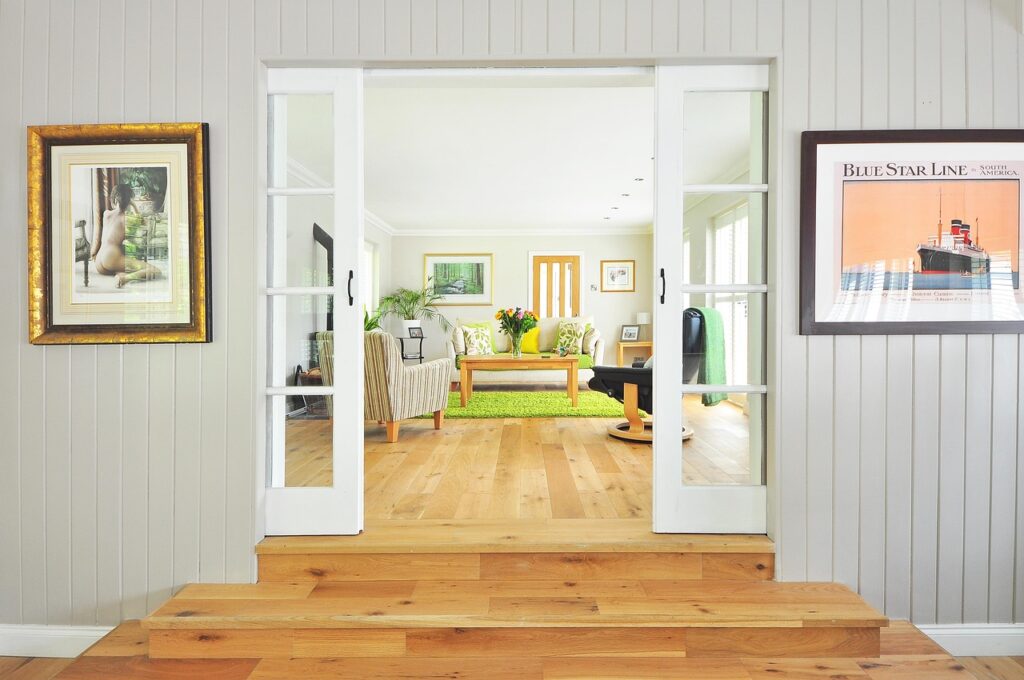
Acacia’s bold character works best when it’s the star of the room. Keep walls neutral — white, cream, light gray, or warm taupe — and let the floor command attention. Furniture in solid neutral tones prevents visual competition with the floor’s color variation.
Acacia pairs beautifully with natural materials: stone countertops, wrought iron fixtures, leather upholstery, and woven textiles. It’s a natural fit for bohemian, eclectic, and global-inspired interiors. In contemporary spaces, the contrast between acacia’s organic wildness and clean-lined modern furniture creates a dynamic tension that feels sophisticated and warm.
One design caution: acacia’s strong visual presence can overwhelm small rooms. In compact spaces, consider using acacia with a more uniform color selection, or opt for lighter-toned boards to keep the room feeling open.
Frequently Asked Questions
Is acacia harder than oak flooring?
Yes, significantly. Acacia rates between 2,000 and 2,300 on the Janka hardness scale, while red oak is 1,290 and white oak is 1,360. That makes acacia roughly 50% to 70% harder than oak, giving it superior resistance to dents, scratches, and everyday wear. For active households with kids and pets, acacia’s hardness is a genuine advantage.
Does acacia flooring scratch easily?
Acacia is one of the most scratch-resistant hardwood flooring options available due to its exceptional hardness. While no hardwood is completely scratch-proof, acacia handles daily wear better than most. Additionally, the dramatic color variation and textured finishes common in acacia products help camouflage minor scratches that do occur, so they’re far less noticeable than they would be on a uniform, smooth floor.
Is acacia the same as Asian walnut?
“Asian walnut” is a marketing name used for acacia flooring. The two species are botanically unrelated — true walnut (Juglans) and acacia (Acacia) belong to entirely different plant families. The name was adopted because some acacia color ranges resemble American walnut. Be aware of this when shopping, as some retailers use the names interchangeably, and you want to know exactly what species you’re buying.
How long does acacia flooring last?
With proper maintenance and climate control, acacia hardwood flooring can last 25 to 50 years or more. Solid acacia can be refinished 3 to 5 times, and engineered acacia with a thick wear layer can be refinished 1 to 2 times. The primary threat to acacia’s longevity isn’t wear — it’s moisture damage from poor humidity control. Invest in a good hygrometer and humidifier/dehumidifier system to protect your investment.
Is acacia flooring eco-friendly?
Acacia is among the more sustainable exotic hardwood options. Acacia trees grow quickly, reaching harvestable maturity in 15 to 25 years compared to 60+ years for most domestic hardwoods. Many acacia plantations operate under FSC or PEFC certification. However, the environmental impact of shipping from Southeast Asia adds to the carbon footprint compared to domestically sourced wood. If sustainability is a priority, look for FSC-certified acacia products from reputable manufacturers.
Prefer to explore on your own?
See how new flooring looks in your actual room in seconds — free, no signup.
Try the free Floor Studio →