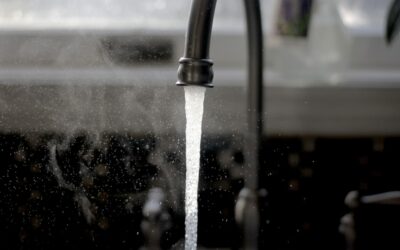
An air gap faucet is a small dedicated fixture, usually installed next to your main kitchen faucet, that protects your drinking water from contamination by a reverse osmosis system or dishwasher. It looks like a slim gooseneck spout with no handle, and its whole job is to create a physical break in the drain line so dirty water can never siphon backward into clean water. In plumbing terms this is the gold standard of backflow prevention, and in several states it is required by code. If you have ever seen a chrome stub next to a sink dripping or gurgling, you have met an air gap faucet doing its job.
The Problem an Air Gap Solves
Every plumbing system faces the risk of backflow, where water reverses direction and travels the wrong way through a pipe. This can happen when a water main breaks, a fire hydrant is opened nearby, or pressure drops suddenly upstream. When that happens, waste water sitting in a drain line can be sucked backward, a phenomenon called back-siphonage.
For a reverse osmosis system or a dishwasher, that reversal could pull dirty drain water back toward your clean water. An air gap eliminates the risk entirely by breaking the pipe into two separate segments with an open air space between them. Water can fall down through the gap, but nothing can climb back up across it, because there is no continuous pipe for it to travel through. It is the same principle that keeps the space between your faucet spout and the rim of the sink from ever letting the sink water climb back up into the faucet.
How an Air Gap Faucet Works
The mechanics are simple and elegant. Inside the fixture there is no valve and no moving part. Instead, there are two tubes.
- The drain line from your reverse osmosis membrane, or the dishwasher, runs up to the underside of the air gap faucet.
- Inside the faucet body, that water spills into an open chamber, exposed to atmosphere through the small vents you sometimes hear gurgling.
- The water then drops by gravity into a second, larger tube.
- That second tube carries the water down to your sink drain or garbage disposal.
Because the incoming water physically falls through open air before entering the outgoing tube, there is no sealed path for contamination to travel backward. That open-air break, typically at least twice the diameter of the pipe or a minimum of one inch, is the “air gap.” No pump, no electricity, no maintenance beyond keeping it clear.
Air Gap Faucet vs. Standard RO Faucet
When you buy a reverse osmosis system, you usually choose between an air gap faucet and a non-air-gap (standard) faucet. They look nearly identical on top of the counter, but the plumbing underneath differs.
- Air gap faucet: Has a third tube and requires the drain saddle connection. Meets plumbing codes that mandate an air gap, including much of California and Colorado. Prevents any possibility of drain-water backflow.
- Non-air-gap faucet: Simpler two-line design, easier to install, quieter, and less prone to the classic air gap complaints. Relies on the drain line and the system’s own check valves for backflow protection, which is acceptable in many jurisdictions but not all.
If your local code requires an air gap, the decision is made for you. If it does not, many homeowners prefer the non-air-gap version for its simplicity and silence, since RO membranes already include a check valve. Check with your local building department before you buy, because a failed inspection means swapping the whole faucet.
Common Problems and How to Fix Them
Air gap faucets have a reputation for two nuisances, and both are easy to understand once you know the cause.
Gurgling and spitting: A little gurgle when the RO tank fills is normal. Loud, repeated spitting usually means the drain line is partially clogged downstream of the air gap, forcing water to back up into the open chamber. The fix is to disconnect the larger outlet tube and flush it, because RO reject water carries fine sediment that builds up over months.
Water leaking onto the counter: If water dribbles out of the vent holes on top of the faucet, the outgoing drain tube is blocked or kinked, so the chamber overflows through the vents instead of draining. Clear the line and make sure the drain tubing runs downhill with no low spots or tight bends. A larger-diameter drain hole in the disposal or drain pipe often solves chronic overflow.
Slow gurgle at random times: This is just the system flushing its membrane. It is doing exactly what it should.
Installing an Air Gap Faucet
Most homeowners can install one in an afternoon, though it involves working under the sink. Here is the sequence for a typical reverse osmosis setup.
- Mount the faucet in a sink deck hole, usually the standard 1.25 to 1.5 inch accessory hole, or drill one in a stainless or granite counter with the right bit.
- Connect the RO tank’s supply line to the small threaded post that feeds the spout.
- Route the RO membrane’s drain line to the small inlet barb under the air gap.
- Connect the larger outlet barb to a drain saddle clamped onto the sink drain pipe, above the trap, or to the dishwasher inlet on a disposal.
- Make sure the drain tubing slopes continuously downward, with no dips where water can pool.
The most common install mistake is a drain line that sags or runs uphill, which is what causes overflow out the vents. Keep it short, straight, and downhill, and the faucet will run quietly for years.
Do You Actually Need One?
Whether an air gap faucet is required or merely optional comes down to your local plumbing code and your peace of mind. Jurisdictions that follow the Uniform Plumbing Code often mandate an air gap for RO drain connections, while areas under the International Plumbing Code may accept an approved air gap fitting or a high-loop under the counter instead.
From a pure safety standpoint, a true air gap is the most reliable backflow prevention that exists, which is why hospitals and commercial kitchens use the same concept. For a home RO system, the practical risk of contamination without one is low because of the built-in check valve, but the air gap removes that risk entirely with no mechanical part to fail. If your city requires it, install it correctly and keep the drain line clear. If it does not, weigh the guaranteed protection of the air gap against the quieter, simpler non-air-gap option.
Air Gap Faucet vs. Under-Sink Air Gap Fitting
There is a second way to achieve an air gap that many homeowners do not know about, and it matters if you dislike the countertop faucet style. Instead of the tall air gap built into the faucet, you can install a separate air gap device down under the sink, hidden inside the cabinet, and pair it with a plain non-air-gap faucet on top. The backflow protection lives out of sight, and the faucet you see is a clean, quiet two-line unit.
Both approaches satisfy the same code requirement, so the choice comes down to looks and access. The faucet-mounted air gap is self-contained and easy to inspect, but it can gurgle and it clutters the countertop with a taller spout. The under-sink air gap fitting keeps the counter clean and quiet, though clearing a clog means getting into the cabinet. Confirm with your inspector that the specific under-sink device you plan to use is approved in your jurisdiction, because not every fitting meets every local code. Either way, the goal is identical: a physical air break that drain water can never cross back over.
Maintenance and Longevity
An air gap faucet is close to maintenance-free, but a few habits keep it trouble-free. Every six months, or whenever you replace your RO filters, disconnect and flush the drain tubing to clear sediment before it clogs. Wipe the spout and vents so mineral scale does not narrow the openings. If you switch to a garbage disposal, use the dedicated dishwasher/air gap inlet and knock out the internal plug.
Because there are no valves or handles, an air gap faucet rarely wears out. The spout finish may spot with hard water like any chrome fixture, but the backflow protection itself will keep working as long as the tubes are clear and sloped correctly. It is one of the simplest, most reliable safety devices in your whole plumbing system, quietly guarding the water you drink every day.