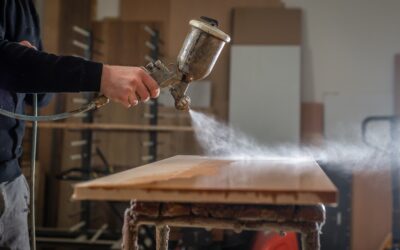
Painting a 2,000-square-foot exterior with a brush and roller is a full week of work; an airless sprayer cuts it to a weekend. That efficiency is why so many homeowners start reading airless paint sprayer reviews the moment they face a big repaint. But the specs that reviewers obsess over, GPM ratings, tip sizes, and horsepower, mean nothing until you match them to the actual jobs you plan to do. Buy too small and you fight tip clogs on thick paint; buy too big and you overpay for a rig that never leaves the garage.
Part of our Paint & Walls guide — explore the full guide →
- How Airless Sprayers Work and Why They Are Faster
- The Specs That Actually Matter
- Matching a Sprayer to Your Projects
- Understanding Tip Sizes and Fan Width
- Reading Reviews Critically
- Cleaning and Maintenance Determine Lifespan
- Prep and Masking: The Hidden Time Cost
- Safety and Technique Basics
- The Bottom Line on Value
How Airless Sprayers Work and Why They Are Faster
An airless sprayer uses a piston pump to push paint through a hose at 2,000 to 3,000 PSI, forcing it through a tiny tip that atomizes the coating into a fine fan. There is no compressed air involved, which is why the finish is heavier and faster than an HVLP gun. You lay down a thick, even coat in a single pass, and you can spray unthinned latex, primer, and even some thicker coatings that would choke a smaller sprayer.
The speed is real. A decent airless unit moves through a gallon in a few minutes, coating siding, fences, and large walls far faster than any roller. The trade-off is overspray and material waste; you use roughly 15 to 30 percent more paint than brushing, and you spend real time masking off anything you do not want coated. For a small room, that setup and cleanup can erase the time savings, which is why the right project matters as much as the right machine.
The Specs That Actually Matter
Three numbers separate a good sprayer from a frustrating one. Gallons per minute (GPM) tells you flow capacity; a rating of 0.24 to 0.34 GPM suits homeowner projects, while 0.40 GPM and up is contractor territory for continuous all-day spraying. Maximum tip size tells you the biggest opening the pump can support without pressure loss; look for at least 0.017 inches so you can spray thicker coatings and primers.
Pressure control is the third. A unit with adjustable pressure lets you dial the PSI down for fine trim work and up for thick exterior paint, which reduces overspray and saves material. Cheap models run at a fixed high pressure that wastes paint and lays down a rougher finish. Also check whether the pump can draw straight from a 1- or 5-gallon bucket, which is far less fussy than filling a small cup reservoir every few minutes.
Matching a Sprayer to Your Projects
Be honest about what you will paint. For occasional interior walls, a single accent project, or furniture, a compact handheld or small stand unit in the $150 to $300 range is plenty. These handle a couple of gallons at a time and store easily, though they clog on unthinned thick paint and are not built for daily use.
If you are tackling whole-house interiors, exterior siding, decks, and fences, step up to a mid-range cart or stand sprayer rated around 0.30 to 0.34 GPM in the $400 to $700 range. These pull directly from a 5-gallon bucket, run for hours, and support the larger tips you need for exterior work. Only a working painter repainting properties week after week needs a $1,000-plus commercial rig; for a homeowner, that is horsepower you will never use.
Understanding Tip Sizes and Fan Width
The spray tip is a three-digit number, and it controls both fan width and flow. The first digit doubled gives the fan width in inches; the last two digits are the orifice size in thousandths of an inch. A 515 tip, for example, sprays a 10-inch fan through a 0.015-inch opening, which is ideal for interior walls with latex paint.
Match the tip to the coating: use 0.009 to 0.013 tips for thin materials like stains and lacquers, 0.013 to 0.015 for interior wall paint, and 0.017 to 0.021 for thick exterior latex and primers. Tips wear out, and a worn tip widens the fan, wastes paint, and ruins the finish. Plan on replacing tips every 15 to 40 gallons depending on how abrasive the coating is, and keep a spare on hand so a worn tip does not stop your project.
Reading Reviews Critically
When you read airless paint sprayer reviews, weight the long-term durability comments over the first-impression praise. Nearly every unit sprays well out of the box; the ones worth buying still spray well after 50 gallons and survive being stored over a winter. Look specifically for reviews that mention how easily the pump primes after storage and whether replacement parts like packings and valves are available, because a sprayer you cannot rebuild is disposable.
Be skeptical of complaints that really describe user error. Many one-star reviews about clogging come from painters who did not strain their paint or flush the machine properly, not from a defective pump. The genuinely useful negative reviews describe a specific failure: a pump that lost prime after ten gallons, a cracked housing, or a manufacturer that would not honor a warranty. Those patterns, repeated across dozens of reviews, tell you what to avoid.
Cleaning and Maintenance Determine Lifespan
An airless sprayer lives or dies by how you clean it. Dried paint in the pump, hose, or tip is the number one killer, and it happens fast, sometimes in under 30 minutes if you walk away mid-job. Flush the entire system with water for latex or the appropriate solvent for oil-based coatings immediately after use, running clean fluid through until it comes out clear.
Before long-term storage, run a pump conservative or storage fluid through to keep the seals from drying out and cracking. Budget 15 to 20 minutes of cleanup after every session; it is the price of admission for the speed the tool delivers. Owners who skip this step are the ones writing angry reviews six months later about a pump that will not prime.
Prep and Masking: The Hidden Time Cost
Reviews rave about spray speed but rarely mention that masking eats most of the clock on any real job. Because an airless sprayer atomizes paint into a fine cloud, overspray drifts and coats everything it touches, so you must cover or remove anything you do not want painted. Windows, trim, fixtures, floors, and landscaping all need plastic sheeting, painter’s tape, or drop cloths before you pull the trigger.
Plan on the masking taking as long as or longer than the actual spraying for the first few jobs. On an exterior, that means bagging light fixtures, taping window frames, and running drop cloths along the foundation and over shrubs. Indoors, it means masking the ceiling line, floors, and every opening. Budget this time honestly; a painter who skips masking to save an hour spends the next day scraping overspray off glass and cleaning speckled floors, which erases every minute the sprayer saved.
Safety and Technique Basics
Airless sprayers operate at up to 3,000 PSI, which is high enough to inject paint through your skin and cause a serious injury that requires immediate medical attention. Always engage the trigger lock when not spraying, never point the gun at yourself or anyone else, and use the tip guard at all times. Relieve the pressure before you clear a clogged tip or disassemble anything; this is not optional, it is how people end up in the emergency room.
Good technique gives the professional finish the tool is capable of. Hold the gun 10 to 12 inches from the surface, keep it perpendicular, and move at a steady pace, starting your stroke before you pull the trigger and releasing it before you stop moving to avoid heavy edges. Overlap each pass by about 50 percent for even coverage. Practice on a scrap sheet of cardboard until your strokes are consistent before you commit to the actual wall.
The Bottom Line on Value
For most homeowners, the sweet spot is a mid-range airless sprayer around $400 to $600 with adjustable pressure, a 0.017-inch tip capacity, and the ability to draw from a 5-gallon bucket. That machine handles interior repaints, exterior siding, fences, and decks for years if you clean it properly, and it pays for itself against contractor labor on the very first big job.
Skip the bargain-bin models under $150 if you have more than a room or two to paint; they clog, spray unevenly, and rarely survive a second project. Read the reviews for durability and parts availability, match the GPM and tip size to your actual workload, and commit to the cleanup routine. Do that, and the sprayer becomes the tool that makes big painting jobs genuinely enjoyable instead of a week you dread.