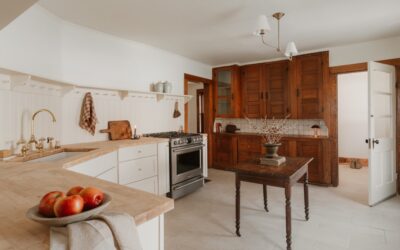
Cool grey floors dominated 2018-2023. By 2024 the pendulum had swung — warm woods came back into rotation, and warm honey-amber tones in particular started showing up in design magazines and Zillow listing photos again. Amber flooring describes any wood-tone floor in the honey-to-caramel spectrum, whether that comes from natural species color (cherry, hickory), stain application (oak with Minwax Early American), or printed luxury vinyl. The category covers a wide price range and several product types worth sorting out before buying.
What Counts as Amber
The color sits in a specific zone on the wood-tone spectrum — warmer than natural maple, lighter than walnut, less red than cherry. Think of the inside of a fresh-cut oak log after it has been sealed with oil-modified polyurethane. That golden-honey glow is what stylists call amber.
The color works because it carries warmth without going orange. It pairs naturally with cream walls, navy cabinets, brass hardware, and the new wave of saturated paint colors that designers like Joanna Gaines and Studio McGee have brought back into the mainstream.
Wood Species That Deliver Amber Tones Naturally
Several hardwood species produce amber coloring without stain — which means the color cannot wear through over time.
- White oak with natural oil finish — develops a soft amber patina over 6-18 months from UV exposure
- Hickory — variable creamy-to-amber heartwood with bold grain contrast
- American cherry — starts pinkish-blond and ambers significantly within the first year
- Brazilian cherry (Jatoba) — naturally amber-red, deepens dramatically over time
- Acacia — exotic mid-tone amber with distinctive grain swirl
For homeowners who want amber tones that improve rather than wear away, natural-species floors are the most durable path. Expect to pay $5.49-$9.99 per sq ft for solid or engineered options in these species.
Stained Amber Floors
The other path to amber color is staining oak, maple, or birch with the right product. Popular stain choices include Minwax Early American (302), Bona DriFast Amber, and Duraseal Country White diluted with Golden Oak. Application is straightforward but the technique matters — pre-stain conditioner is essential on tight-grained species like maple to avoid blotching.
Site-stained floors give you the most color control because you can sample multiple stains on actual jobsite wood before committing. The downside is added labor cost of $1.50-$2.50 per sq ft beyond the base sanding and finishing.
Pros of Amber Flooring
The aesthetic case is strong. Amber floors photograph warmer in artificial light than cool greys, which makes evening rooms feel cozier. They also hide minor scratches and pet hair better than dark espresso floors, and they show less dust than light blond floors.
- Hides scratches and wear better than dark or pale floors
- Forgives interior design changes — works with both modern and traditional furniture
- Reflects 40-55 percent of available light, easier on rooms with limited natural light than dark stains
- Increasingly trendy in 2024-2026 design cycles, may help resale value
Cons and Caveats
Color trends shift on roughly 10-year cycles, and amber tones may feel dated to some buyers in 5-7 years if the design industry swings back to cool tones. That said, natural amber from real wood species ages gracefully regardless of trend cycle — it is printed or stained amber that can read as a specific era.
UV exposure also matters. South-facing rooms with large windows can cause uneven ambering, with floor sections under rugs or furniture staying lighter than exposed areas. After 12-18 months you may need to move furniture and let the shadowed sections catch up, or accept the visible shadow pattern.
Finally, the cheaper end of the amber LVP market often shows poor color depth — flat brown printing that looks plastic in direct sunlight. Spend at least $3.49 per sq ft for vinyl in this color family to get convincing visuals.
Product Categories and Pricing
Solid Hardwood
2-1/4 inch to 5 inch wide planks, $5-$11 per sq ft material. Refinishable 4-6 times over a 50-100 year lifespan.
Engineered Hardwood
5-9 inch wide planks with 2-4mm wear layers, $4.49-$9.99 per sq ft. Refinishable 1-3 times depending on wear layer thickness.
Luxury Vinyl Plank
5-9 inch wide planks with 8-22 mil wear layers, $1.99-$5.49 per sq ft. Not refinishable but waterproof and budget-friendly.
Laminate
AC4-rated planks with realistic embossed surfaces, $1.79-$3.99 per sq ft. Good visual quality, limited moisture tolerance.
Pairing Amber Floors with Wall Colors
Color pairing makes or breaks the room. Cool neutrals like Sherwin-Williams Repose Gray (SW 7015) or Benjamin Moore Classic Gray (OC-23) balance the floor’s warmth without competing. White walls like Sherwin-Williams Alabaster (SW 7008) let the floor become the focal point. Avoid yellow or beige wall colors against amber floors — they fight rather than complement.
For trim and cabinetry, white never goes wrong, but creamy off-whites like Sherwin-Williams Creamy (SW 7012) blend warmth more seamlessly. Saturated tones like navy, hunter green, or deep burgundy work brilliantly on accent walls.
Installation Considerations
Standard wood-floor prep rules apply. Acclimate for 72+ hours. Maintain humidity 35-55%. Check subfloor moisture before install. For glue-down engineered installs, use a urethane adhesive rated for the species — denser woods like hickory benefit from premium adhesives like Bostik BEST or Sika MultiBond.
Final Take
Amber flooring delivers warmth and approachability that grey floors cannot match, and the trend cycle is currently on its side. For longevity, choose natural species like white oak, hickory, or American cherry over stained alternatives. For budget, premium LVP in amber tones has gotten visually convincing enough to use confidently in most rooms. Match wall and trim colors with cool neutrals to balance warmth, and the floor will read sophisticated rather than dated.
Prefer to explore on your own?
See how new flooring looks in your actual room in seconds — free, no signup.
Try the free Floor Studio →