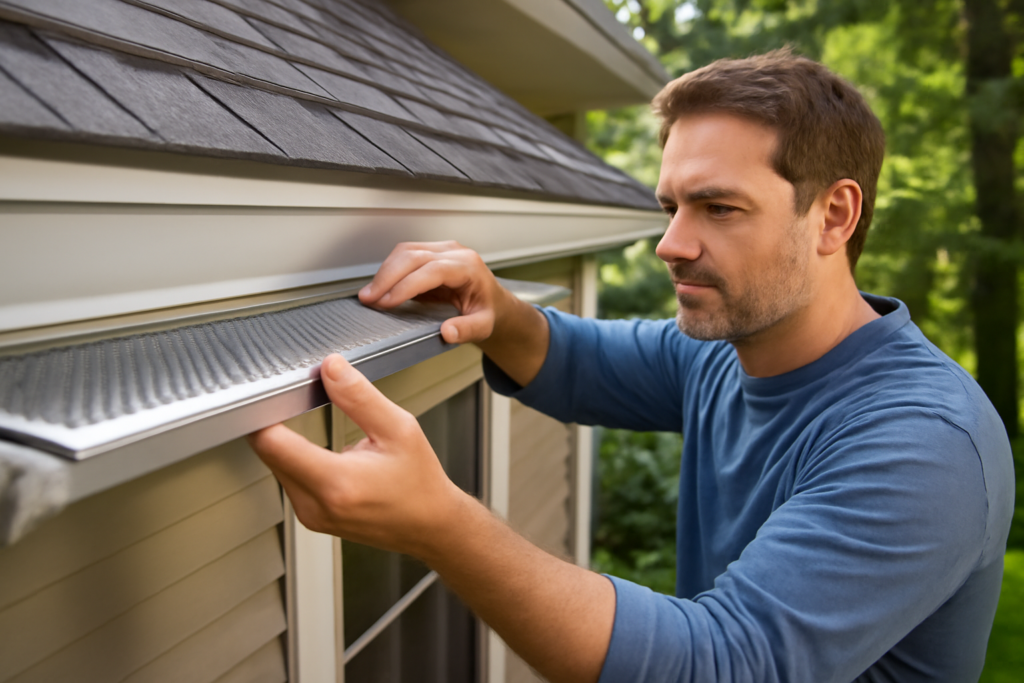
Amerimax gutter guards are one of the most widely available and budget-friendly ways to keep leaves and debris out of your gutters without hiring a $2,000-plus installer. Sold at Home Depot, Lowe’s, and other US retailers, Amerimax offers a full range of guard styles, from simple snap-in screens to fine stainless micro-mesh, so you can match the product to your tree cover and roof type. This guide walks through the main Amerimax models, how they install, what they cost, and how to choose the right one for your home.
Part of our Roofing guide — explore the full guide →
- Who Amerimax Is and What They Make
- The Main Types of Amerimax Guards
- Matching the Guard to Your Debris
- Sizing and Compatibility
- How Amerimax Guards Install
- Cost Expectations
- Performance and Limitations
- Amerimax vs. Premium Pro Systems
- Common Mistakes to Avoid
- Maintenance for Long Life
- Installation Tips for Best Results
- Which Amerimax Guard for Your Home
Who Amerimax Is and What They Make
Amerimax Home Products is a large US manufacturer of rain-carrying products, including gutters, downspouts, and a broad lineup of DIY gutter guards. Their guards span a wide price and performance range, which is exactly why they are popular with homeowners: you can spend a little on a basic screen for light debris or step up to micro-mesh for heavy pine and oak coverage. Because the products are stocked at major home centers and sold by the linear foot, they are easy to buy in the exact quantity your gutters need.
The Main Types of Amerimax Guards
Amerimax offers several guard categories, each suited to different debris:
- Snap-in and lock-in screens: Rigid plastic or metal screens that snap into the gutter lip. Inexpensive and easy, best for large debris like leaves and twigs.
- Hinged and flip-up guards: Screens that hinge open for cleaning, convenient for gutters that still need occasional access.
- Solid-frame metal mesh: Powder-coated steel or aluminum panels with a mesh surface, more durable and better at blocking smaller debris.
- Micro-mesh guards: Fine stainless steel mesh on a rigid frame, the top tier for blocking pine needles, seeds, and shingle grit while letting water through.
- Foam inserts: Wedge-shaped foam that sits inside the gutter and blocks debris on top while water passes through. Cheap and simple, but shorter-lived.
Matching the Guard to Your Debris
The right choice depends mostly on the trees around your house:
- Occasional large leaves: A basic snap-in screen or lock-in guard is plenty and keeps costs low.
- Heavy oak, maple, or mixed hardwood: A solid metal mesh panel resists clogging and holds up to wet leaf loads.
- Pine needles, seed pods, and fine grit: Only micro-mesh reliably blocks these; screens with larger holes let needles slip through.
- Low budget, light debris: Foam inserts are the cheapest option but need periodic replacement.
Choosing too coarse a guard for fine debris is the most common mistake, because pine needles thread through wide mesh and clog the gutter anyway.
Sizing and Compatibility
Most Amerimax guards are made for standard 5-inch K-style gutters, which are the most common residential size in the US, with some products available for 6-inch gutters. Guards come in stackable sections, commonly 3-foot or 4-foot lengths, sold in bundles that cover a set number of linear feet. Before buying, measure your total gutter run and confirm your gutter width and profile (K-style vs. half-round) match the product. Micro-mesh and solid-frame products are more particular about fit than flexible screens.
How Amerimax Guards Install
One of Amerimax’s biggest selling points is DIY-friendly installation. Common methods include:
- Snap-in: Flex the screen and snap the back edge under the shingles or the gutter’s back lip, then clip the front onto the gutter lip. No fasteners needed on many models.
- Slide-under-shingle: The rear edge tucks under the first course of shingles while the front rests on the gutter lip. Avoid lifting shingles so far that you break their seal.
- Screw-down frame: Solid-frame and micro-mesh panels fasten to the gutter’s front lip with self-tapping screws for a secure hold in wind and heavy debris.
Always clean and flush the gutters before installing any guard, work from a stable ladder or scaffold, and never lean a ladder against the gutter itself. If your roof is steep or two stories, consider hiring a pro for safety even though the product is DIY-rated.
Cost Expectations
Amerimax guards are dramatically cheaper than premium professionally installed systems:
- Basic snap-in screens and foam inserts: roughly $1 to $3 per linear foot.
- Solid metal mesh panels: roughly $2 to $5 per linear foot.
- Micro-mesh guards: roughly $3 to $8 per linear foot.
For a typical home with 150 to 200 linear feet of gutter, DIY materials often total $300 to $1,200, compared with $2,000 to $6,000 for a professionally installed branded system like LeafFilter. The tradeoff is that you supply the labor and the performance ceiling is generally a bit lower than top-end pro systems.
Performance and Limitations
Amerimax guards significantly reduce how often you clean your gutters, but no guard is truly maintenance-free. Screens and coarse mesh can let fine debris and grit through, and even micro-mesh accumulates a film of pollen, dust, and roof grit on top that needs occasional brushing. Foam inserts eventually break down from UV and hold moisture that encourages plant growth. Expect to inspect guarded gutters once or twice a year and clear anything sitting on top, especially after heavy pollen season or a big leaf drop.
Amerimax vs. Premium Pro Systems
Homeowners often compare Amerimax to installed brands like LeafFilter, Gutter Helmet, or LeafGuard. The key differences:
- Cost: Amerimax is a fraction of the price because you install it yourself.
- Warranty: Pro systems carry longer clog-free warranties and professional installation guarantees; Amerimax warranties are more limited.
- Fit and durability: Premium micro-mesh systems use heavier frames and custom-fit installation, while Amerimax uses standardized DIY sections.
- Performance: Good Amerimax micro-mesh performs well for most homes, but the highest-end pro systems edge it out in extreme debris conditions.
For a homeowner with moderate tree cover and a willingness to do a weekend project, Amerimax delivers most of the benefit at a small fraction of the cost.
Common Mistakes to Avoid
- Wrong mesh size for your trees: Coarse screens under pines clog fast. Match mesh to debris.
- Installing over dirty gutters: Trapped debris underneath still causes clogs. Clean first.
- Lifting shingles too far: Breaking the shingle seal can cause roof leaks and void roof warranties.
- Ignoring valleys and downspout openings: High-flow areas need special attention so guards do not cause water to overshoot.
- Assuming zero maintenance: Even the best guard needs periodic surface cleaning.
- Skipping fasteners on windy sites: Snap-in guards can blow off; use screw-down models where wind is strong.
Maintenance for Long Life
To keep any Amerimax guard working, brush or rinse the top surface once or twice a year to clear grit and pollen, inspect after major storms, and replace foam inserts when they degrade. Confirm downspouts still flow freely by running a hose into the gutter. Guards reduce the frequency and mess of cleaning dramatically, but a quick seasonal check ensures water keeps moving away from your foundation.
Installation Tips for Best Results
Getting the most from Amerimax guards comes down to a few installation habits that many DIYers overlook:
- Match the pitch to the water flow: In roof valleys where large volumes of water concentrate, water can overshoot a flat guard. Consider diverters or extra attention in these high-flow zones.
- Check gutter slope first: Guards do not fix a gutter that does not drain. Confirm the gutter pitches toward downspouts before installing.
- Secure the front edge: On windy sites, screw-down guards stay put where snap-in screens can blow off. Use stainless or coated screws that resist rust.
- Do not void your roof warranty: If a guard tucks under shingles, lift them gently only as far as needed so you do not break the shingle seal or crack them in cold weather.
- Overlap sections correctly: Lap stackable guard sections in the direction of water flow so debris does not catch on raised seams.
Working methodically section by section, and testing with a garden hose afterward, ensures water flows into the gutter and out the downspouts as intended.
Which Amerimax Guard for Your Home
To pick the right product, start with your trees and roof. If you have mostly large deciduous leaves and a single-story roof, a snap-in screen or solid metal mesh is affordable and effective and easy to install yourself. If pine, spruce, or other needle-dropping trees surround the house, go straight to micro-mesh, because coarser guards let needles through and clog anyway. If budget is tight and debris is light, foam inserts are the cheapest entry point, with the understanding they need replacement over time. And if your roof is steep or two stories, factor in the cost or safety of professional installation even for a DIY-rated product, since no gutter guard is worth a ladder fall.
Amerimax gutter guards give US homeowners an affordable, accessible way to cut down on gutter cleaning and protect against overflow. Match the guard style to your tree cover, size it to your gutters, clean and install carefully, and keep up with light seasonal maintenance, and you will get years of reliable protection for a fraction of what a full pro system costs.