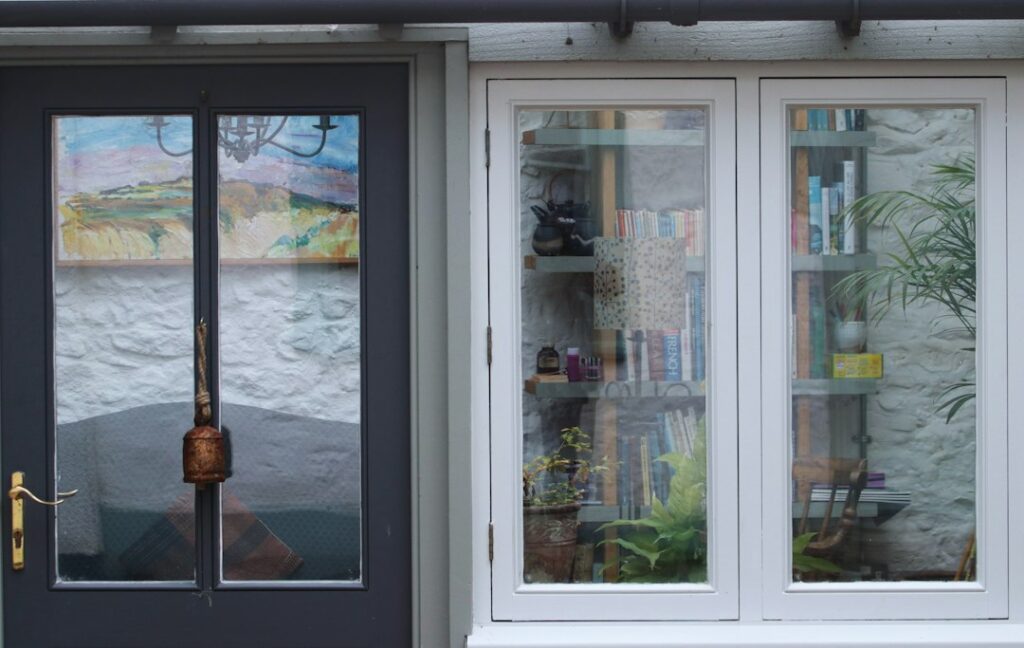
A pair of salvaged doors with wavy old glass can do more for a room than a $5,000 renovation. Antique french doors bring old-growth wood, hand-cut joinery, and genuine patina that new doors simply cannot copy. They also come with quirks: nonstandard sizes, lead paint, loose glazing, and no frame. Buy with a plan and a tape measure, and you can end up with the most admired feature in your house.
Part of our Windows & Doors guide — explore the full guide →
What Counts as Antique French Doors
Strictly speaking, an antique is 100 years or older, so most doors sold as antique date from before the 1920s. In practice, salvage yards also use the term for vintage doors from the 1920s through the 1950s. Either way, a French door is a door with glass panes, called lites, running most or all of its height, divided by wood muntins. They were commonly hung in pairs between parlors, dining rooms, and libraries, or as exterior doors onto porches and terraces.
Common styles you will find include 10-, 12-, and 15-lite doors, doors with a solid lower panel and glass above, arched-top doors from Victorian and Mediterranean Revival homes, and European imports from France and Belgium with tall, narrow proportions and ornate hardware.
How to Evaluate Age and Quality
A few clues separate real old doors from reproductions and help you judge whether a door is worth the restoration effort:
- Wavy glass. Cylinder glass made before about 1920 has visible distortion, tiny bubbles called seeds, and slight thickness variation. Look at a straight line through it.
- Joinery. Through-mortise-and-tenon joints held with wooden pegs are a good sign. Staples, dowels, or finger joints point to later manufacture.
- Wood. Old-growth pine, fir, oak, chestnut, and mahogany are dense with tight growth rings, often 15-30 rings per inch compared to 4-8 in modern plantation lumber.
- Hardware evidence. Mortise lock pockets, ghost outlines of old hinges, and patched keyholes suggest long service.
- Glazing putty. Hard, cracked linseed-oil putty points to original glass, though many doors have been reglazed.
Condition matters more than age. Check that the stiles and rails are straight by sighting down each edge. A warp of more than about 1/4 inch over the height of the door is difficult to correct. Press on joints to feel for looseness, probe the bottom rail for rot with an awl, and confirm that the pair actually matches in height, width, and lite layout.
Typical Prices
| Door Type | Typical Price Range |
|---|---|
| Single interior door, painted, needs work | $100 – $350 |
| Matched interior pair, good condition | $400 – $1,500 |
| Stripped or restored pair, hardwood | $1,200 – $3,500 |
| European imported pair with original hardware | $2,500 – $8,000+ |
Architectural salvage stores, estate sales, Habitat for Humanity ReStores, online marketplaces, and demolition contractors are the main sources. Restoration can add $300-$1,500 per pair if you hire it out, and a carpenter will typically charge $500-$1,500 to build a jamb and hang a vintage pair.
Lead Paint Safety Comes First
Almost every painted door made before 1978 contains lead paint somewhere in its layers, and doors are among the worst offenders because friction at the edges and hinges creates dust. Before sanding, scraping, or planing, test the paint with an EPA-recognized lead test kit, or assume it contains lead.
- Never dry-sand or use a heat gun above 1,100°F on lead paint.
- Work outdoors or in a contained area with plastic sheeting, and use a HEPA vacuum for cleanup.
- Wear a P100 respirator and disposable coveralls, and keep children and pregnant family members away from the work.
- Consider professional chemical dip stripping, commonly $150-$400 per door, which removes paint without dust.
If you hire someone to work on painted doors in a home built before 1978, federal rules require an EPA RRP-certified renovator. For extensive stripping or when young children live in the home, a certified lead abatement professional is the safer call.
Restoring Antique French Doors
Restoration is patient work, but none of it is especially difficult. A realistic sequence looks like this:
- Remove hardware and bag it with labels. Soak brass in warm water with a little dish soap and clean it with a soft brush; avoid aggressive polishing if you want to keep patina.
- Strip or clean the finish. For a painted look, you may only need to wash, degloss, and scuff-sand loose areas. For natural wood, use a chemical stripper or dip service.
- Reglue loose joints. Work fresh hide glue or a slow-set wood glue into the mortise and clamp across the door, checking for square by measuring diagonals.
- Repair rot with a two-part epoxy consolidant and epoxy filler, or cut out and dutchman-patch larger sections with matching old wood.
- Reglaze. Remove failed putty, set loose panes with glazier points, and apply fresh linseed-oil glazing putty. Let it skin for one to two weeks before painting. Replace broken panes with salvaged glass to keep the wavy look.
- Finish. Use a quality oil or waterborne alkyd enamel for painted doors, or shellac and wax, tung oil, or spar varnish for exterior natural wood.
A note on safety glass: current building codes generally require tempered or laminated glass in doors. Many jurisdictions allow original glass in existing interior doors, but using old glass in a new exterior opening or a door beside a tub may not pass inspection. Check with your local building department before installing.
Fitting Old Doors into a New Opening
Antique doors rarely match modern sizes, so plan the opening around the doors rather than the other way around. Buy the doors first, then frame or modify the rough opening.
- Measure precisely. Record the width and height of each leaf, thickness (often 1-3/8 or 1-3/4 inches), and hinge locations.
- Size the rough opening. A common rule is the combined door width plus about 2-1/2 inches, and the height plus about 2-1/2 inches, adjusted for jamb stock and flooring.
- Allow for the floor. Measure from the finished floor height, not the subfloor. If you are installing hardwood, tile, or carpet later, add that thickness plus clearance: typically 3/8 to 1/2 inch above hard floors and about 3/4 inch above carpet.
- Trim carefully. Take material evenly from both stiles of a pair to keep the look balanced, and never cut more than about 1/4 inch from any one edge on a door with narrow stiles.
- Choose the swing. Pairs can use one active leaf with a flush bolt or ball catch holding the passive leaf, or both leaves can swing freely. An astragal strip covers the gap where they meet.
Structural changes deserve care. Widening a doorway in a bearing wall requires a properly sized header, and in many areas a building permit. Consult a licensed contractor or structural engineer before removing studs in any wall that might carry load.
Exterior Use: Weatherproofing Vintage Doors
Old French doors can work as exterior doors, but they need help. Add adjustable weatherstripping in the jamb, a sill with a sloped threshold, and a door bottom sweep. Seal the bottom edge and all six faces of the door with finish to limit moisture movement. Deep overhangs or a covered porch make a huge difference in longevity; a south-facing door exposed to direct rain and sun will need refinishing every two to three years.
Single-pane glass also means real heat loss. Some owners add interior storm panels or magnetic acrylic inserts for winter. Others reserve antique doors for interior openings and use modern insulated French doors outside.
Design Ideas for Interior Openings
Inside the house, antique French doors are far easier to live with than as exterior doors, and they solve several common layout problems. A pair between a living room and a home office gives you a quiet workspace that still borrows light from the main room. In a dining room, glass doors let you close off the space for a formal dinner without making the house feel chopped up. Pantry doors with frosted or reeded glass hide the shelves while keeping the vintage look.
Barn-style sliding hardware is another option when floor space is tight. Mounted on a flat track above the opening, a single tall antique door slides along the wall instead of swinging, which works well for a laundry nook or a primary bath entrance. You will need a solid header or blocking behind the track to carry the weight, often 80-150 pounds for an old hardwood door.
Unhung doors also have value. A pair can become a headboard, a room divider mounted on casters, or a folding screen with piano hinges. These uses are ideal for doors with minor warp or mismatched sizes that would be hard to hang in a real opening.
Whatever the use, keep the flooring in mind. A threshold between rooms with different floor heights, such as hardwood meeting tile, should be planned so both leaves clear it evenly. A slim reducer or a flush transition strip centered under the closed doors looks cleaner than a raised saddle.
Hardware and Finishing Touches
Original mortise locks, porcelain or glass knobs, and cast butt hinges add authenticity. Restored mortise locks cost $40-$150 each from salvage suppliers, and reproduction hardware is widely available when parts are missing. Match hinge finish across both leaves, and use ball-bearing hinges if the doors are heavy solid hardwood.
Frame the opening with casing that suits the era, such as wide flat casing with a head cap for Craftsman homes or fluted casing with corner blocks for Victorian homes, and your antique french doors will look like they have always been there.