There’s a warmth and craftsmanship in old cabinetry that new factory boxes rarely match. Antique kitchen cabinets—from freestanding Hoosier cabinets to salvaged built-ins—bring history, solid-wood construction, and one-of-a-kind character to a kitchen. This guide covers the popular styles, how to judge value and condition, restoration steps, and how to blend antiques into a working modern kitchen.
Part of our Kitchen Remodeling guide — explore the full guide →
- What Counts as an Antique Kitchen Cabinet?
- Popular Antique Cabinet Styles
- How to Judge Value
- Inspecting Before You Buy
- Lead Paint and Safety
- Restoration Basics
- Refinishing vs. Preserving
- Blending Antiques Into a Modern Kitchen
- Where to Find Antique Cabinets
- Costs to Expect
- Common Mistakes to Avoid
- Caring for Antique Cabinets
- Adapting Antiques for Modern Function
- Hardware and Period Details
- Countertop Pairings for Antique Cabinets
- Where Antiques Fit Best
- Protecting Antiques in a Working Kitchen
- Budgeting for the Full Project
- The Bottom Line
What Counts as an Antique Kitchen Cabinet?
Strictly, “antique” means at least 100 years old, while “vintage” generally refers to pieces 40 to 100 years old. In practice, buyers use the terms loosely for any cabinetry with genuine age and period character—typically pre-1960s. The appeal lies in solid hardwood construction, hand-cut joinery, wavy old glass, and a patina that can’t be faked on new materials.
Popular Antique Cabinet Styles
- Hoosier cabinets: the freestanding kitchen workstations of the 1900s–1930s, with a flour sifter, enamel work surface, and clever storage. Highly collectible.
- Farmhouse cupboards and pie safes: tall storage pieces, sometimes with punched-tin panels for ventilation.
- Built-in early 20th-century cabinetry: often salvaged from old homes, featuring beadboard backs and glass upper doors.
- Apothecary and general-store cabinets: banks of small drawers repurposed for kitchen storage.
How to Judge Value
Several factors drive an antique cabinet’s worth:
- Originality: original hardware, glass, and finish command a premium over replaced parts.
- Condition: solid structure and working drawers matter more than surface wear, which many buyers prize.
- Maker and provenance: named makers (like Hoosier, Sellers, or McDougall for Hoosier-style pieces) and documented history add value.
- Wood species and joinery: oak, maple, and dovetailed drawers signal quality.
Hoosier cabinets in good original condition typically sell for $600 to $2,000-plus, while simpler cupboards may run $200 to $800.
Inspecting Before You Buy
- Open every drawer and door—check that dovetails are tight and slides aren’t worn through.
- Look underneath and inside for water damage, rot, and active woodworm (small fresh holes with powder).
- Smell for mustiness or mildew that signals long-term moisture.
- Check for lead paint on pre-1978 painted pieces; plan safe handling if present.
- Test that the piece sits level and doesn’t rack when you push a corner.
Lead Paint and Safety
Cabinets painted before 1978 may carry lead-based paint. Never dry-sand or heat-strip suspect finishes, which releases lead dust and fumes. Test with an inexpensive lead swab kit. If lead is present and you want to repaint, either encapsulate with a bonding primer over an intact surface or have a certified professional handle removal. This is a genuine health matter, especially in homes with children.
Restoration Basics
Restoring an antique cabinet balances preserving character with making it functional:
- Clean gently first—often a wipe with mild soap and water reveals a piece is better than it looked.
- Preserve patina where possible; over-sanding erases the age that gives the piece value.
- Repair joints with hide glue or wood glue and clamps rather than nails.
- Refinish sparingly—a fresh coat of shellac, wax, or oil often restores warmth without stripping.
- Replace hardware with period-correct reproductions if originals are missing.
Refinishing vs. Preserving
Collectors generally value original finish, so think twice before stripping a piece to bare wood. If the finish is intact but dull, a cleaning and fresh wax may be all it needs. Strip and refinish only when the original surface is beyond saving. For pieces you’ll use hard in a working kitchen, a durable modern topcoat over a repaired finish balances longevity with looks.
Blending Antiques Into a Modern Kitchen
You don’t need a fully vintage kitchen to enjoy antique cabinetry. Popular approaches include:
- Using a Hoosier or cupboard as a freestanding accent and pantry.
- Installing a salvaged glass-front upper as a display cabinet among new cabinets.
- Repurposing an antique dresser or apothecary chest as an island or coffee station.
- Mixing one antique piece with clean modern cabinets for an eclectic, collected look.
Where to Find Antique Cabinets
Hunt at architectural salvage yards, estate sales, farm auctions, antique malls, and online marketplaces. Architectural salvage is the best source for built-in cabinetry pulled from old homes. Bring measurements and a tape measure, and factor transport—these pieces are heavy solid wood. Salvaged built-ins may need modification to fit modern appliance dimensions.
Costs to Expect
Beyond purchase price, budget for restoration. A light clean-and-wax is nearly free; professional refinishing runs $300 to $1,000-plus per piece depending on size and condition. Reproduction period hardware costs $10 to $40 per piece. Adapting salvaged built-ins to a modern layout—cutting for a dishwasher or fitting a new countertop—adds carpentry labor.
Common Mistakes to Avoid
- Over-restoring and stripping away the patina that gives the piece value and charm.
- Ignoring lead paint on pre-1978 finishes.
- Buying without measuring your space and appliance openings.
- Overpaying for a piece with heavily replaced parts marketed as “all original.”
- Placing untreated antique wood next to a dishwasher or sink without moisture protection.
Caring for Antique Cabinets
Keep humidity stable (35–50 percent) to prevent cracking, dust with a soft cloth, and feed the wood with a quality paste wax or wood conditioner a couple of times a year. Avoid silicone sprays and harsh chemicals that can damage old finishes. Keep the pieces out of direct sun and away from heat sources to protect fragile finishes and glass.
Adapting Antiques for Modern Function
Making a century-old cabinet work in a modern kitchen sometimes calls for careful updates. You might add discreet interior shelving, retrofit soft-close drawer glides hidden inside original drawer boxes, or line a Hoosier’s flour bin for food-safe storage. When adapting a salvaged built-in to hold a modern dishwasher or microwave, work with a carpenter who respects the original construction and makes reversible modifications where possible. The goal is to preserve the piece’s character and value while quietly improving its usability—not to erase the age that makes it special.
Hardware and Period Details
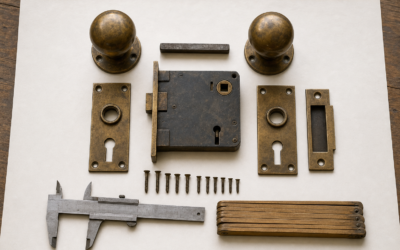
Original hardware dramatically affects both authenticity and value. Antique cabinets often feature cast-iron or brass bin pulls, cupboard latches, icebox-style hinges, and porcelain knobs. If pieces are missing, reputable reproduction hardware makers offer period-correct latches, pulls, and hinges that blend seamlessly. Resist swapping original hardware for modern pieces—it dates the restoration and lowers collector value. If you must store originals for safekeeping, keep them with the piece so they can be reinstalled later.
Countertop Pairings for Antique Cabinets
The right countertop lets an antique piece shine without looking out of place. Butcher block and soapstone both have a period-appropriate, timeworn character that suits vintage cabinetry. Honed marble evokes old bakery and pastry tables. For a Hoosier or freestanding cupboard, the original enameled steel work surface—if intact—is worth preserving as a functional nod to history. Avoid glossy, ultra-modern engineered surfaces that clash with the piece’s age; a warmer, matte natural material harmonizes far better.
Where Antiques Fit Best
Antique cabinets shine as intentional focal points rather than wall-to-wall replacements. A freestanding cupboard makes a characterful pantry; a glass-front upper displays dishware; an apothecary chest organizes spices and utensils in dozens of small drawers. In a butler’s pantry, mudroom, or coffee station, a single antique piece adds soul without the challenges of adapting a full run to modern appliance dimensions. Blending one or two genuine antiques with clean, functional new cabinetry gives you the best of both worlds: everyday practicality and irreplaceable character.
Protecting Antiques in a Working Kitchen
Because antique cabinets weren’t built for modern kitchen moisture and heat, a few protective steps help them survive daily use. Keep antique wood away from direct contact with dishwasher steam and sink splash, and seal any raw or repaired surfaces with a durable food-safe finish where they’ll get wet. Use felt pads under items that sit on shelves to prevent scratching, and avoid stacking heavy cookware in drawers built for lighter dry goods. Maintaining stable indoor humidity between 35 and 50 percent prevents the seasonal cracking that plagues old wood in dry, heated homes.
Budgeting for the Full Project
When planning an antique-cabinet kitchen, budget beyond the purchase price. Factor transport of heavy solid-wood pieces, professional restoration or refinishing if needed, reproduction hardware to replace anything missing, and any carpentry to adapt salvaged built-ins to modern appliance and countertop dimensions. A realistic total often runs well above the sticker price of the cabinet itself, but the result—character and craftsmanship no showroom can sell—rewards the investment. Getting quotes for restoration and adaptation before you buy prevents budget surprises later.
The Bottom Line
Well-chosen antique kitchen cabinets deliver character, craftsmanship, and history that new cabinetry can’t replicate—often at a reasonable price. Inspect carefully for structural soundness and lead paint, restore with a light hand that preserves patina, and blend a standout piece or two into your kitchen for a warm, collected look that’s genuinely one of a kind.