If you have ever wondered what wood can survive a forklift, the weather, and decades of pounding cargo, the answer is often apitong. Apitong flooring, also sold as Keruing, is a dense, exceptionally strong tropical hardwood used almost exclusively for truck beds, trailer decking, and heavy industrial floors — not your living room. It is prized for raw toughness and weather resistance, but its oily nature, weight, and rugged character make it a specialized product. This guide explains what apitong is, where it excels, why it is not a residential floor, and how to work with it.
What Is Apitong?
Apitong is the trade name for several closely related species in the Dipterocarpus genus, native to Southeast Asia. The same wood is commonly marketed as Keruing. It is a heavy, dense hardwood with a coarse, straight-to-interlocked grain and a reddish-brown to grayish-brown color. What sets it apart is its mechanical strength: apitong is extremely stiff, hard, and resistant to impact and abrasion. Those traits, combined with good resistance to decay and the elements, made it the traditional choice for surfaces that take a beating most floors would never survive.
Primary Uses: Truck and Trailer Decking
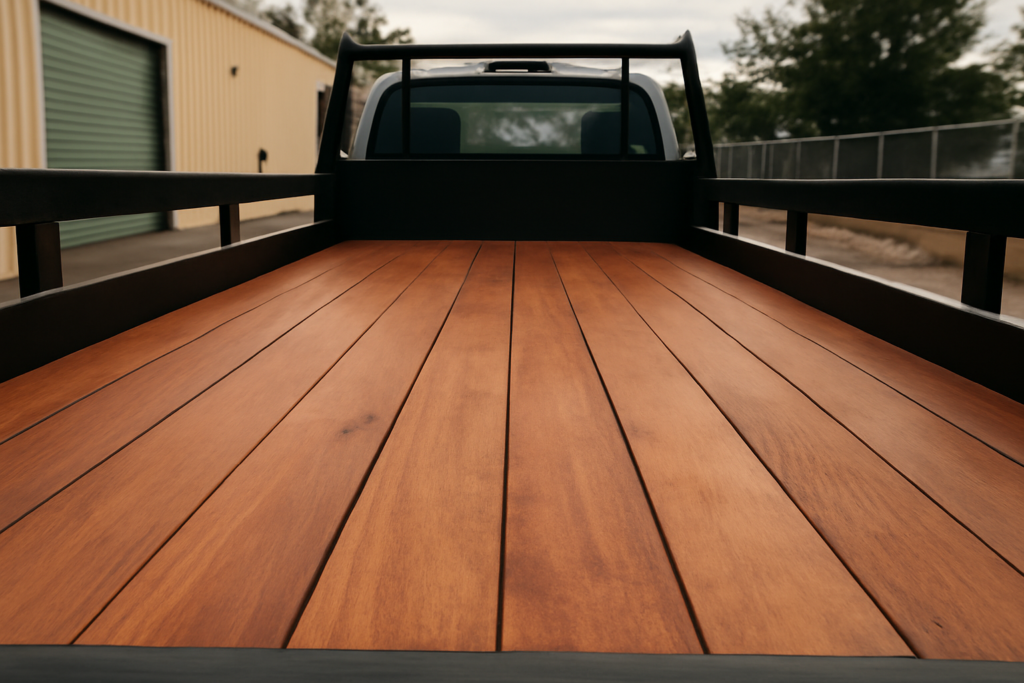
Apitong’s main job is industrial. Its dominant application is decking for flatbed trucks, trailers, and railcars.
- Truck and trailer beds: Apitong boards, often shiplapped or tongue-and-groove, form the load floor of flatbeds and dump trailers.
- Railcar flooring: Boxcars and rail equipment use it for the same reasons — strength and wear resistance.
- Industrial and warehouse floors: Heavy-duty work areas where forklift traffic and dropped loads would destroy ordinary wood.
- Trailer and equipment repair: Replacement decking boards are a standard repair item for fleet maintenance.
It is typically sold in thick, heavy boards designed to span trailer crossmembers and bolt down, not to float or nail like residential strip flooring.
Why It’s So Tough
The appeal of apitong is pure durability. It is dense enough to resist denting and gouging from cargo, hardware, and chains. It holds up to constant abrasion from sliding loads. It performs well outdoors, standing up to rain, sun, and temperature swings far better than common construction lumber. And it has the bending strength and stiffness to carry concentrated loads across the gaps between trailer crossmembers without flexing. For an application where failure means a destroyed deck or a dropped load, that combination is exactly what fleets want.
The Oily Nature and What It Means
Apitong contains natural oils and resins, and this is a defining working characteristic. The oils contribute to its weather resistance, but they also affect how the wood behaves on the job. Fresh boards can weep resin, especially in heat, which is why industrial decking is often treated or coated. The oiliness can interfere with adhesives and some finishes, so surfaces may need cleaning or specific products to bond. It can also bleed through coatings if not sealed properly. None of this is a problem for its intended industrial use, but it is one more reason apitong lives in the world of trucks and warehouses rather than homes.
Why Apitong Isn’t a Residential Floor
It is worth being clear: you will not find apitong in a typical home, and that is by design. The boards are very heavy and thick, sized for trailer decking rather than residential subfloors. The look is rugged and utilitarian, not the refined grain homeowners want in a living space. The oils complicate finishing for an indoor, foot-friendly surface. And because it is sold as an industrial commodity, it is not milled, graded, or finished for residential installation. If you want a hard, durable wood floor at home, dense species like jatoba (Brazilian cherry) or hickory deliver toughness in a form actually made for living spaces.
Working With Apitong Decking
For its real-world users, a few practical points apply. The wood is dense and hard on tools, so carbide-tipped blades and predrilling for fasteners are the norm; it can split if you drive bolts or screws without pilot holes. Because of the oils, surfaces intended to be coated should be cleaned, and the right primer or sealer chosen to handle resin. Apitong is usually fastened down mechanically with bolts or heavy screws into the trailer frame, not glued. When replacing trailer decking, matching the original board thickness and profile keeps the load floor flush and strong.
Sourcing and Sustainability
Apitong is sold through industrial lumber suppliers, trailer-parts dealers, and specialty hardwood distributors rather than home centers. Because it is a tropical hardwood, responsible buyers should ask about the source and look for material from legally and sustainably managed forests, since Dipterocarpus species face harvesting pressure in their native range. Pricing reflects its density and import status, and availability can vary. For one-off repairs, trailer and fleet suppliers typically stock standard decking dimensions.
The Bottom Line
Apitong, or Keruing, is one of the toughest woods you can put underfoot — but its home is the flatbed, the trailer, the railcar, and the warehouse, not the den. Its density, strength, and weather resistance make it the standard for heavy-duty apitong flooring in industrial and transport applications, while its weight, oily resin, and rugged form keep it out of residential use. If you maintain trucks or trailers, it is the proven choice for decking; if you want a hard wood floor at home, look to a dense residential species milled for the job instead.
Maintaining and Extending Apitong Decking
For the fleets and operators who rely on it, apitong decking lasts longest with a little upkeep. Keeping the surface coated with an appropriate oil-based deck sealer or industrial finish slows weathering, locks in the natural resins, and reduces splintering and checking over time. Inspect the boards periodically for cracks, loose fasteners, and worn spots, and retorque or replace hardware as needed so the deck stays flat and tight to the frame. Because the wood is so dense, fasteners that work loose can elongate their holes under vibration, so catching them early matters. Replace individual damaged boards rather than waiting for the whole deck to deteriorate, matching the original thickness and profile so the load floor remains even. With routine attention, an apitong deck commonly outlasts every other component on a trailer.
Alternatives to Apitong for Decking
Apitong is the traditional benchmark, but a few alternatives serve similar duty. Other dense tropical hardwoods, sometimes sold under regional trade names, offer comparable strength where apitong is scarce. For operators seeking lower maintenance or non-wood options, laminated bamboo decking and composite or metal decking systems have grown more common, trading some of wood’s repairability for rot-proof consistency. Each has trade-offs in weight, cost, grip, and how easily a single board can be swapped out. For pure proven performance and field repairability, though, apitong and its tropical-hardwood cousins remain the default choice across much of the trucking and trailer industry.
Prefer to explore on your own?
See how new flooring looks in your actual room in seconds — free, no signup.
Try the free Floor Studio →