The hardwood industry casually groups ash and oak together because their grain structures look similar from across a showroom — and that has confused buyers for decades. Ash oak flooring as a search term usually means buyers are weighing two different but related species, both ring-porous hardwoods with strong grain patterns and excellent durability. This guide separates American ash from white and red oak, explains where each fits, and helps you decide whether the modest price difference makes sense for your project.
What Ash and Oak Actually Are
White ash (Fraxinus americana) is a hardwood native to the eastern United States with a Janka hardness rating of 1,320 — slightly harder than red oak (1,290) and slightly softer than white oak (1,360). The grain is ring-porous like oak, which gives both species their distinctive open-grain look, but ash has a longer, more consistent grain pattern and slightly creamier color. Modern ash flooring sometimes has scarcity issues due to the emerald ash borer, which has killed millions of ash trees since 2002.
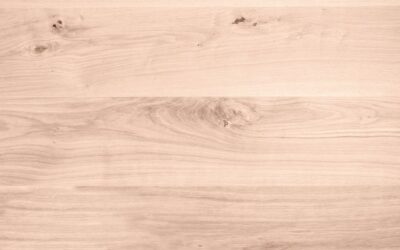
Oak in the US flooring market means white oak (Quercus alba) or red oak (Quercus rubra). White oak is more popular currently because it accepts gray and natural finishes more elegantly. Red oak has slightly pinker undertones that show through stains. Ash sits visually between the two, with neither white oak’s gray potential nor red oak’s pink — closer to a creamy yellow-brown.
Pros of Ash Flooring
Ash competes well against oak when the project specs are weighed honestly.
- Hardness — 1,320 Janka, harder than red oak and most domestic species
- Grain character — long, consistent grain lines that read more uniform than oak’s variable rays
- Color flexibility — accepts a wide range of stains from light natural to deep charcoal
- Lower price — typically 8% to 18% less expensive than white oak in similar grades
- Stability — moderate dimensional change with humidity, comparable to oak
- Domestic species — sustainably harvested in midwestern and Appalachian forests
Cons of Choosing Ash
The negatives are real but manageable. Ash supply is constrained due to the emerald ash borer infestation, which has eliminated millions of trees across 35+ states since 2002. Lead times for genuine ash flooring are sometimes 8 to 14 weeks, longer than oak which is more reliably stocked. Some “ash” products on the market are actually European or Russian ash imports, which have similar properties but uncertain supply consistency.
Aesthetic flexibility is a smaller market for ash. Most homeowners gravitate toward oak for the gray-stain trend that defines current design — and ash does not gray as elegantly as white oak. Designers and architects who specifically want the modern washed-gray look should plan on white oak instead. Ash hits its visual peak in natural and warm-stained finishes.
Ash vs White Oak vs Red Oak
The three species have distinct profiles that suit different rooms and design goals.
- White ash — creamy yellow-brown, long grain, accepts most stains; $5 to $10 sq ft material
- White oak — pale gray-brown, dense grain, ideal for gray and natural finishes; $7 to $13 sq ft
- Red oak — pink-brown undertones, prominent grain, classic American look; $5 to $9 sq ft
- European oak — wider plank availability, slightly cooler tone; $9 to $18 sq ft
- Engineered versions of any species — usually 25 to 35% cheaper than solid; $4 to $14 sq ft
Best Applications for Each Species
Ash works beautifully in casual modern homes, transitional designs, and projects where buyers want a unique look that does not chase current trends. The grain reads as confident and clean — neither too rustic nor too refined. For high-traffic kitchens and entry rooms in active households, ash hardness handles the abuse well. Avoid ash in below-grade installs; like oak, it does not handle high humidity environments without engineered construction.
White oak suits formal living rooms, gray-trend kitchens, and any space where the floor is a major design feature. Red oak fits historic restorations, mid-century homes, and spaces with classic American style. Match the species to the home’s character rather than chasing whatever Instagram showed last week.
Solid vs Engineered Construction
Both ash and oak are available in solid and engineered formats. Solid 3/4 inch tongue-and-groove planks install via blind nailing and refinish multiple times — best for forever homes on first or second floor wood subfloors. Engineered planks have a 2 to 6 mm wear layer of the actual species over a multi-layer plywood core, install over concrete or floating, and refinish once or twice depending on wear-layer thickness.
For new construction or major renovations, engineered ash or oak is increasingly the practical choice. The wider plank availability (up to 9 inches), better dimensional stability over radiant heat, and lower install cost compensate for the limited refinish potential.
Finish Options
Three main finish categories work on either species. Site-finished installs unstained planks and applies stain plus polyurethane after install — most customizable but messiest. Pre-finished planks come from the factory with UV-cured aluminum oxide finish — most durable wear layer (10 to 25 year warranty), no install dust. Wire-brushed and hand-scraped textures hide normal wear in busy households at slightly higher cost.
For ash, natural finish or light wax-effect stains showcase the wood’s character best. Avoid forcing ash into gray or whitewash territory — the wood resists those tones and looks muddy. For oak, current popular finishes include natural matte, warm honey, and various gray washes from Bona DriFast or Duraseal.
Installation Methods
Solid plank installs by blind-nailing through the tongue with a Powernail 50P or Bostitch BTFP12569 pneumatic nailer. Use 16 gauge cleats at 8 to 10 inch on center along the tongue. Engineered plank installs by glue-down (Bostik GreenForce or Bona R590), nail-down, or floating click-lock depending on the manufacturer. Acclimate planks in the install space for 7 to 14 days before opening cartons; rushing this step is the leading cause of post-install gapping.
Cost for a 500 Sq Ft Room
For 500 sq ft, expect: site-finished red oak around $4,000 to $6,500; site-finished white oak around $5,500 to $9,000; site-finished ash around $4,500 to $7,500; pre-finished engineered oak or ash around $5,500 to $11,000. Solid 3/4 inch hardwood costs more than engineered but refinishes 4 to 6 times across a 50-year lifespan.
Long-Term Maintenance
Ash and oak have similar maintenance profiles. Sweep daily with a soft broom or microfiber. Damp mop weekly with hardwood-specific cleaner like Bona ProSeries Hardwood Floor Cleaner. Avoid oil soaps, vinegar, and steam mops — all degrade polyurethane. Refinish every 8 to 15 years on solid plank, depending on traffic. Touch up scratches with manufacturer fill sticks; deep gouges require board replacement.
The Verdict for Most Buyers
For homeowners considering ash oak flooring as a category, the practical answer is usually white oak for design-driven projects, red oak for traditional homes, and ash when supply is available and the natural cream tone matches the design. Either oak species hits the easier-to-source mark at slightly higher cost. Ash delivers a unique character at a modest discount — worth specifying when timing and aesthetic align.
Prefer to explore on your own?
See how new flooring looks in your actual room in seconds — free, no signup.
Try the free Floor Studio →