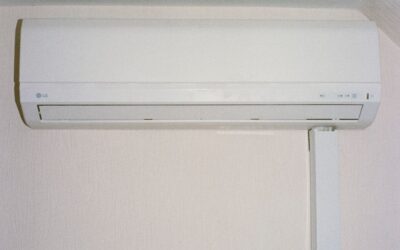
If you’ve priced out ductless heating and cooling lately, you’ve probably run across the AUX name and wondered whether a budget brand can actually keep a room comfortable through a July heat wave. The short answer from the field is yes. An AUX mini split is a legitimate ductless heat pump that competes on price with Pioneer, MRCOOL, and Senville while undercutting the Mitsubishi and Daikin tier by a wide margin. AUX (Aux Group) is a large Chinese HVAC manufacturer that also builds compressors and units for other labels, so the guts are more familiar than the badge suggests.
I’ve hung enough of these to tell you where they shine, where they cut corners, and how to size one so you don’t roast in one room while another stays chilly. Let me walk you through it the way I’d explain it to a homeowner standing in the driveway.
What You’re Actually Buying
A ductless mini split is two pieces: an outdoor condenser and one or more indoor air handlers, joined by a line set that carries refrigerant, a communication wire, and a condensate drain. There’s no ductwork, which is why these are the go-to fix for a converted garage, a bonus room over the garage, a three-season porch, or an addition your existing furnace was never sized to reach.
Nearly every AUX unit is a heat pump, not just an air conditioner. That means it heats and cools from the same box by reversing the refrigerant flow. Most of their residential lineup is rated to produce useful heat down to around 5°F, with some low-ambient models pushing to -22°F. In the Sun Belt that’s overkill; in New England you’ll want the cold-climate spec sheet in hand before you commit to heating with it alone.
Getting the BTU Sizing Right
Sizing is where most DIY jobs go sideways. Bigger is not better with a mini split. An oversized head short-cycles, never runs long enough to pull humidity out of the air, and leaves the room clammy at 74°F. Undersize it and the compressor runs flat-out and still loses ground on the worst days.
A rough rule of thumb for a reasonably insulated room is 20 to 25 BTU per square foot, but adjust for sun exposure, ceiling height, and climate. Here’s how the common AUX capacities map out:
- 9,000 BTU (9k): 300 to 400 sq ft. A bedroom, home office, or small living room.
- 12,000 BTU (12k): 450 to 550 sq ft. A master bedroom or a modest open living area.
- 18,000 BTU (18k): 650 to 800 sq ft. A large great room or a small open-plan first floor.
- 24,000 BTU (24k): 900 to 1,200 sq ft. A big open living/kitchen space or a finished basement.
Rooms with west-facing glass, cathedral ceilings, or poor insulation push you toward the next size up. A sunroom with three walls of windows might need a 12k for a space a spreadsheet says only wants a 9k. When in doubt, have someone run a Manual J load calculation rather than guessing.
SEER2 Ratings and What They Cost You Monthly
SEER2 (the updated efficiency standard that replaced SEER in 2023) tells you cooling efficiency; HSPF2 covers heating. AUX single-zone units generally land in the 19 to 22 SEER2 range, with some premium models advertised higher. For reference, a legally minimum builder-grade system sits around 14 to 15 SEER2, so even an entry AUX runs efficient.
What does that mean in dollars? A 12k unit at 20 SEER2 running the cooling season in a moderate climate typically adds $15 to $35 a month to the electric bill, depending on runtime and local rates. The inverter-driven compressor is the reason these numbers stay low. Instead of slamming on and off like an old window shaker, an inverter ramps up and down and cruises at low speed most of the day, which sips power and holds the temperature within a degree or so.
Real Price Ranges
Equipment pricing moves, but here’s a realistic snapshot for single-zone AUX systems bought online, before installation:
- 9k single-zone: roughly $700 to $1,000
- 12k single-zone: roughly $850 to $1,200
- 18k single-zone: roughly $1,100 to $1,600
- 24k single-zone: roughly $1,400 to $2,000
- Multi-zone (2 to 5 heads): $2,000 to $4,500 for the equipment
Add a line set kit ($80 to $200), a wall mounting bracket and pad, a whip and disconnect, and a surge protector if you want to protect the board. Professional installation typically runs $1,000 to $2,500 for a single zone and more for multi-zone, so an installed AUX system commonly lands between $2,500 and $5,000 all in for one room.
DIY Versus Pro Installation
This is the fork in the road. Most AUX units ship pre-charged and require a vacuum pump, a manifold gauge set, a torque wrench for the flare fittings, and comfort working with a 220V circuit. If you don’t own that gear or have never pulled a vacuum on a line set, factor in renting tools or buying a $150 pump.
The critical step nobody should skip is evacuating the lines to around 500 microns and holding it to prove there are no leaks. Skip that and you trap moisture and air in the system, which forms acid, freezes at the metering device, and kills the compressor months later. That failure is almost never covered under warranty because it traces back to installation.
Honest take: if you’re handy, own or can rent a vacuum pump, and respect the electrical side, a single-zone AUX is a realistic weekend project for two people. Multi-zone, long line runs, or anything involving a panel upgrade should go to a licensed HVAC contractor. Some homeowners split the difference: mount everything and run the line set themselves, then pay a tech $200 to $400 to pull the vacuum, verify the charge, and commission the system.
Single vs Multi-Zone, Noise, and Upkeep
One more decision shapes both cost and comfort: one head or several. A single-zone system pairs one outdoor condenser with one indoor head and is the simplest, most efficient, and cheapest way to condition a single room. If a spare bedroom is your only problem, that’s the answer.
A multi-zone setup runs two to five indoor heads off one larger condenser, letting you treat several rooms with a single outdoor unit. It’s tidier on the exterior and often cheaper than buying three separate systems, but there’s a catch worth knowing. Multi-zone condensers modulate less gracefully at very low load, so a single small head calling for a little heat can make the whole system short-cycle. If your rooms have wildly different needs, sometimes several single-zone units actually outperform one multi-zone box. AUX sells both, so match the architecture to how you actually live in the space.
People are often surprised how quiet these run. An AUX indoor head on low fan sits around 25 to 30 decibels, quieter than a refrigerator, which is why they work so well in bedrooms. The outdoor condenser is the louder component, in the 50s of decibels, so don’t mount it under a bedroom window if you can help it.
Maintenance is light but not zero. Rinse the washable indoor filters every two to four weeks in cooling season, keep leaves and snow clear of the outdoor coil, and flush the condensate drain twice a year so it never backs up. Once a year, a deeper coil cleaning keeps efficiency where it belongs. Neglect the filters and you’ll watch your efficiency and airflow drop while ice forms on the indoor coil.
Warranty and Buying Smart
AUX residential systems typically carry a 5-year compressor and 2-year parts warranty on units sold through authorized channels, though terms vary by seller and model year. Two things void coverage fast: a self-install on a model that requires professional commissioning, and buying from a gray-market listing that isn’t an authorized dealer. Read the warranty card before you click buy, and register the unit with the serial number within the window they require.
Keep your invoice, a photo of the data plate, and any commissioning paperwork. If a board or sensor fails at year three, that documentation is the difference between a free part and a $300 argument.
Is an AUX Mini Split Right for You?
For a spare room, a garage gym, an office, or a whole-house ductless retrofit where budget matters, an AUX mini split delivers strong efficiency and quiet operation for meaningfully less money than the premium brands. You trade some of the ultra-cold-climate refinement and the dense national service network you’d get with Mitsubishi, but for most of the country in most homes, that trade is easy to make.
Size it honestly, insist on a proper vacuum during install, buy from an authorized seller, and register the warranty. Do those four things and an AUX system will hum along quietly heating and cooling that stubborn room for a decade or more at a price that leaves money in your pocket for the rest of the project.