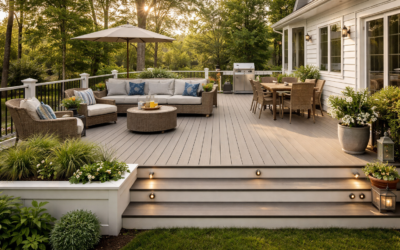
Plenty of homeowners still search for AZEK railing systems by name, but the brand landscape has shifted. AZEK and TimberTech now sit together inside the James Hardie family of brands, and the parent company lists railing under the TimberTech name while the AZEK name is tied to trim, siding and moulding. If you type an old AZEK railing web address today, it forwards to that brand overview instead of a railing catalog.
That matters when you shop, order replacement parts or match an existing deck. The railing products people once bought as AZEK are now found in the TimberTech railing lineup, which is organized by material: PVC, composite, powder-coated aluminum and a premium vinyl option. Colors in the current range center on black, brown, white and a khaki tan, and the premium matte composite colors carry a 25-year limited fade and stain warranty according to the manufacturer.
Past the brand question, the practical work is the same as any modular railing: choose a material, pick a top rail profile and infill, size your posts, and confirm the guard height your local code requires. Each piece is covered here so you can plan a railing that looks right and passes inspection.
AZEK Railing Systems at a Glance
The quickest way to understand AZEK railing systems today is to look at how the current lineup is grouped. Each material has its own strengths, price position and look. Use this as a starting point, then check the current spec sheet for exact section lengths, post sizes and color availability, because railing catalogs change from season to season.
| Spec | Value | What it means |
|---|---|---|
| Current brand home | TimberTech (James Hardie family) | Railing formerly sold under the AZEK name is now listed under TimberTech |
| PVC railing | Extruded PVC with aluminum reinforcement | Highest price tier; crisp milled-wood look; lines include Pinnacle Rail and Statement Rail |
| Composite railing | Polymers blended with recycled wood fiber | Mid to upper tier; most style options, including Premier Rail, Radiance Rail, Trademark Rail and Drink Rail |
| Aluminum railing | Powder-coated aluminum, panelized (Impression Rail Express) | Mid tier; no fastening of individual balusters; slimmer balusters |
| Premium vinyl | High-grade vinyl (Reliance Rail) | Most budget-friendly; low maintenance and quick to install |
| Core colors | Black, brown, white, khaki (tan) | Availability varies by material and profile |
| Fade and stain warranty | 25-year limited (premium matte colors) | Applies to matte composite colors, on top of a 25-year limited product warranty on most rail lines |
| Typical guard heights | 36 in. or 42 in. | Your local code decides which you need |
If you are replacing a section on a deck built years ago, take photos of the post sleeve, top rail profile and bracket style before you call a dealer. Older AZEK profiles may not match current parts exactly, and a close match is easier to find when the dealer can see what is already installed.
Choosing a Railing Style
Style comes down to three choices: the material, the top rail shape and the infill between posts. Each one changes the look of the deck and the amount of upkeep you will do over the years.
PVC Railing
PVC railing sits at the top of the price ladder. It is extruded PVC reinforced with aluminum, and the manufacturer describes it as resistant to moisture, cracking, chipping, rot, swelling and splitting. It is also UV resistant and paintable, although it does not need paint. The clean, square-cornered profile suits traditional homes and coastal designs where bright white trim is part of the look. On a deck that already uses PVC trim, a white PVC rail ties everything together.
Composite Railing
Composite railing blends polymers with recycled wood fibers. It offers the widest range of styles, including the Classic Composite Series with Premier Rail, Radiance Rail and Trademark Rail profiles, and a Drink Rail option that gives you a ledge wide enough for a cup. If you want your railing to read as part of a composite deck rather than a separate metal element, composite is the natural fit.
Aluminum Railing
Aluminum railing is powder coated for corrosion resistance and comes in panels, so you do not fasten individual balusters. The balusters are slimmer than many competitors, which opens up the view. Homeowners with a lake, yard or mountain view often pick aluminum for that reason. It also handles harsh sun well and stays lighter on the posts.
Premium Vinyl
Premium vinyl railing is the value pick. It installs quickly, needs little care and works for both residential and light commercial builds. The trade-off is a plainer look and fewer profile choices than composite or PVC.
Colors and How to Pair Them
Current colors in AZEK railing systems, under the TimberTech name, center on black, brown, white and khaki. Not every color is offered in every material, so confirm availability for the exact profile you want before you finalize a design.
- Black: the modern default. It frames views, hides dirt and pairs with almost any deck board color, from light gray to deep brown.
- White: a classic look for farmhouse, colonial and coastal homes. It shows dirt faster, so plan on washing it a few times a season.
- Brown: blends with darker deck boards and natural wood siding, giving a quieter, more rustic feel.
- Khaki or tan: a soft neutral that works with sandy or weathered gray boards and lighter stone patios.
A popular approach is contrast: a white top rail and posts with black balusters, or black aluminum infill set between composite posts that match the deck. Before ordering, set a sample of the rail cap next to your deck board in daylight. Colors that look close indoors can clash outside in full sun.
Parts of a Railing System
Modular railing kits share a common set of parts. Knowing the names helps you read a spec sheet, build a shopping list and avoid a second trip to the supplier.
- Post or post sleeve: the vertical support. Many systems slide a sleeve over a structural wood post, while others use a metal post mount bolted to the framing.
- Post cap and skirt: trim pieces that finish the top and bottom of the sleeve. Some caps accept low-voltage lights.
- Top rail: the horizontal cap you rest your hand on. Profiles range from rounded to flat and wide.
- Bottom rail: the lower horizontal member that holds the balusters and keeps a gap above the deck surface.
- Balusters or infill: square or round balusters, glass panels or cable, depending on the system.
- Brackets and hardware: connect rails to posts. Hidden brackets give a cleaner look.
- Support blocks or foot blocks: sit under the bottom rail midway along longer spans to stop sag.
- Stair kits: angled brackets and rails sized for the slope of your stairs.
Section lengths are usually sold in a few standard spans, and you cut them to fit between posts. Plan post spacing so each span is close to a standard length to reduce waste.
Heights, Codes and Planning
Most residential codes call for a guard on any deck surface more than about 30 inches above grade. The common residential guard height is 36 inches, while many jurisdictions require 42 inches for certain decks and for commercial work. Openings in the infill typically must stop a 4-inch sphere from passing through. Codes vary, so call your local building department before you buy and ask about guard height, baluster spacing and whether you need a permit.
Post strength is the part people overlook. A railing is only as strong as the post connection to the framing. Wood posts should be through-bolted or secured with structural hardware into the rim joist and blocking, and metal post mounts must be fastened into solid framing as the installation guide specifies. Never anchor a guard post into deck boards alone.
Installation Steps
Tools and materials you will need: tape measure, pencil, a post level, miter saw with a fine-tooth blade, drill and driver, structural screws or bolts, the railing kit, post sleeves or mounts, and safety glasses.
- Lay out post locations, keeping spans at or under the maximum length in the installation guide.
- Install structural posts or mounts into the framing with blocking where needed.
- Plumb each post in two directions with a post level before tightening fasteners.
- Slide on sleeves and skirts, then measure each span between posts at top and bottom.
- Cut top and bottom rails to length, keeping cuts square, and attach brackets.
- Insert balusters or panels, install the bottom rail with support blocks, then fasten the top rail.
- Add post caps, then check the whole run for sway and loose brackets.
Ladder and Fall Safety
Railing work happens at the edge of a raised surface, often before there is anything to stop a fall. Keep the open edge in mind at all times, set temporary barriers on high decks, and never lean over an unprotected edge to reach a fastener. When you need a ladder for an elevated deck, set it on firm, level ground at a 4-to-1 angle, keep three points of contact and do not stand on the top two rungs. For decks two or more stories above grade, hire a professional crew with proper fall protection.
Troubleshooting Common Railing Problems
- Wobbly posts: almost always a framing issue. Add blocking and through-bolts rather than more screws through the sleeve.
- Sagging rails: add a support block at mid-span and check that the span does not exceed the guide limit.
- Gaps at brackets: usually a short cut. Recut a new rail rather than shimming.
- Rattling balusters: confirm they are fully seated and that the correct spacer strips are in place.
- Chalky or dull finish: wash with mild soap and water and a soft brush; avoid pressure washers set too close.
General Cost Ranges
Railing cost depends heavily on material. Premium vinyl and aluminum usually sit in the lower to middle range per linear foot, composite runs from middle to upper, and PVC sits at the top. Stairs, corner posts, glass or cable infill and lighting all add to the total. Professional installation can roughly match or exceed material cost on complex decks. Get at least two quotes and ask each installer to list post count, span lengths and infill type so you can compare.
When to Call a Pro
Hire a deck builder when your deck is high off the ground, when posts need new structural attachment, or when your local code requires a permit and inspection. A pro is also worth the fee for stairs with tricky angles or for glass and cable systems, which need careful tensioning and layout.
Frequently Asked Questions
Is AZEK railing still sold?
The parent company lists railing under the TimberTech brand, while the AZEK name now covers trim, siding and moulding. Look for the railing you need in the TimberTech lineup and ask a dealer about matching older profiles.
What colors do AZEK railing systems come in?
Current railing colors center on black, brown, white and khaki, with availability that varies by material and profile. Check the current color chart for the exact rail you want.
Is PVC or composite railing better?
PVC offers a crisp, painted-wood look and strong moisture resistance at a higher price. Composite gives more style options at a lower cost. Pick based on the look you want and your budget.
How tall should my deck railing be?
Many residential codes call for 36 inches, and some areas require 42 inches. Your local building department sets the rule, so confirm before ordering.
Can I install railing over my existing wood posts?
Many systems slide a sleeve over a structural wood post. The post must be sized correctly, plumb, and securely fastened into the framing for the sleeve system to work.