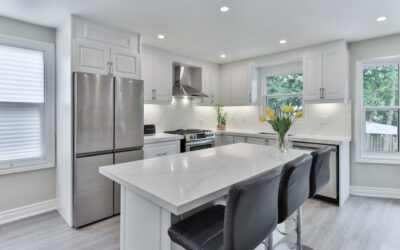
Grout lines are the part of a tile backsplash that ages worst. They stain behind the stove, collect grease around the faucet and need sealing every year or two. A back painted glass backsplash removes the problem entirely: one or a few large sheets of tempered glass, painted on the back side, mounted to the wall with no grout at all. The color sits behind the glass, so it stays glossy and protected, and the whole wall wipes clean in seconds.
Part of our Kitchen Remodeling guide — explore the full guide →
It looks simple, yet it is one of the less forgiving backsplash installs. The glass is cut and tempered to exact dimensions in a fabrication shop, outlet holes cannot be added later, and wall flatness matters more than with tile. Planning the measurements and colors carefully is most of the work.
- What Back Painted Glass Is
- Choosing Colors
- Cost of a Back Painted Glass Backsplash
- Planning Cutouts and Seams
- How Back Painted Glass Is Installed
- Handling Glass Safely
- Back Painted Glass vs Tile and Other Panels
- Cleaning and Care
- Troubleshooting and Common Problems
- When to Call a Professional
- Frequently Asked Questions
What Back Painted Glass Is
Back painted glass is a sheet of glass, usually 1/4 inch or 3/16 inch thick, coated on the rear face with a specialty paint and then cured. Viewed from the front, you see the color through the glass, which gives it depth and a high-gloss sheen that painted drywall or lacquer cannot match. For backsplashes, the glass is almost always tempered, so it can handle heat near a cooktop and breaks into small, less dangerous pieces if it does fail.
Some panels are factory painted before tempering using ceramic frit or enamel that fuses into the glass. Others are painted after tempering. Either way, the paint side faces the wall and is never touched in daily use.
Choosing Colors
Standard clear glass has a green tint from iron content. Behind white or pale colors, that tint shows up clearly, turning a pure white into a faint mint. For whites, light grays, pastels and anything you want to match exactly, specify low-iron glass (sometimes called ultra-clear glass). It costs more but shows the true color. Deep blues, blacks, reds and greens hide the tint, so regular clear glass is usually fine for darker colors.
Fabricators can color match to a paint chip, a cabinet door sample or a countertop. Bring physical samples, not photos, and ask for a small painted glass sample before they produce the full panel, because color through glass always looks a shade or two different from the same paint on a flat surface. Also look at the sample under your actual kitchen lighting; warm under-cabinet LEDs change cool colors noticeably.
Popular approaches include a white panel matched to white cabinets for a clean modern look, a bold accent color behind a range, a soft gray to bridge stone countertops and painted cabinets, or a black glass that reads almost like polished stone.
Cost of a Back Painted Glass Backsplash
Pricing varies widely by region and fabricator, but installed back painted glass commonly runs somewhere around $40 to $100+ per square foot. Factors that push it up include:
- Low-iron glass for light colors
- Custom color matching
- The number of outlet and switch cutouts
- Very large single panels that require extra handlers
- Polished or beveled exposed edges
A typical kitchen backsplash of 25 to 35 sq ft might land in a broad range from roughly $1,200 to $3,500 installed. That is often more than mid-range ceramic tile but comparable to designer tile with labor, and it avoids future grout maintenance.
Planning Cutouts and Seams
Tempered glass cannot be cut or drilled after tempering, so every outlet, switch, pot filler pipe and window trim notch must be measured precisely before fabrication. Most fabricators send a professional to template the wall after countertops are installed. If you DIY the measurements, create a full-size cardboard or plywood template, mark each cutout center and dimension, and double-check everything.
Long runs are usually split into several panels. Plan seams at logical breaks, such as at the edge of a range, a window or an inside corner, so they look intentional. Leave a small gap (often about 1/8 inch) at countertops and between panels for expansion, filled with clear or color-matched silicone.
Outlets and Electrical Boxes
Outlets in a kitchen backsplash must be GFCI protected. The glass adds thickness to the wall, so receptacles often need box extenders so the device and cover plate sit flush and secure. Before removing any cover plates or adjusting receptacles, turn off the breaker and confirm power is off with a non-contact voltage tester. Never work on energized circuits. Moving, adding or relocating outlets is a job for a licensed electrician, and so is adding new circuits for appliances.
How Back Painted Glass Is Installed
Most homeowners hire the fabricator to install, but understanding the process helps you prepare the space and judge quality.
- Prepare the wall. The wall should be flat, clean, dry and primed. Remove old tile if present and patch the drywall. High spots or bumps can stress the glass.
- Template and fabricate. After counters are set, the wall is measured, panels are cut, painted and tempered. Lead times of 1 to 3 weeks are common.
- Prepare electrical. With the breaker off and power confirmed off with a non-contact tester, cover plates are removed and box extenders positioned as needed.
- Apply adhesive. Installers use a mirror-safe adhesive or silicone that will not attack the paint layer, applied in vertical beads or dabs so air can circulate.
- Set the panels. Glass is set on spacers at the countertop, pressed into place and held with tape or temporary supports while the adhesive cures, usually 24 hours or more.
- Finish. Joints and edges are sealed with silicone, spacers removed, devices reinstalled and cover plates attached.
Handling Glass Safely
Large glass panels are heavy and awkward, and the edges are the weakest point. Wear cut-resistant gloves and eye protection, and always use two people (more for panels over about 4 ft long) to carry and set them. Carry panels vertically, never flat, and never flex, twist or strike the edges against counters or cabinets. Suction cup lifters make positioning much safer. Use only tempered glass on a kitchen backsplash, especially near a cooktop.
Back Painted Glass vs Tile and Other Panels
Compared with ceramic or porcelain tile, painted glass wins on cleaning and on a sleek, continuous look, but it costs more and is far less forgiving of measurement mistakes. Tile can be cut on site around a misplaced outlet; a tempered panel cannot. Glass mosaic tile gives some of the same shine with the flexibility of tile, but brings grout lines back into the picture.
Against stainless steel or acrylic panels, glass offers more color choice and a deeper gloss. Acrylic is lighter and cheaper but scratches easily and can warp near heat, so it is a poor choice behind a range. Stainless shows fingerprints and water spots. Solid-surface or quartz slab backsplashes match the counter perfectly but are heavier and usually more expensive.
A back painted glass panel also suits other rooms: a bathroom vanity wall, a laundry room splash zone, a dry-erase wall in a home office or a modern accent wall behind a bar. The same fabrication and electrical rules apply wherever it goes.
Cleaning and Care
One of the biggest advantages is maintenance. A soft microfiber cloth with glass cleaner or warm, mildly soapy water removes splatter and grease easily. Avoid abrasive pads and powders that can scratch the front surface. Wipe grease behind the cooktop regularly so it does not bake on. Because the color is on the back, it will not fade or wear from cleaning.
Keep the range clearance in mind. Tempered glass handles normal cooking heat, but follow the cooktop maker’s instructions for the minimum distance between burners and the wall.
Troubleshooting and Common Problems
- Color looks green or off: Standard clear glass behind a light color. The fix is replacing the panel with low-iron glass, which is why ordering a sample first matters.
- Visible adhesive marks: The adhesive was not compatible with the paint or was applied unevenly. Mirror-safe adhesive and a solid back coating prevent this.
- Cutouts do not line up: The measurement or template was off. Glass cannot be modified after tempering, so the panel must be remade.
- Cracking: Usually from a stressed edge, an uneven wall or impact. Contact the installer; a cracked panel needs replacement.
When to Call a Professional
Most back painted glass projects are best left to a glass fabricator from templating through installation, especially for large panels, multiple cutouts and light colors that need low-iron glass. Hire a licensed electrician for any receptacle relocation, new outlets or circuit changes. A small single panel behind a sink may be a reasonable DIY project for an experienced homeowner, but only with professionally fabricated tempered glass and a helper.
Frequently Asked Questions
Is back painted glass durable enough for a kitchen?
Yes. Tempered back painted glass resists heat, moisture and stains, and it has no grout to discolor. It can crack from a hard impact, but everyday use is not a problem.
Can you put back painted glass behind a stove?
Tempered glass is commonly used behind cooktops. Follow the appliance maker’s clearance requirements and avoid untempered glass in that area.
Why does my white glass backsplash look green?
Standard glass contains iron that tints light colors green. Low-iron glass is the fix for whites and pale colors.
Can I install a back painted glass backsplash myself?
Small panels are possible for experienced DIYers with a helper, but large panels with outlet cutouts are best installed by the fabricator who templated them.
How do you clean back painted glass?
Use a microfiber cloth with glass cleaner or mild soapy water. Skip abrasive scrubbers and harsh powders that can scratch the front surface.