
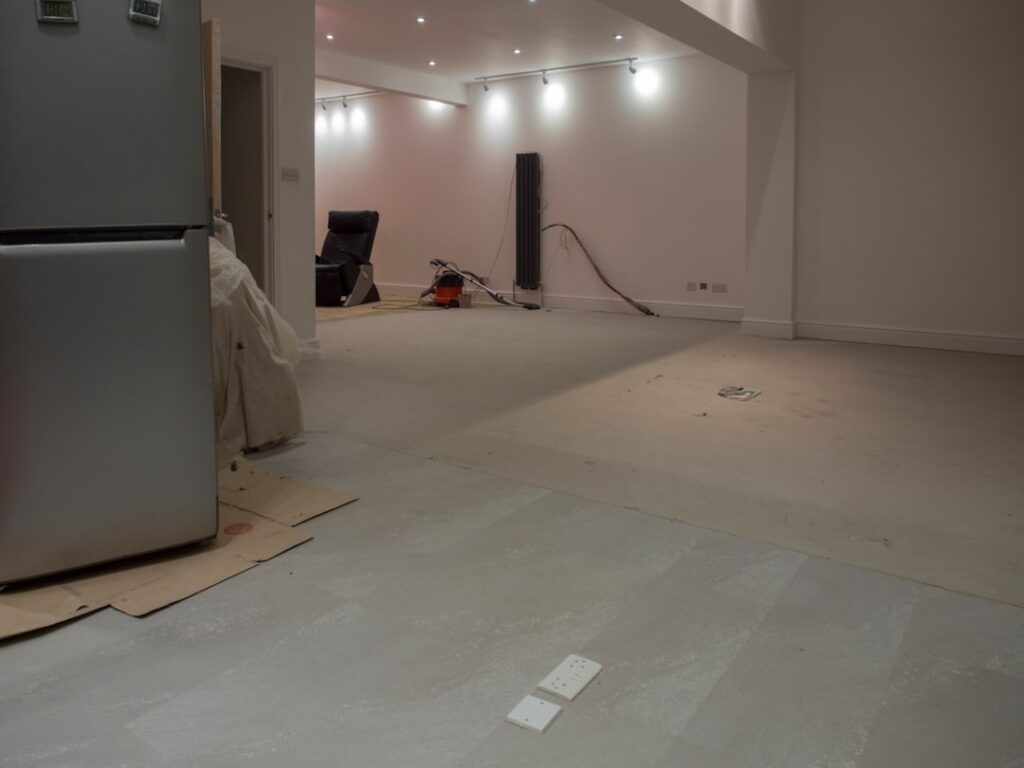
- Basement Carpet: Everything You Need to Know Before Installing
- Can You Carpet a Basement?
- The Moisture Problem: Why Basements Are Different
- Best Carpet Fibers for Basements
- Carpet Tiles vs Broadloom for Basements
- Moisture Barrier Underneath: Essential for Broadloom
- When Carpet Is a Good Choice for Basements
- When to Choose an Alternative Flooring
- Maintenance Tips for Basement Carpet
- Frequently Asked Questions About Basement Carpet
- Is it a good idea to carpet a basement?
- What is the best carpet material for a basement?
- Are carpet tiles better than regular carpet for basements?
- Do I need a moisture barrier under basement carpet?
- Can basement carpet cause mold?
- How long does basement carpet last?
- What should I put under carpet in a basement?
Basement Carpet: Everything You Need to Know Before Installing
Carpeting a basement can transform a cold, uninviting space into a cozy family room, home theater, or guest suite. But basements come with unique challenges, and basement carpet is not something you can approach the same way as carpeting any other room in your home. Moisture is the primary enemy, and choosing the wrong carpet, pad, or installation method can lead to mold, mildew, and a very expensive mistake.
This guide covers whether carpet is right for your basement, which fibers and styles work best, how to handle moisture concerns, and when you should consider an alternative flooring material instead.
Can You Carpet a Basement?
The short answer is yes, but only under the right conditions. Carpet is a viable basement flooring option if:
- Your basement is dry with no history of flooding or active water intrusion
- Humidity levels stay below 50 percent (use a hygrometer to test)
- The concrete slab has been properly sealed or has a vapor barrier
- The space is properly finished with climate control (heating and dehumidification)
If your basement has any active moisture issues, including seepage, condensation on walls, musty odors, or visible water stains, you should address those problems before installing any carpet. In many cases, a waterproof flooring option like LVP or carpet tiles with moisture-resistant backing may be the safer choice.
The Moisture Problem: Why Basements Are Different
Basements sit below grade, which means they are surrounded by soil that holds moisture. Even in dry climates, concrete slabs can wick moisture from the ground through capillary action. This moisture rises through the slab as water vapor and gets trapped beneath the carpet, creating a perfect environment for mold and mildew.
How to Test for Basement Moisture
Before installing carpet, perform these simple moisture tests:
- Plastic sheet test: Tape a 2-foot square of plastic sheeting to the concrete floor, sealing all edges. Wait 48 to 72 hours. If moisture or condensation appears under the plastic, you have a moisture problem
- Calcium chloride test: A more precise method using a test kit that measures the moisture vapor emission rate (MVER) from the slab. Acceptable levels for carpet are below 3 lbs per 1,000 sq ft per 24 hours
- Relative humidity test: A digital hygrometer can measure ambient humidity. Keep it below 50 percent for carpet installations
Best Carpet Fibers for Basements
Not all carpet fibers are created equal when it comes to moisture resistance. In a basement environment, synthetic fibers only are recommended. Natural fibers like wool absorb moisture and are prone to mold growth.
| Fiber Type | Moisture Resistance | Mold Resistance | Cost | Best For |
|---|---|---|---|---|
| Olefin (Polypropylene) | Excellent | Excellent | $1 – $3/sq ft | Basements with minor moisture risk |
| Polyester | Very good | Very good | $2 – $4/sq ft | Comfort-focused finished basements |
| Nylon | Good | Good | $3 – $6/sq ft | High-traffic finished basements |
| Triexta (SmartStrand) | Very good | Very good | $3 – $5/sq ft | Families with kids and pets |
| Wool | Poor | Poor | $5 – $15/sq ft | NOT recommended for basements |
Why Olefin Is the Top Choice for Basements
Olefin (polypropylene) is the gold standard for basement carpet because it is inherently hydrophobic, meaning it does not absorb water at all. It resists mold, mildew, and staining, and it is the most affordable synthetic fiber available. The trade-off is that olefin is less resilient than nylon, so it may flatten in high-traffic areas over time.
When to Choose Polyester or Triexta
If your basement is fully finished, climate-controlled, and dry, polyester or triexta offer a softer, more luxurious feel than olefin while still providing good moisture resistance. These fibers are also naturally stain-resistant, making them ideal for family spaces.
Carpet Tiles vs Broadloom for Basements
You have two main installation formats for basement carpet: carpet tiles (modular squares) and broadloom (wall-to-wall rolls). Each has distinct advantages in a basement setting.
| Feature | Carpet Tiles | Broadloom Carpet |
|---|---|---|
| Moisture handling | Better (air circulation underneath, easy to lift) | Worse (traps moisture against slab) |
| Flood recovery | Remove, dry, replace individual tiles | Usually must tear out entire carpet |
| Installation | DIY-friendly, peel and stick or loose lay | Requires stretching and tack strips |
| Comfort underfoot | Good (built-in backing) | Excellent (with separate pad) |
| Appearance | Visible seams (can be minimized) | Seamless, traditional look |
| Cost | $2 – $6/sq ft | $1 – $6/sq ft (plus pad) |
| Repairability | Replace individual tiles | Patch repair is difficult |
Our recommendation: For most basements, carpet tiles are the better choice. Their modular design allows you to pull up individual tiles if moisture appears, replace damaged sections without redoing the whole floor, and provide better airflow beneath the carpet. Brands like FLOR and Interface offer residential carpet tiles in a wide range of styles and colors.
Moisture Barrier Underneath: Essential for Broadloom
If you choose broadloom carpet for your basement, installing a moisture barrier between the concrete slab and the carpet pad is critical. This barrier prevents moisture vapor from reaching the carpet and pad.
Moisture Barrier Options
- 6-mil polyethylene sheeting: The most common and affordable option. Lay sheets with 6-inch overlaps, taped at seams
- Dimpled membrane (Delta-FL): Creates an air gap above the slab for improved airflow and moisture management
- Moisture-barrier carpet pad: Some pads have a built-in vapor barrier on the bottom. These combine two layers into one
- Epoxy slab sealer: Applied directly to the concrete before any flooring installation
Carpet Pad Selection for Basements
- Choose a closed-cell foam pad or rubber pad that does not absorb moisture
- Avoid rebond (bonded urethane) pads in basements, as they absorb and hold water
- A pad thickness of 3/8 inch is sufficient for basements; thicker pads trap more moisture
- Synthetic felt pads are another moisture-resistant option
When Carpet Is a Good Choice for Basements
- The basement is fully finished with drywall, insulation, and climate control
- There is no history of flooding, seepage, or standing water
- Humidity stays consistently below 50 percent
- A dehumidifier is available and used regularly during humid months
- The primary use is a family room, bedroom, or home theater where comfort is a priority
When to Choose an Alternative Flooring
If your basement has any of the following conditions, carpet is not recommended:
- History of flooding or water intrusion, even if it has been repaired
- Visible efflorescence (white powder on concrete), indicating moisture migration
- Failed moisture tests (plastic sheet or calcium chloride)
- Persistent musty odor
- Sump pump that runs frequently
- The basement is used for laundry (high humidity from dryers and washing machines)
Better Alternatives for Wet Basements
- Luxury vinyl plank (LVP): 100 percent waterproof and comfortable underfoot with the right underlayment
- Carpet tiles with waterproof backing: Provide the feel of carpet with easy removal if moisture appears
- Porcelain tile: Completely impervious to water, ideal for basements with chronic moisture
- Epoxy-coated concrete: Durable, waterproof, and easy to clean
For a complete overview of all your options, visit our basement flooring guide and our carpet flooring overview.
Maintenance Tips for Basement Carpet
- Vacuum at least once a week to prevent dirt from grinding into fibers
- Run a dehumidifier during humid months to keep moisture below 50 percent
- Address spills immediately to prevent moisture from reaching the pad and slab
- Have the carpet professionally cleaned every 12 to 18 months
- Check for musty odors regularly, which can indicate hidden moisture
- Inspect the perimeter of the room seasonally for signs of water intrusion
Frequently Asked Questions About Basement Carpet
Is it a good idea to carpet a basement?
Carpet can be an excellent basement flooring choice if the space is dry, finished, and climate-controlled. It adds warmth, comfort, and sound insulation. However, if your basement has any moisture issues, carpet is not recommended because it can trap moisture and promote mold growth.
What is the best carpet material for a basement?
Olefin (polypropylene) is the best carpet material for basements because it does not absorb water and is naturally resistant to mold and mildew. Polyester and triexta are also good choices for dry, finished basements where comfort is a priority.
Are carpet tiles better than regular carpet for basements?
Yes, in most cases. Carpet tiles offer better moisture management, easier repair (replace individual tiles rather than the whole floor), simpler installation, and the ability to pull up tiles if moisture is detected. They are the recommended format for basement carpet.
Do I need a moisture barrier under basement carpet?
Yes. A moisture barrier between the concrete slab and the carpet pad is essential for broadloom carpet in a basement. Options include 6-mil polyethylene sheeting, dimpled membranes, or carpet pads with built-in vapor barriers. Carpet tiles with waterproof backing may not require an additional barrier.
Can basement carpet cause mold?
Carpet itself does not cause mold, but it can trap moisture against the concrete slab, creating conditions that promote mold growth. Using synthetic fibers, proper moisture barriers, and maintaining humidity below 50 percent significantly reduces mold risk.
How long does basement carpet last?
In a dry, well-maintained basement, carpet can last 8 to 15 years depending on the fiber quality and traffic level. Olefin carpet in low-traffic areas may last longer, while nylon in high-traffic basements may need replacement sooner.
What should I put under carpet in a basement?
Use a closed-cell foam pad or rubber pad (not rebond) over a moisture barrier such as 6-mil polyethylene sheeting. Avoid thick, absorbent pads that hold moisture. Some homeowners use a dimpled membrane like Delta-FL for added airflow beneath the carpet system.


