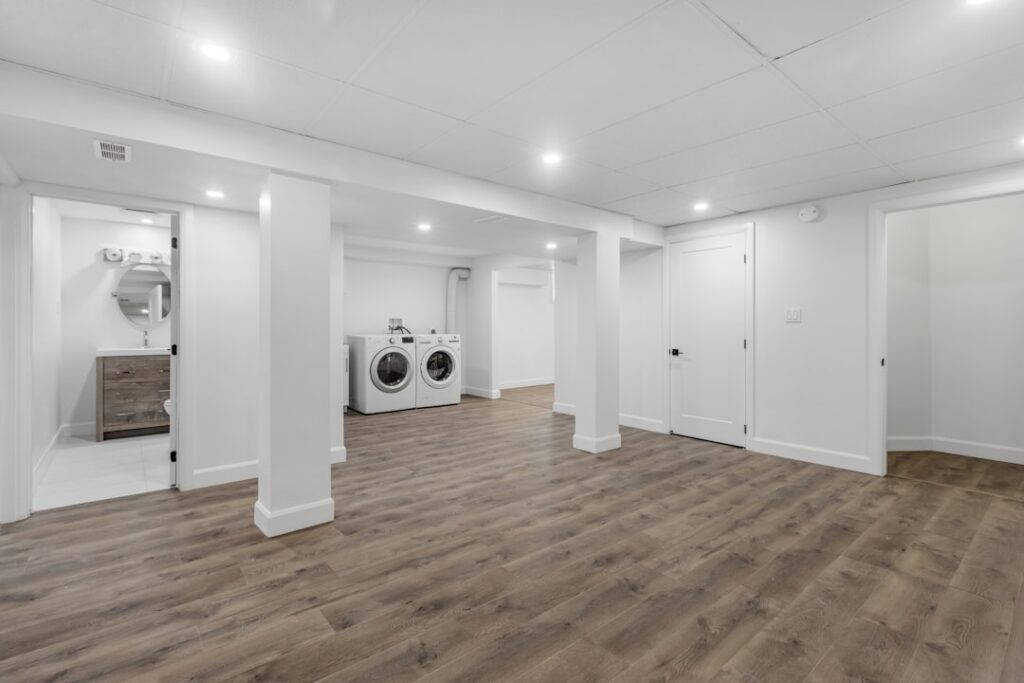
The color you paint a basement floor does more than look nice; it controls how bright the space feels, how visible the dust is, and whether the room reads as finished or forgotten. Choosing the right basement floor paint colors can turn a dim, gray concrete cave into a clean, livable space that feels like a real extension of your home. Basements bring unique challenges, low natural light, potential moisture, and heavy dust, so the best color isn’t just about taste; it’s about practicality. This guide walks through the most popular color choices, what each one does for the room, and how to pick a shade that stays looking good with minimal upkeep.
Part of our Epoxy, Concrete & Garage Floors guide — explore the full guide →
- Why Color Choice Matters in a Basement
- Gray: The Practical Favorite
- Tan and Beige: Warm and Inviting
- Blue and Green: Adding Personality
- Best Colors by Basement Use
- The Case for Flake and Speckled Finishes
- Light vs. Dark: Making the Right Call
- Coordinating With Walls and Ceiling
- Prep and Product Choices That Affect Color
- Dealing With Moisture Before You Paint
- Adding Interest With Borders and Patterns
- Making Your Final Choice
Why Color Choice Matters in a Basement
Basements are typically the darkest rooms in a house, often with small windows or none at all. That makes light reflectance a real functional concern, not just an aesthetic one. Lighter floor colors bounce what little light exists around the room, making the whole space feel bigger and brighter, while dark colors absorb light and can make a low-ceilinged basement feel like a bunker.
Color also determines how much maintenance you’ll do. Basements collect fine dust and the occasional water spot, and certain colors hide that grime far better than others. The smartest choice balances the brightness you want with a shade forgiving enough to look clean between cleanings.
Gray: The Practical Favorite
Gray is the most popular basement floor color for good reason. It’s neutral, modern, and hides dust, dirt, and minor imperfections better than almost any other shade. A medium gray reads as intentional and clean, complements virtually any wall color or furniture, and doesn’t show every footprint the way a dark or very light floor would.
Lighter grays brighten the space and pair well with a home gym or playroom, while charcoal and darker grays give a sophisticated, contemporary look, best reserved for basements with decent lighting. Gray is also the default color for many epoxy and concrete coating systems, so it’s easy to source in any product type.
Tan and Beige: Warm and Inviting
If gray feels too cold, warm earth tones like tan, beige, and sand make a basement feel cozier and more residential. These colors mimic the look of natural stone and pair beautifully with wood furniture and warm lighting, softening the industrial feel of bare concrete.
Tan and beige also do an excellent job hiding dust and dirt, arguably even better than gray, because their warm, mottled tones camouflage the fine gray grime that basements produce. For a finished living space, a family room, guest suite, or home office, these welcoming neutrals are hard to beat.
Blue and Green: Adding Personality
For a basement that serves as a rec room, playroom, or hobby space, a color with more character can be a fun choice. Soft blues create a calm, spa-like feel, while muted greens bring a natural, grounding vibe. These work best in basements with enough light to keep the color from going flat.
Deeper blues and greens can be dramatic and cozy in a media room or bar area, though they show dust more readily than neutrals. If you love color but worry about maintenance, consider using it as an accent, painting a border or a defined zone, rather than the entire floor.
Best Colors by Basement Use
Matching the color to the room’s function helps narrow your choices:
- Home gym: medium gray hides sweat marks and rubber-mat scuffs and keeps energy high.
- Playroom: light gray or tan brightens the space and hides toy scuffs; add colorful rugs on top.
- Living or family room: warm tan or beige for a cozy, finished feel.
- Workshop or storage: darker gray or a flake finish to disguise oil, dust, and dropped tools.
- Laundry area: light neutral to spot leaks early and keep the space feeling clean.
The Case for Flake and Speckled Finishes
One of the smartest choices for a basement is a multi-color flake or speckled finish rather than a single solid color. Epoxy or concrete coatings with broadcast color flakes create a subtle mottled texture that hides dust, dirt, and imperfections dramatically better than any solid color. The varied specks break up the surface so that grime, small stains, and even minor cracks essentially disappear from view.
Flake systems come in blends built on gray, tan, blue, and earth-tone bases, so you can get both the color you want and the ultimate low-maintenance surface. For a busy basement, this is often the most forgiving and best-looking option available.
Light vs. Dark: Making the Right Call
The brightness of your basement should heavily influence the decision. If your basement is dark with few windows, lean light, light gray, tan, or beige, to reflect maximum light and open up the space. Dark floors in a dim basement will make the room feel smaller and can require extra lighting to compensate.
If your basement has good egress windows or plenty of artificial lighting, you have more freedom to go with a darker, dramatic color. Just remember that very dark floors show every speck of dust and every footprint, so they demand more frequent cleaning to look their best.
Coordinating With Walls and Ceiling
The floor color should work with the whole room. A common winning combination is a light gray or tan floor with soft white or light gray walls, which keeps the space bright, cohesive, and easy to decorate around. Save bold color for an accent wall or your furnishings rather than committing the entire floor to a strong hue.
If your ceiling is exposed joists or dark, a lighter floor helps counterbalance the visual weight overhead. The goal is a balanced palette where the floor grounds the room without darkening it.
Prep and Product Choices That Affect Color
The color you see in the can isn’t always the color you get on the floor, because the concrete underneath and the product you choose both shift the final result. Bare, porous concrete drinks up the first coat and can look blotchy or lighter than expected, which is why a primer or a base coat evens out the color and helps it read true. Always prep thoroughly: clean, degrease, and etch or grind the surface so the coating bonds and the color lays down uniformly.
Product type matters for appearance too. A solid epoxy or one-part epoxy paint gives a richer, glossier version of the color, while a standard concrete floor paint reads flatter and more muted. Gloss level changes perception as well; a satin or semi-gloss finish makes colors look deeper and reflects more light, brightening a dark basement, whereas a matte finish softens the shade. Test your chosen product and color together on the actual floor, since the same gray can look noticeably different in flat paint versus glossy epoxy.
Dealing With Moisture Before You Paint
No color choice survives a moisture problem, so address dampness before you fall in love with a shade. Basements below grade are prone to water vapor pushing up through the slab, and that moisture can cause even the best coating to bubble, peel, or turn white with efflorescence regardless of color. Run a simple moisture test first: tape a two-foot square of plastic sheeting to the floor for a day or two and check for condensation underneath.
If moisture is present, use a coating specifically rated for damp or high-moisture concrete, and consider a penetrating primer or a moisture-mitigating system designed for below-grade slabs. Lighter colors have a practical edge here, since efflorescence and water spots show up less starkly against a light gray or tan than against a dark floor. Solving the moisture issue up front protects both your color and the entire investment, preventing the frustration of a beautiful floor that fails within months.
Adding Interest With Borders and Patterns
You don’t have to commit the whole floor to one flat color. A few simple techniques add personality while keeping maintenance low. Painting a contrasting border around the perimeter defines the space and gives a finished, intentional look, especially in a rec room or home gym. A darker border with a lighter field feels grounded and tidy.
For more character, consider a two-tone approach or a subtle stenciled pattern in an entry or bar area, or lean on the flake and speckled finishes discussed earlier, which build pattern right into the coating. Area rugs layered over a neutral painted floor are another easy way to introduce color and warmth without committing the concrete itself to a bold hue. These touches let you enjoy a livelier basement while keeping the base color practical and forgiving.
Making Your Final Choice
Before you commit, buy sample quantities and paint test patches on the actual concrete, then look at them in the evening under your basement’s real lighting, not in a bright store. Colors shift under the cool artificial light most basements have, and a shade that looked warm in the store can turn flat below grade.
For most homeowners, a light-to-medium gray or a warm tan, ideally in a flake or speckled finish, delivers the best mix of brightness, style, and dust-hiding practicality. Choose the basement floor paint color that fits how you use the space and how much cleaning you’re willing to do, and you’ll end up with a floor that looks finished and stays that way.
Prefer to explore on your own?
See how new flooring looks in your actual room in seconds — free, no signup.
Try the free Floor Studio →