
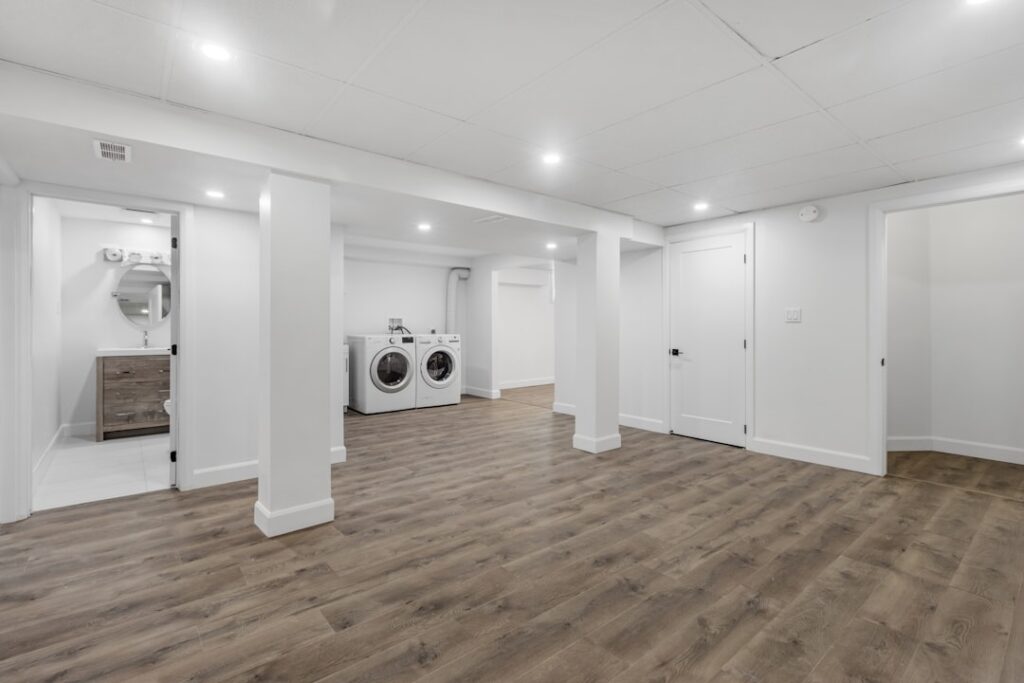
A basement fights you on every design decision, and color is where most people lose. The right warm basement paint colors can turn a cold, cave-like space into a room you actually want to spend time in, while the wrong cool gray turns it into a dungeon. Basements share three enemies: little or no natural light, cold concrete and masonry, and often low ceilings. Warm tones counteract all three by adding a sense of coziness and light where daylight cannot reach. This guide covers the best warm shades for below-grade rooms, why cool colors backfire, and the tricks that make an underground space feel inviting.
Part of our Paint & Walls guide — explore the full guide →
- Why Warm Colors Win Underground
- Warm Whites and Creams for Brightness
- Cozy Beiges, Taupes, and Greiges
- Warm Earth Tones and Terracotta
- Warm Greens for a Cozy Retreat
- Colors to Avoid Below Grade
- Lighting: The Essential Partner to Paint
- Handling Low Ceilings and Exposed Elements
- Moisture, Concrete, and Paint Selection
- Zoning a Finished Basement With Color
- Extra Tricks to Warm and Brighten
Why Warm Colors Win Underground
Basements get little to no natural sunlight, and the light they do get is often filtered through small window wells that cast a cool, bluish tone. Cool paint colors, grays, blue-grays, stark whites, amplify that chill and can make the room feel like a walk-in refrigerator.
Warm colors do the opposite. Shades with yellow, red, and brown undertones reflect artificial light in a flattering way and psychologically warm the space, making it feel cozier and more welcoming. In a room lit mostly by lamps and recessed fixtures, warmth is not just a preference; it is the difference between a livable room and a space nobody visits.
Warm Whites and Creams for Brightness
When your priority is fighting the darkness, a warm white or cream maximizes light without the sterile chill of a cool white. These shades bounce every lumen around the room while keeping the atmosphere inviting.
- Benjamin Moore White Dove (OC-17): a soft, warm white that brightens without going cold.
- Sherwin-Williams Creamy (SW 7012): a gentle, warm off-white ideal for low-light rooms.
- Behr Swiss Coffee: a cozy cream that reads bright but never clinical.
Warm whites are the safest choice for basements with very little light, since they reflect the most light while the warm undertone prevents the space from feeling like a hospital corridor.
Cozy Beiges, Taupes, and Greiges
If you want more color and warmth than white provides, warm neutrals wrap a basement in comfort. Beiges, taupes, and warm greiges add a hug of coziness while still keeping the room reasonably light.
- Sherwin-Williams Accessible Beige (SW 7036): a warm greige that feels enveloping and inviting.
- Benjamin Moore Shaker Beige (HC-45): a rich, warm neutral perfect for a cozy den.
- Behr Wheat Bread (720C-3): a soft, warm greige that grounds the space.
These tones are especially good for basement family rooms and home theaters, where a little warmth and depth actually enhance the comfortable, tucked-away feeling.
Warm Earth Tones and Terracotta
For a basement with more light or a bolder design goal, warm earth tones bring genuine character. Soft terracotta, warm clay, and muted ochre reference the cozy, sun-baked colors of a Mediterranean home, and they feel wonderful in a lower-level lounge or bar area.
These colors work best when balanced with warm white trim and plenty of layered lighting. A terracotta accent wall behind a basement bar, paired with warm wood and brass fixtures, transforms a cold concrete box into an intimate retreat.
Warm Greens for a Cozy Retreat
Green is having a moment, and warm-leaning greens work surprisingly well below grade. Choose olive, sage, or earthy greens with yellow undertones rather than cool, blue-based greens.
- Sherwin-Williams Evergreen Fog (SW 9130): a warm gray-green that feels cozy and current.
- Benjamin Moore Saybrook Sage (HC-114): an earthy, warm sage that grounds a basement lounge.
- Behr Jojoba (S390-4): a muted, warm green for a calming, den-like space.
Colors to Avoid Below Grade
Some shades sabotage a basement no matter how you style it. Steer clear of these.
- Cool grays and blue-grays: they amplify the underground chill and read gloomy in artificial light.
- Stark, blue-based whites: they feel sterile and cold in a lightless room.
- Deep, saturated cool colors: navy and slate can make a low-ceiling basement feel oppressive.
If you love gray, choose a warm greige with a beige base rather than a true cool gray, and the room will feel far more inviting.
Lighting: The Essential Partner to Paint
No paint color can save a poorly lit basement, so treat lighting as part of the color plan. Warm paint reflects warm light beautifully, so choose bulbs in the 2700K to 3000K range for a cozy glow rather than harsh, bluish 5000K daylight bulbs that fight your warm walls.
Layer your lighting with recessed ceiling fixtures for general brightness, plus lamps and sconces to add pools of warm light at eye level. The combination of warm paint and warm, layered lighting is what truly banishes the basement gloom, one without the other only goes halfway.
Handling Low Ceilings and Exposed Elements
Basements come with structural quirks that paint can either hide or highlight. Low ceilings are the most common complaint, and color strategy makes a real difference. Painting the ceiling a warm white draws the eye upward and makes a low ceiling feel taller, while a dark ceiling presses down on an already short room. Carrying a light wall color all the way up without a heavy contrasting trim line also stretches the perceived height.
Exposed ducts, pipes, and beams are another basement reality. You can either paint them the same color as the ceiling so they visually disappear, or lean into an industrial look by painting them a contrasting matte black or charcoal as an intentional design feature. For a warm, cozy basement, blending them into a warm-white ceiling is usually the better move, since it keeps the eye from snagging on the mechanical clutter overhead.
Moisture, Concrete, and Paint Selection
Warmth is only part of the basement challenge; moisture is the other. Below-grade walls are prone to humidity and the occasional dampness that will ruin ordinary paint. Before choosing a color, address any water issues, since painting over a damp or leaking wall traps moisture and leads to peeling and mildew no matter how lovely the shade.
For masonry and concrete basement walls, use a quality masonry primer or a waterproofing primer as your base coat, then apply your warm color over it. In areas prone to humidity, choose a paint with mildew resistance and an eggshell or satin sheen rather than flat, since the slight sheen resists moisture and wipes clean more easily. Getting the surface prep and product right ensures your warm, inviting color actually lasts rather than bubbling off the wall within a year.
Zoning a Finished Basement With Color
Many basements serve double or triple duty as a family room, home office, gym, and guest space all at once. Color is a powerful, inexpensive way to define these zones without building walls. A warm greige can unify the main living area, while a deeper accent, warm terracotta, a cozy green, or a rich taupe, marks off a home theater nook or a reading corner. Keeping all the tones within the same warm family ensures the zones feel like parts of one cohesive space rather than a patchwork. This approach lets a single open basement feel organized and purposeful while staying warm and inviting throughout.
Extra Tricks to Warm and Brighten
Paint and lighting do the heavy lifting, but a few finishing moves complete the transformation. Paint the ceiling a warm white to visually raise a low ceiling and reflect light downward. Add warm-toned textiles, rugs, throws, upholstered furniture, to soften cold concrete floors and reinforce the cozy palette. Hang mirrors to bounce light and create the illusion of depth. And keep trim in a warm white to frame the walls crisply without introducing a cold note.
The best warm basement paint colors turn an afterthought of a room into one of the most-used spaces in the house. Lean into creamy whites and warm neutrals to fight the darkness, add earthy tones or warm greens for character, avoid the cool grays that deepen the chill, and pair everything with warm, layered lighting. Do that, and your basement will feel less like a place you store things and more like a room you never want to leave.


